March 8, 2022 Pet of the Week segment on KMOV, featuring 12-week-old lab mix, Coffee!
ATTLAS grows both roots and wings in debut LP, ‘Lavender God’ [Review]
ATTLAS‘ debut album on mau5trap has been half a decade in the making. The Canadian producer has steadily garnered a devoted fan base over the past five-plus years with numerous singles and remixes, a well-rounded set of EPs, and a celebrated Storyline mix series. He was largely quiet on the release front in 2019, spending time putting together the latest Storyline episode and tackling an even bigger project: Lavender God.
In the final month of 2019, ATTLAS announced the LP was on its way and shared its first single, “Sinner Complicated.” The six-minute track showcased the full-bodied auditory experience that was to come, and he followed it up with “Hotel” with Maylyn shortly after.
Lavender God was released on Jan. 31, featuring 10 tracks that span from contemplative instrumental pieces to lighter collaborations with artists like Alisa Xayalith of The Naked and Famous.
ATTLAS’ meticulous attention to detail is evident in every angle of Lavender God‘s 48 minutes and 21 seconds. He sets the scene with “Shatter,” an adventurous, multi-faceted introductory track that leads the listener down the rabbit hole to fully experience the captivating twists and turns he has composed.
With the help of Lambert, ATTLAS moves gracefully from “Shatter” to “A Winding Path.” This delicate tune feels like one gorgeous four-minute build, as the artist continues to introduce his listener to the longer format of this collection.
“Half Light” with Xayalith delivers a more pop-friendly atmosphere, as the songstress’ vocals soar over relaxing instrumentals. A dreamy piano melody serves as both the intro and outro to this song, tying it together beautifully.
The album’s namesake, “Lavender God,” follows. The tune continues the introspective tone set by its predecessors. Its purposeful pace gives the listener ample time to immerse themselves in its mellow melodies, and it’s easy to see why the artist chose this track and its name to summarize the 10-track collection.
The late fall and early winter months are impeccably captured in “November,” a track that leads off with a scattered melody. The theme builds in gradual layers, adding delicate background piano before fading back into its original singular refrain.
The shortest track on the LP is followed by one more than twice its length, “Sinner Complicated.” The song arrived as the album’s debut single in mid-December, giving a taste of the complex world-building fans would be able to experience when the full LP arrived. It nestles cohesively in the middle of the album, paving the way for “Ray of Light” to follow.
“Ray of Light” lends a more optimistic tone after the shadowy atmosphere of “Sinner Complicated,” introducing itself with bright synths just as its name suggests. A calming piano melody and soothing orchestral elements balance out the bold synthwork, making it a stunning example of all ATTLAS is capable of.
An air of mystery returns in “Home.” Though it begins with a slightly haunting introduction, “Home” eventually opens up to a warmer soundscape, and ATTLAS delivers dramatic ebbs and flows throughout the course of the tune’s nearly five minutes.
ATTLAS brings Maylyn aboard for “Hotel,” which arrived as the LP’s second and final single before its full release. This upbeat number is sure to thrill dance music fans at its steady 120 BPM and encourages swaying or head-bobbing with a steady beat.
The LP wraps with “More Than That,” the second-longest song in the collection. This orchestral piece is destined for symphony play, punctuated by dramatic horns and intriguing percussion in its first half. ATTLAS switches it up just before the 3:30 mark to deliver a second half that takes on an entirely different form, illustrating his versatility in a way that makes the listener think back on the journey from “Shatter” to the ending notes of “More Than That.”
Over the course of this LP, ATTLAS masterfully demonstrates the deep-set roots he’s taken painstaking care to establish over the past five years. At the same time, he’s able to showcase what’s to come: years of top-notch, unique productions that make him invaluable to the ever-evolving music scene.
Lavender God is an unprecedented adventure, with ATTLAS fearless at the helm.
This story was originally published at dancingastronaut.com. Read it in full on DA’s website here.
Turning it up a notch with RAM Records founder Andy C [Interview]
Decades ago, the electronic music scene was nigh unrecognizable from its worldwide integration and popularity today. Andrew John Clarke was younger then, attending illegal raves with his friends in the English countryside. One such party came to mind when someone recently sent him a photo from many years ago over social media, reminding him of years past.
“It was one of those parties where somebody put out a phone number to call, and you met up at a service station on the road. Then this big convoy of cars made its way through the countryside to this back garden [in Kent] and we had a rave,” he recalls. “That’s how we used to do it. But now look at the kind of stages we do at EDC Las Vegas.”
It would be years before Andrew John Clarke would become known to most as Andy C, and he never would’ve guessed he would be where he is today. But his love of music and what would become drum ‘n’ bass led him down an unexpected pathway.
He helped create what many view as one of the most influential drum ‘n’ bass tracks of the 1990s—”Valley of the Shadows” under his Origin Unknown moniker with Ant Miles—and began to make a name for himself through his energetic DJ sets. Around the same time in 1992, he created RAM Records with Ant Miles, not knowing the influence the label would have over the next 27 years.
“Things are doing awesome [at RAM],” Clarke says enthusiastically. “We have an absolute steady stream of releases coming out every week. It’s relentless, but that’s how we like it. We make up one part of this beautiful scene of ours, and we’ve been there for everything. It’s a beautiful thing to still be at the forefront, you know?”
RAM had incredibly humble beginnings, starting out with Clarke picking up records in the trunk of his dad’s car and stamping the labels in his bedroom.
“Now, we’re streaming millions of streams all over these new mediums and touring the world,” he says. “It’s unfathomable, really.”
Though things have changed drastically since 1992 for RAM Records, Clarke maintains an optimistic viewpoint.
“I always think change is for the good,” he says. “I like to look forward. I appreciate the past because it invokes so many beautiful memories for me, but I love to look to the future. That’s what keeps the excitement there for me.”
Clarke is as excited about today’s drum ‘n’ bass scene as he was years ago. He says he’s “seeing a resurgence” in the United Kingdom, where the scene has “gone up to another level” in recent years. He’s also enjoying seeing the genre’s boom in the United States, where it’s been steadily getting more recognition and gaining traction.
“We seem to be seeing a lot of social media talk from people [in the States] who play drum ‘n’ bass tunes in their sets or are wanting to make dnb,” he says. “It seems to me we’re turning it up a notch.”
But Clarke would love to see even more drum ‘n’ bass coming out of the States. In fact, he encourages it.
“I know the United States is full of sick producers and people who want to smash the sound,” he invites. “Bring it to us.”
To those pursuing production, he offers advice that rings true for many aspects of life:
“If you want longevity, you’ve got to be true to yourself. If you’re pushing a sound and you’re passionate about it and love it, then you should stick at it and somewhere, hopefully, the crowd will get on your wave.”
When it comes to the style of music, Clarke notes he’s noticed today’s drum ‘n’ bass returning to “rawer sounds,” which delights the producer since that’s background he comes from.
“It’s been great to see the younger generations sort of battling it out week in and out to see who can make the sickest drop,” he says. “That’s what I’m feeling right now.”
But trends in music are unpredictable, and many producers scramble to figure out how to ride the current wave while staying true to their own sounds. For Andy C, though, the capricious nature of electronic music is a huge part of what makes it fun.
“I have no clue what drum ‘n’ bass will sound like in five years or even six months, and that’s part of the excitement” he says. “It just takes someone to come along and do a genre-defying song or create the next big bassline or take on a beat, and then it goes off on a tangent. That’s the beauty of it. Time goes pretty fast, but I know [drum ‘n’ bass is] going to be in an even healthier position than it is now.”
Clarke’s passion for drum ‘n’ bass and the scene surrounding it is driven by “the energy, the people, and the sense of community.” He calls the genre unique and says that “when you feel it, you really get it, and it becomes a strong passion within you.”
Those who have embraced this strong passion span generations—something that’s truly special to Clarke when he performs.
“At the events I do, there can be people spanning a 25-year age gap, and everybody will be raving together. It’s all ages, but that passion is always there. There’s a real beauty to a passion that never leaves for a style of music.”
When asked if he thinks the scene has changed for the better over the past few decades, Clarke’s answer is instantaneous.
“Of course! As much as I like raging in the back garden with 12 people, I definitely love being able to play all over the world to thousands of people. I’m such a lucky guy. It’s humbling and beautiful.”
This story was originally published at dancingastronaut.com. Read it in full on DA’s website here.
Celebrate 10 years of UKF with founder Luke Hood [Interview]
In April 2009, a 16-year-old from Frome, England wanted to share his love of bass music with the world. Luke Hood started a YouTube channel called UKF (which stands for United Kingdom and his hometown of Frome) and saw his subscriber base steadily begin to grow. The brand launched that year with the creation of its original channels: UKF Drum & Bass and UKF Dubstep, which now have 2.2 million and 6.3 million subscribers, respectively.
It’s been 10 years since the launch of these lauded channels, and Hood’s passion project has turned into something bigger than he ever could’ve imagined. Videos across the UKF channels have garnered more than 3 billion views, and the brand has hosted UKF events in 20 countries and 38 cities around the world.
Hood and his team have been celebrating these momentous milestones all year long by dropping singles from the label’s UKF10 – Ten Years Of UKF album—a massive 37-track compilation that makes its full debut on Friday, Nov. 29. So far this year, the world has been treated to fresh tunes from bass music greats like Camo & Krooked, Hybrid Minds, Matroda, and more. Finally, to cap off the year, UKF is throwing a huge party in London on Dec. 14, featuring a lineup that most bass music lovers could only dream of.
To hear more about the journey from humble YouTube beginnings to legendary compilation albums and worldwide events, we chatted with founder Luke Hood.
What does this 10-year anniversary milestone mean to you as UKF’s founder?
For me, it’s my entire adult life’s work! So it’s a really special moment to reflect for me. We’re all guilty always looking into the horizon, setting goals and comparing yourself to others along the way, without ever really taking a moment to pause and reflect, so it’s been really special in that respect. We’ve achieved a lot over 10 years with so many artists, managers and labels, and it’s been one of my favourite years ever running UKF.
What have been some of the most exciting moments in UKF’s timeline?
2011 was a really crazy year for us. We released UKF Dubstep 2010 in December 2010 which in January topped the iTunes Dance charts and remained in the top 50 for years, followed by venturing into live events where we put on our first 500 capacity show in January, through to a sell-out 12,000 capacity show at Alexandra Palace with UKF Bass Culture, which tied into our first TV advertised album. It was a lot to take in at the time, but I look back on it with some pretty fond memories.
In more recent years, festival takeovers and launching UKF.com into an editorial platform to help up and coming artists in the bass scene get support where they otherwise wouldn’t. I’ve always wanted to champion new music and supporting artists with some of their first interviews written on UKF has been a highlight.
And finally, taking UKF back to my hometown of Frome in Somerset was a real moment for me. I had the pleasure of bringing some well-known UKF artists back to my hometown where while I was growing up it was impossible to go out and see artists in the bass world perform. When I was 16/17 I always wanted to go to shows but they were all too far away, I hope that some people who had never been to a dance music event before were able to attend and hopefully be inspired enough to go on that journey and build the next UKF.
What have been some of the biggest challenges UKF has had to overcome?
When you’re a global youth music brand focusing on multiple niches/genres of music, it becomes really difficult to stay on top of the various scenes we cover while knowing which platforms to focus on as they appear. We obviously started out as a YouTube channel, but our ethos has always been to try and spread the music we love everywhere, so had invested from the early days to make sure we had a presence on Spotify and Apple Music, where a lot of our audience now live. That extends to social media too, where when you cover such a broad spectrum it’s hard to know should we be on Facebook? Instagram? Snapchat? Tiktok? How much time and energy should we focus on each? I think we’ve done a good job of striking the balance over the years, but it’s something we have to constantly review.
What do you think makes UKF special and contributes to its longevity the most?
I’d like to think there’s a degree of authenticity that our fans subscribe to. Unlike most streaming services today we really do our best to keep our ear to the ground to find the latest tracks that are being made and getting reloaded in clubs, compared to the data-driven/algorithm-led world we live in today. I’m still heavily involved in the curation and I hope that consistently over the channels it’s noticeable.
The second and most important thing I think, particularly that has kept the longevity is the community. There have been people commenting on our videos for years, and it’s that interactivity and engagement you don’t get from other platforms. We are nothing without our fans and the comments/likes/dislikes that come with them. Without that, we’d just be a streaming service.
What has feedback been like on the UKF10 singles hitting the airwaves this year?
Positive! We were overwhelmed by the feedback initially when we put out the first single with Camo & Krooked. As soon as “Atlas” was announced we had so many artists and managers get in touch to express an interest in getting involved with the campaign. We’ve always been there promoting artists to our community at the core of what we do, and naturally helping artists release their music felt like a natural step after 10 years. I’m really proud of the album that’s come together as part of this and I’m excited to see the response to it when it finally drops! It’s an amazing collection of artists old and new that we’ve worked with and supported over the decade.
This story was originally published at dancingastronaut.com. Read it in full on DA’s website here.
Take the plunge with Goldroom on his new multi-faceted endeavor, ‘Plunge/\Surface’ [Interview]
Los Angeles-based singer, songwriter, and producer Goldroom feels most at home on the water. He grew up sailing and has carried his love of the world’s oceans into his adulthood and his music career, crafting dreamy synth-pop tunes that are right at home with a balmy sea breeze to carry them from ear to ear. Josh Legg—known to the music world as Goldroom—has made a career of combining his passion for music with his love and respect for the water, and many fans know him best from his longstanding High Seas tours he’s been putting on for the past several years.

He put out his last record, West of the West, in the fall of 2016 and followed it up with a long bus tour with his band. In June 2017, he played a few Corona SunSets festivals, one of which was in Tulum, Mexico. Legg and the band had a day off and chose to spend it at the beach. The waters were mellow, and Legg decided to go bodysurfing.
“In a really surprising and unlucky way, I got tossed just the wrong way and hit the top of my head on the sand,” Legg recalls. “I felt the lightning bolts go through me, but I didn’t think I was that hurt.”
However, it became apparent over the next few hours that he was more than just a little hurt. In fact, he’d broken his neck in two places.
“I lived in a hospital in Cancun for two weeks and then flew back to LA and lived in a hospital there for another few weeks,” Legg says. “Then I was pretty bedridden at home another month or so. Finally, I was able to begin working my way back.”
He remembers reading comments on social media saying “he’s done” and “he’s never coming back.”
“I felt a lot of personal pressure to get back out on the road,” he says.
I broke my neck in Mexico. Here’s what’s up pic.twitter.com/n2W0safCTw
— Goldroom (@goldroom) June 22, 2017
But everything he did that autumn was “way too early.” Legg was managing his pain with painkillers, including an opiate called Tramadol, which doctors had told him to take daily for six months.
“Tramadol is pretty heavily abused by a lot of people and leads to bad things,” Legg says. “I was trying not to take it every day, and I didn’t. But even so, it led to a foggy year in my life.”
In a bit of an existential crisis wondering where the Goldroom project was going, Legg thought about the lengthy process he’d had preparing West of the West to make its way into the world. In his haze, he continued to write songs but wasn’t quite sure where things were going. The music to come out of this time period makes up what became the Plunge part of the upcoming LP.
i guess breaking your neck can really change things cause this music is VERY different from what I always expected would come next
— Goldroom (@goldroom) October 17, 2017
“When I listen back to the songs that became Plunge, all I hear is haziness—but in a good way. It’s extremely representative of my 2017 and 2018, and I love that about this music. It’s just true to where my life was at.”
Around this time, Legg started to fall back in love with dance music. He’d always loved DJing, but the further he went with his Goldroom project, the less he’d found himself making club-friendly music.
“When I was finally able to start touring again and felt healthy physically, I started to really fall in love with dance music in a new way,” he remembers. “I think it coincided with a lot of disco and certain types of house music that had kind of disappeared for a while and started to come back.”
In his renewed excitement, he found himself thinking about the kind of music his idols sampled: slow, funky, and psychedelic. Then it clicked. He had made a record of just that for Plunge.
“Rather than sample other people, I thought I’d just sample myself. And what slowly came about was the idea of sampling every single song I’d made and making an alternative, French house version of it.”
These alternate versions would become Surface, the other side to the two-part LP.
“Plunge sounds like my injury to me.
When I listen to Surface, I can hear myself getting healthy.”
Legg knew he was on to something, but he had to try his concept out. Though he plays plenty of live shows with his band, he also loves to DJ and thought he’d take a Surface song out for a spin.
“The first one I tried was ‘Yellow Flowers,’ the sister song to the final single on the album, ‘Trust,’” he says. “Everyone was really excited about it, and that was the lightning moment. It became obvious that I could make [an alternate version] for all of them.”
Many of Plunge/\Surfacetracks have debuted ahead of the LP’s full release on Nov. 1—like “I Can Feel It” and “Do You Feel It Now?” which are sister tracks and both feature singer Love, Alexa. While these two are fairly easy to see as related, Legg assures his fans that none of the versions of the songs on the LP are the “correct” iterations.
“As I was releasing these songs, I wanted people to have no idea what came first,” he says. “Neither is meant as a remix or original. They’re just each an individual song that is re-contextualized based on the other. Hopefully, you might even like both of the songs better because they both exist.”
West of the West was Legg’s first experience doing a slew of collaborations with other people. He prefers not to work through the internet bouncing stems and vocals back and forth, and would rather team up in the studio to work through the songwriting process. But for Plunge/\Surface, Legg worked on many more tracks solo—and some of them sound much like they did the day he wrote them, like “Cocaine Girl,” which he says he wrote in four or five hours.
“I really wanted my sonic touch to be all over this record because it’s a little weirder and a little darker… more human and messy,” he says. “I wanted it to be that way.”
With the exception of new friend Love, Alexa, Goldroom chose to work with previous collaborators like Mereki, Chela, and Nikki Segal, whose voices you can hear on music from years ago, like “Only You Can Show Me,” “Fifteen,” and “California Rain,” respectively.
“Working with them felt like being at home, which was something I really needed coming off my injury,” he says.
The key difference between West of the West and this new collection of songs is that it’s “just much more Josh,” the producer says.
“It’s much more me… more raw and much more human. There’s a lot more mistakes in the playing and in the singing. The vocal takes aren’t perfected within an inch of their life. It’s purposefully messy because my life’s been kind of messy.”
When asked how his life would be different if he hadn’t broken his neck on that fateful day in 2017, Legg says it’s something he’s never thought of before.
“I feel incredibly lucky that nothing worse happened,” he says, after thinking for a minute. “A lot of people that break C6 and C7 [vertebrae in the neck] end up paralyzed or they die. Realistically, I would’ve put music out sooner, and I would’ve been playing live more often, but I have no idea what the music would’ve sounded like.”
Even while he was injured, though, all he wanted to do was get back out on the water.
“Even though it was the thing that bit me, I felt the need to get back there as soon as possible. It’s the place in the world where I feel like I get the most joy and bring the most joy. Because of my injury, I feel even stronger than ever that it’s my place in the world.”
This story was originally published at dancingastronaut.com. Read it in full on DA’s website here.
The Midnight paint with vibrant sonic colors as they prepare their new LP, tour the world [Interview]
Tim McEwan and Tyler Lyle are exhausted—the good kind of exhausted that comes from performing in countless venues around the world.
“We haven’t slept in six months,” Lyle says. “It’s all one big blur.”
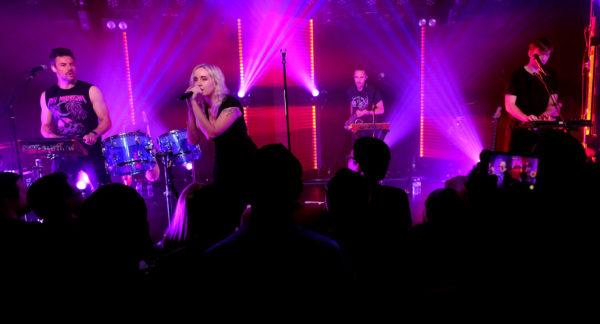
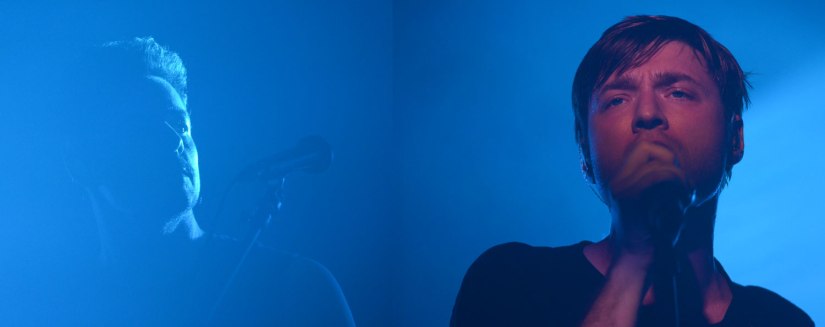
The duo, known to the music world as The Midnight, have been touring almost nonstop since the release of Kids, their third LP released last September. They’ve spent most of 2019 on the road, kicking off in Norway in February and hardly slowing down since then. On a stop in St. Louis in the midst of this heavy tour schedule, DA caught up with The Midnight to hear about their journey across the globe and the promise of new music on the horizon.
McEwan and Lyle jointly form one of the most celebrated acts in the modern synthwave scene, but they don’t like to put their music in a genre-confined box. They simply enjoy making music together and delivering the end result to their fan base and beyond.
There is a Japanese term: Mono no aware. It means basically, the sad beauty of seeing time pass – the aching awareness of impermanence. These are the days that we will return to one day in the future only in memories.
McEwan and Lyle first got together in 2012 when they were paired up in a studio session. They didn’t know each other prior. McEwan, who’s from Copenhagen, comes from a production and studio background, and Lyle grew up in Georgia and has a songwriting background. While their backgrounds were largely different, something happened the first day they got in the studio together: They wrote their first song as The Midnight, “WeMoveForward.”
“[Lyle] wrote the verses pretty quickly, but finding out what the song was was a longer process,” McEwan recalls. “We didn’t know we were going to make a band called The Midnight. It was all about finding and figuring out where to point the ship.”
Both artists agreed that the tricky thing about meeting someone you could do anything with is that it’s both freeing and overwhelming. They spent their first EP figuring out what The Midnight sounded like, and from there, it was a natural progression.
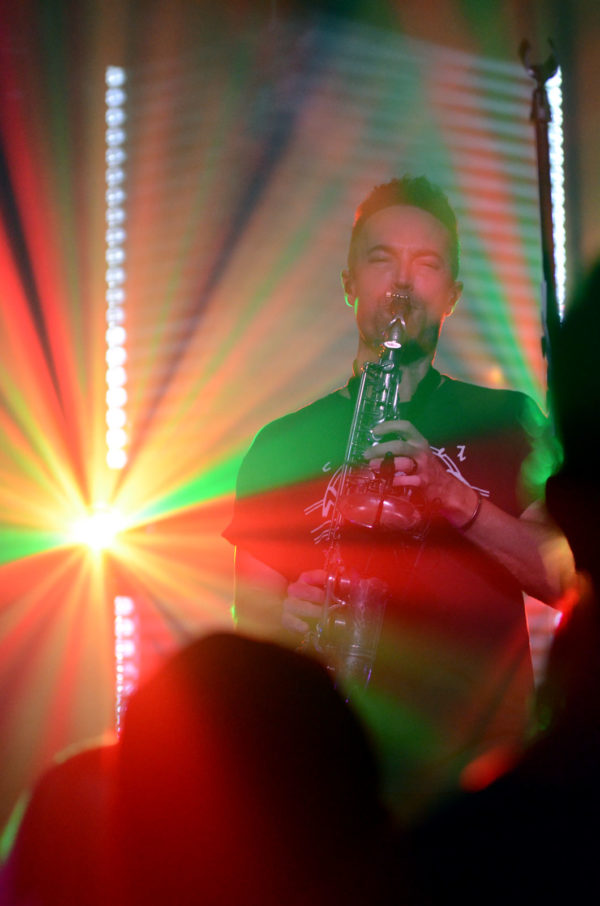 “It’s a palette of colors we’ve been working with,” Lyle notes. “We’re still going to use those palettes over time, but we’re going to grow.”
Mono no aware fuels The Midnight’s music—whether it’s in the form of the dramatic “WeMoveForward” or the final Kids track, “Kids (Reprise),” from last September. They’ve grown tremendously as a band since those early days and are constantly seeking to evolve their sonic palette. Many fans were initially thrown off by the absence of saxophone riffs in the Kids album, but McEwan and Lyle insist that the recent album had a different story to tell than its predecessors. Kids is—as its title plainly reveals—about what it’s like being a kid.
“Sultry sax doesn’t go hand in hand with being 10 years old and riding around on bikes,” McEwan explains. “The people that connected [to Kids] connected in a very deep way. They really got it. There’s a pain and a sadness inherent in nostalgia that I think [Lyle] was really good at tapping into.”
Lyle expounds, noting that they’re “trying to broaden and deepen the palette” with their new material.
“We’re writing songs in different corners of the room,” he says. “Hopefully with the next record, we’ll bring a little more sunlight out.”
Where Kids was about growing up, McEwan and Lyle see their next album as a natural progression in life into the teenage phase. McEwan says they’ll look to capture “the angst and the turmoil of being a teenager, the highs and lows, the hormones going crazy” in their next body of work. The way their writing process is going, they see this series as “maybe a trilogy,” telling an overarching story.
For those who can’t wait for their next dosage of The Midnight’s new material, the duo’s second remix EP landed on Silk Music on Sept. 27, featuring reinterpretations of tracks like “Arcade Dreams” from Timecop1983 and “Shadows” from Uppermost.
“I always love hearing a different take on our songs and my tracks and what elements are used and how they’re using [Lyle’s] voice,” McEwan says. “It’s so freeing to hear. I’m really excited about these songs being dressed up differently for people.”
For now, though, The Midnight are on a brief tour break after trekking across the States for much of the summer and early autumn. In late October, the duo take off again across the pond to play shows in Germany, the UK, France, and many more, wrapping up one of their heaviest tour years to date in the later days of 2019.
As a singer, Lyle thrives off the energy he gets from crowds, noting that his favorite part of his job is the moments when he can feel the connection in the room.
“I spent 10 years as a folk singer in much smaller rooms,” he remembers. “It felt like a heart-to-heart connection, but this feels like a spiritual energy with a whole room. There’s an energy there that’s hard to simulate any other way.”
McEwan lives on the other end of the spectrum, calling himself a “studio guy.”
“My real high comes when I’m working on a track and I crack the code,” he says. “You have the promise of something great, but you haven’t had to do the laborious work of executing it yet. You’re riding the high of all the possibilities, and you know where to take it.”
Combined, these two personalities and skill sets are unstoppable. With their music, The Midnight has touched countless lives with their ability to reach and comfort their fans—fans who “need to be told they’re OK, they’re loved and that they’re not alone,” Lyle says. “We’re trying to build up the mythology, singing about monsters and vampires… But at the end of the day, the connection seems to happen when we just sort of recognize that human struggle is universal, and we’re all in it. Music is this magical thing that helps us feel a little less alone.”
McEwan agrees, saying that all of us “are the same when it comes down to it.”
“It sounds like such a cliché, but music is a way to unite people,” he says. “It’s the feeling of knowing that you’re meeting all these kindred spirits. You’re writing a song, and three years down the line you’re playing somewhere in Germany or St. Louis and someone comes up to you and says ‘you got me through a hard period of my life.’ That’s something that’s bigger than us.”
This story was originally published at dancingastronaut.com. Read it in full on DA’s website here.
Premiere: BoxPlot gears up for enthralling Liquicity EP with ‘Voicemail Poems’ [Q&A]
Introspective drum ‘n’ bass finds its voice in talented producers like BoxPlot. The Boston-based producer first caught the attention of the dnb world back in 2015 and has been making a name for himself via his unique brand of dreamy beats ever since.
His newest piece of work, an EP called Alice, arrives on Liquicity Records on Sept. 6. Hear its opening track, “Voicemail Poems,” and learn more about the work that went into the EP below.
Tell us a little bit about the making of this EP.
The initial idea came from my tune “My Non-Existent Friend, Alice,” but not from the tune itself. It came from the people in the YouTube comments sorta wondering “who is this person” or “why is she non existent.” That got me wondering if I should build this story further into an EP, and so I did. The making of Alice was a pretty grueling and extensive—1.5 years or so—but it was definitely fun. I’m very meticulous when it comes to writing songs because I nitpick on literally every detail and I absolutely want to make sure that it’s 100 percent the direction I want to go in. As for production techniques, I’ve finally gotten to utilize my Eurorack synth that I’ve been on and off building for a year or so. I’ve sorta designed it to where it’s basically made to be an ambient-lofi drone machine, and it does wonders when it comes to making atmospheres.
What can listeners expect from this EP?
I’d definitely consider this to be like a mini concept album if anything, but still very familiar to my Tramontane EP. I really wanted to hone in on the emotions of lust and loss and sorta play around with them. You can sorta view the timeline of these two imaginary characters and see how things evolve over the course of the four tracks. I periodically listen to the entirety of the EP end to end and I still get chills from it.
 What does this EP mean to you?
While making the EP, I didn’t really think it had some sort of emotional connection to my actual self. I more or less just thought I was just writing a story just for the sake of writing a story. But after these past few months have gone by, I’ve come to realize that this body of work was actually me subconsciously telling myself how I felt over the past year. It kind of is surreal to think how when writing things you can be writing something that has no meaning or anything behind it, but in actuality it does and you don’t know it yet.
What are your hopes for drum ‘n’ bass in the United States?
I’m optimistic about it, but I’m realistically in the middle. I’m noticing there’s now tons of hype coming from a good majority of the big EDM guys talking about how drum ‘n’ bass is so sick and are asking for tunes from people, but it’s one of those things where I sorta need to see it to believe it. Now I’m not talking about the talent here in the U.S. The talent I’m seeing from the States is actually rather insane to be honest. A great example of this is a guy named Winslow. His tunes are absolute stompers and he makes really quality YouTube videos that I tend to watch periodically and enjoy greatly. Anyway, back to the original point: it’s the promoters that are based here that I’m iffy about. For example, if you don’t originate from the UK, you aren’t getting booked. It’s as simple as that. Flite I know for a fact is working his butt off to make sure to change that, and it’s working. It’s just that these promoters aren’t willing to pick up these homebrew artists at all, or they are at times but they are getting paid in pennies. It’s a slow process yes, but that’s what it is going to have to be; a waiting game.
What’s in store for the remainder of 2019?
I do have some collaborations with some artists that I’ve always wanted to work with, but I won’t name drop them because I do want to keep things secret. I do have plans to also make a non drum ‘n’ bass EP for once since the good majority of music I actually listen to isn’t really drum and bass. Finally, I also have another EP lined up, but this time it’s for my side project, Tetracase. Nothing is completely set in stone for that one, but it’s probably going to receive the majority of my attention for the remainder of the year.
This story was originally published at dancingastronaut.com. Read it in full on DA’s website here.
The Downtown Clubhouse: A Historic Treasure
The spirit of the Missouri Athletic Club has stood the test of time. Over the course of more than 115 years, thousands of members and guests have taken part in the time-honored traditions of the Club and celebrated some of life’s biggest moments together. Within the clubhouse walls, these same people have continuously fostered a decades-spanning spirit of camaraderie and friendship.
Many of these relationships began at Missouri Athletic Club’s Downtown Clubhouse, an iconic 10-story structure at 4th and Washington streets that has been a key historical asset to downtown St. Louis since the first brick was laid in the summer of 1915.
But it wasn’t an easy task to get to the initial brick-laying. Just a year prior, the original Missouri Athletic Club building, which opened in 1903, was destroyed in a fire. What hadn’t been destroyed, though, was the morale of the Club’s members and the tenacity of the acting Board of Governors. Just a few weeks after the blaze claimed the structure, they set about rebuilding what is still standing today.

Lauded local architects William Butts Ittner and George F. A. Bruggemann began the daunting task of creating a building type that was unknown to St. Louis at the time. The proposed structure would need to house everything from athletic facilities to hotel rooms – and still look cohesive and architecturally beautiful both inside and out. They opted for an exterior design that clearly displays the different functions the building would contain, done in the Renaissance Revival style.
The first and second stories were done in Bedford limestone with decorative cornices, and the walls above are composed of red brick enriched with terracotta. Stately windows allowed guests dramatic views of the city and below Washington and 4th streets from the second and third floors. The windows drew the eye up to the remaining top floors, which were accentuated by a pattern done in bricks from Hydraulic Press Brick, the city’s biggest brick manufacturer in the early 1900s.
Below the surface, the building’s bones were framed in steel, with concrete floor slabs anchoring the structure into the ground. With the fire still fresh in their minds, Ittner and Bruggemann made sure wood was used only for doors, windows, ornamental work and gymnasium and banquet floors.
Construction of the new building was made possible through $100 bonds, purchased by members. Some contributors, like Boatmen’s Bank and brewer August Busch, went above and beyond, purchasing $5,000 worth of bonds to kick off the financial campaign. When completed, the building cost $1.2 million and satisfied the tricky task of combining form and function in a multi-purpose space.
As the cornerstone of the building was laid on June 15, 1915, a speaker at the ceremony is reported to have expounded on his hopes for the new clubhouse. According to an issue of the St. Louis Republic, A.J. Shapleigh, a hardware wholesaler and business leader, said that “this building when completed will be the superior of all of the athletic clubs in the United States or the world – except possible for that beautiful club in Los Angeles, California.” The new Missouri Athletic Club facilities opened March 1, 1916, with a three-day celebration. According to records, 5,000 people attended the initial opening house event, and hundreds more attended a dinner dance the next evening.
They were likely wowed by the elegance of the building’s lobby, which to this day previews the grandeur of many other rooms of the MAC. Elegant flooring, done in grey marble squares, leads visitors through a stately wooden archway and into the main reception area. From there, members can access athletic spaces and dining and social areas.

One such space that’s been used for decades as one of the MAC’s biggest gathering spaces is the Missouri Room. This ballroom has hosted countless weddings, awards ceremonies, meetings and more, welcoming guests with its ornate ceiling, towering windows and sparkling chandeliers. Many details of the space were restored to their original beauty in the early 2000s, allowing guests to experience the classic room as it would’ve appeared in 1916.
Elsewhere in the Club, Ittner and Bruggemann’s state-of-the-art exterior design is mirrored internally, too, retaining the grandeur and character of its large public and athletic spaces from day one. The MAC quickly became a popular venue for socializing and entertainment among St. Louis businessmen, who admired the integrity of location, design, setting, materials, workmanship, feeling and association.
The St. Louis Art League, too, recognized the significance of the building at the time it was built, acknowledging the Club with a certificate that commended the “best work in architecture executed in St. Louis during the year 1916 as exemplified in its Club Building at Washington Avenue and Fourth Street.” The award also honored the “civic spirit, community pride, and love of beauty” exhibited by the Club. In the years since it opened in March 1916, the Downtown Clubhouse has welcomed thousands of guests through its doors to dine, celebrate and take part in countless athletic activities. Also, over the course of those years, the Club has made a variety of updates to its facilities to keep up with technology and meet the requests of its members.
These updates have included large projects like a sixth-story addition in 1927, a 1950 addition to house additional kitchen and office space, and extensive interior remodeling in 1959, along with periodic redecorating of guest rooms on the top floors to freshen up the design.
Most recently, the Club underwent major renovations at both clubhouses’ fitness facilities that included equipment updates and converting spaces into more usable exercise rooms.

In 2007, the Missouri Athletic Club established the Preservation Foundation to focus on preserving the history and architecture of the Downtown Clubhouse. The building was added to the National Register of Historic Places that same year, joining the ranks of other St. Louis institutions like the Anheuser-Busch Brewery, the Eads Bridge and the Gateway Arch. The Downtown Clubhouse is also said to be the longest-running building still serving its original purpose in downtown St. Louis.
Andrew Weil, the executive director of the Landmarks Association of St. Louis, notes that over the decades the MAC building has stood at 405 Washington Ave., downtown has “transformed” around it.
“Washington Avenue rose and fell as the city’s garment district. The department stores thrived for decades and then closed one by one. The riverfront was cleared and replaced with the Arch. Hop Alley was cleared and replaced with Busch Stadium, before it was cleared and replaced by another Busch Stadium. The streetcars—which once were the lifeblood of the central business district—were discontinued, and the shoe industry largely moved overseas. More than half a million people left St. Louis City. Through more than a century of change, the MAC has remained true to its roots, earning its reputation as one of our community’s most stalwart institutions and an icon of downtown.”
While the inside of the building may not appear exactly as it did when the doors first opened in 1916, the exterior and many details of the interior architecture and décor allude to the rich history of the Missouri Athletic Club and the decades of festivities that have taken place inside the celebrated building.
This story was originally published in the July 2019 issue of the Cherry Diamond magazine. Read it in full here.
Happily Ever After: Googie, Pearl and the Falconnier Family
Once upon a time, two kitties were born with birth defects that didn’t allow for one of their back legs to develop correctly. With big, expressive eyes and sturdy, fluffy bodies, they were beautiful, but it would be a long journey ahead to find forever homes that would love them despite their flaws.
Melista Falconnier had always loved cats. When a friend suggested she start volunteering for Animal House Cat Rescue and Adoption Center, she jumped at the chance and began going every Thursday.
“You end up falling in love with all of them,” Falconnier admits.
She had always considered adopting a cat with special needs and ended up falling head over heels for a pair of three-legged fur babies. Ross and Cami had come from less-than-ideal conditions at an informal breeder’s home. From that hoarding situation, 22 cats were removed and placed at Animal House in hopes of a brighter future. Falconnier watched the rest of the big group get adopted one by one, leaving Ross and Cami.
“I went to go see my mom, and I told myself that if they were still there when I got back, I’d adopt them,” she says. And they were, almost as if they were waiting.
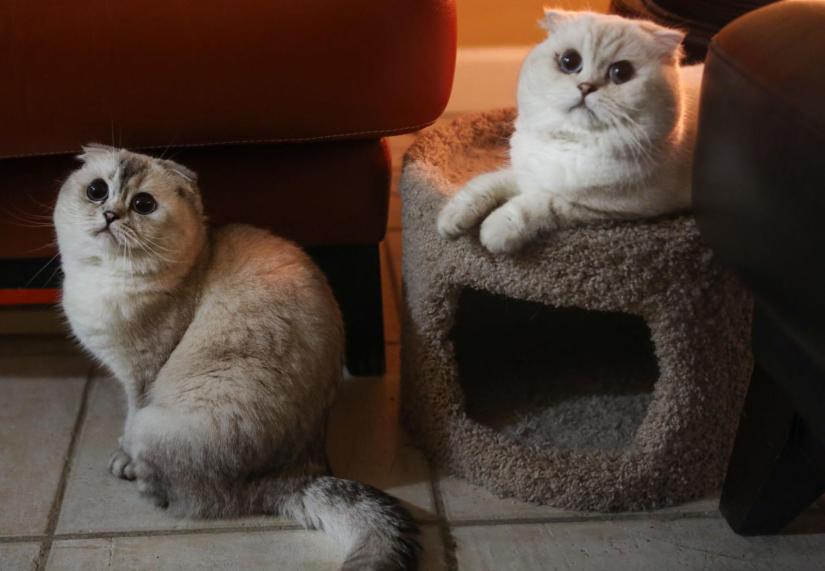
Falconnier brought Ross and Cami (now named Googie and Pearl) home in December. The 2-year-old cats have kept her entertained ever since, amusing her with their playfulness and energy, despite having only six legs between the two of them.
“I was surprised how active they are with their legs,” Falconnier says. “They want to play and chase each other. They just tire out quicker.”
Pearl still has a fairly shy temperament, and Googie loves to talk. They’ve both come out of their shells quite a bit, Falconnier says, and are obsessed with chasing laser pointer dots and batting balls around. Googie in particular will vie for Falconnier’s attention, particularly when she’s talking on the phone.
“He’s so vocal,” she says. “If I’m on the phone for too long, he’ll let me know it’s time for me to pay attention to him.”
Falconnier speaks highly of Animal House and gives its staff credit for working with the cats so they can go to their forever families.
“They really get to know [the cats’] personalities and help them evolve,” she says. “They put so much time and effort into matching them with a family.”
As for her own two, Falconnier says Pearl and Googie have completely melted her heart.
“I love animals,” she says. “They keep you present and in the moment. No matter what your day is like, they’re always happy to see you.”
This story was originally published at laduenews.com. Read it on LN’s website here.
We The People brings the best from crowdfunding to one location
What is crowdfunding?
Crowdfunding is the practice of funding a project or venture by raising small amounts of money from a large number of people, typically via the internet. In 2015, more than $34 billion was raised worldwide by crowdfunding.
In today’s world, the business of … well … business takes many forms.Many entrepreneurs take a traditional route, putting countless hours into developing and marketing their products. In recent years, though, crowdfunding has become a popular route to get an idea off the ground. Websites like Kickstarter and Indiegogo allow innovators to share their concepts with the world, which can garner funds and support from others who believe in their product, too.
Ryan Sim was one such creator back in 2015. The Singapore native “was never the 9-to-5 kind of person” and set about making slim radio-frequency identification-protected wallets via a Kickstarter campaign under the name of Kisetsu. When the first campaign raised more money than expected, Sim started believing in crowdfunding. He went on to launch two more wallet campaigns, each more successful than the last. The third campaign raised $130,000, a fortunate moment that might have been fate, as Sim was fired from his digital agency sales job around the same time. He put all his time and effort into the Kisetsu wallet line but wanted to focus on getting his products out into the world rather than just promoting them online.
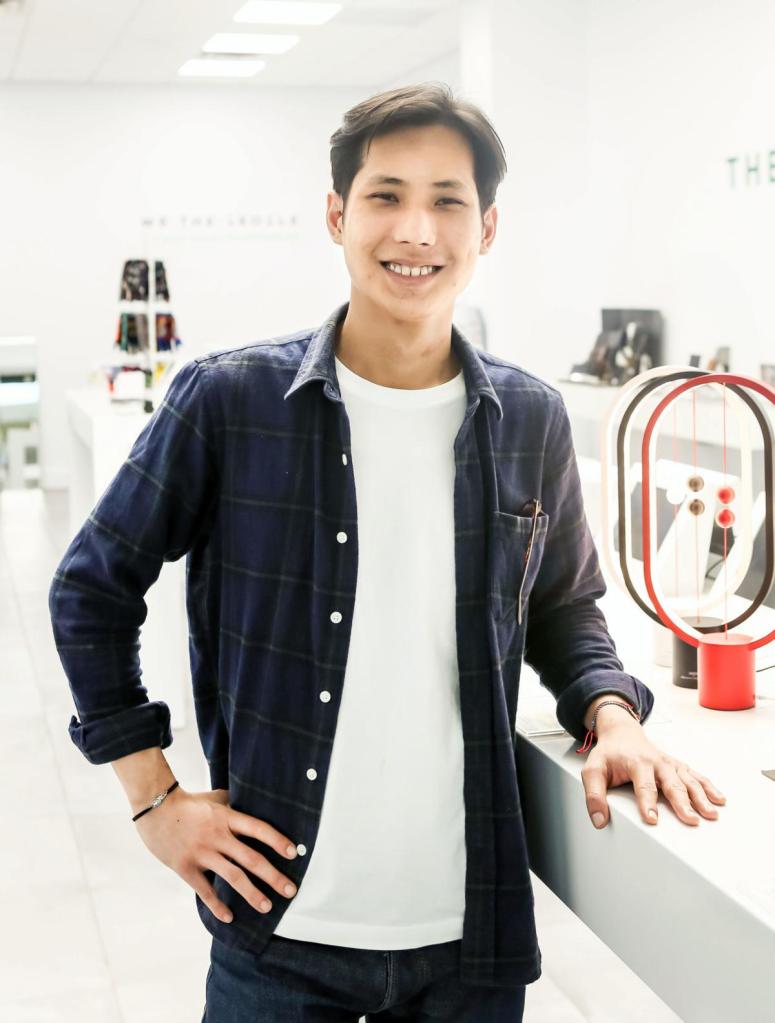 “We rented a booth and sold wallets on the streets of Singapore,” Sim recalls. “It was going pretty well. One day, I put out a little sign that said ‘funded with Kickstarter.’ Sales went up threefold.”
Realizing people were intrigued by crowdfunded products led Sim and a few fellow Singaporean creators to come up with the idea for a crowdfunding store. On doing some research, they found there was no such thing, but there was definitely a market for it.
“People look at these products for more than what they are,” Sim says. “They realize they have a story behind them.”
After a successful pop-up event at a busy shopping area in Singapore, We The People was officially born in 2016.
“We The People is all about ideas and how your ideas powered with crowdfunding can have their own life,” Sim says. “Crowdfunding doesn’t look at your background or how educated you are. It looks at the idea and the person behind it.”
Six months after Sim and his team opened their initial Singapore store, they started getting a lot of interest from the United States wanting to bring We The People stateside. Although it was a market they wanted to tap into, they remained focused on their efforts in Singapore until 2018, when they began franchising and looked into bringing We The People to the U.S. They could’ve looked into the country’s biggest cities like Los Angeles or New York City, but instead they opted for St. Louis.
“We picked St. Louis for two reasons: One, it’s right in the center of the country, and two, the talent pool is just as good if not better than on the coasts,” Sim says.
“A lot of people have been asking, ‘Why St. Louis?’ but I say, ‘Why not?’”
We The People first launched in a pop-up format on the lower level of Des Peres’ West County Center in late 2018 and moved to a permanent location upstairs shortly after. The store, which is a bright and clean-lined space, is set up to feel almost like a museum, but where products can be tried out and handled.
“The sales staff will tell you everything about everything in the store, including background on the product’s creator,” Sim says. “Most of the sales staff are creators themselves.”
We The People currently features products from all over the world, but Sim and his team were passionate about including metro area makers in the store. Visitors to We The People will find local products like the Flipstik, an adhesive patch that attaches to the back of a cellphone and can be stuck to any surface, and Skelosaurz, leather dinosaur puzzles that can be molded into a variety of shapes with water.
There’s something for everyone at We The People. Customers will also find everything from a slick bagel-shaped travel power strip (the store’s best-seller), to paper that uses static electricity to stick to any surface, to Sim’s own wallets. Visitors can also check out forthcoming products through a feature called “livefunding.” Creators set up a booth or send a prototype to We The People, and the sales staff will talk to customers for them.
Giving back to the communities that have helped make their dream a reality is important to the We The People team.
“We have a community going on here,” Sim says. “Everywhere we open a store, we work with local schools. We just hosted KIPP St. Louis [charter school] and had the whole entrepreneurship class come down. We talked about what we do and got them inspired and donated 10 percent of profits for one month to them.”
Sim says reception from the area community has been incredible since the store’s launch. In the few months the store’s been open, he says he and his team have seen several repeat customers, with many coming in as many as four times a month.
“Now big-scale education centers like schools are starting to launch crowdfunding courses,” Sim says. “We are also working in a few schools in Singapore to create courses. Crowdfunding is going to become mainstream. It’s going to be an alternative to business. I see it happening right in front of me.
“A lot of people have thanked us for bringing this here. It’s really turned out well for us. There’s a lot of loyalty.”
This story was originally published at laduenews.com. Read it on LN’s website here.
 Robyn Elizabeth Dexter