Ladue News Feature Stories

Hunting House History

St. Louisans pass by historic homes every day in St. Louis city and county, though they are rarely given a second glance. Yet these houses are full of rich history and colorful stories, many of them due to their former homeowners, buried underneath layers of wallpaper and tile. You might even live in a St. Louis house that’s more than 100 years old, but how much do you know about the time period when it was built, the people who lived in it or what purposes rooms previously served?

For Missouri History Museum associate archivist Dennis Northcott, helping people research their historic homes is more than just a hobby – it’s his job. It’s also something he’s overwhelmingly passionate about, which is evident when curious home researchers stop by the Missouri History Museum Library and Research Center on South Skinker Boulevard. Under its towering dome, St. Louisans can peruse hundreds of old publications, censuses, deeds, genealogy indexes, city directories, property plans, real estate ads and more to find out how their homes came to look the way they do now.

About 10 years ago, Northcott began taking bits of information that were indexed in the research center and inputting them into Microsoft Access. With a little IT help, Northcott was able to create an interface on the history museum’s website that, at first, was used to help genealogists search people by name.

“It’s an ongoing index of all this data we have in our collections,” Northcott says. “This includes neighborhood newsletters, employee magazines, scrapbooks, yearbooks…all kinds of stuff.”

He soon realized people wanted to search for their properties as well as names. Northcott created a house history research guide page on the museum library’s website, which is where he directs people initially.

From there, Northcott’s methods to help people find what they’re looking for vary by what information they have about their home. Oftentimes, the best place to start when arriving at the research center is to consult a city directory, a volume structured similarly to phone books and published annually. St. Louis City directories go back to 1821; St. Louis County directories go back to 1893.

“You can look up someone’s name, and it tells you what their occupation was and where they were living,” Northcott says. “Around 1930 or so, they started including a feature in the back where you could look up your community.”

After finding a community – for example, Clayton’s DeMun neighborhood – you can look up addresses in the neighborhood, house by house, to find out who lived there. Then, you can look up the name and possibly find out the residents’ occupation and other household members year by year.

After discovering names, the research center’s genealogy index can help with the next step: finding obituaries, photos and other scraps from the homeowners’ lives.

Northcott also notes the importance of maps in researching a house’s history and points to resources like fire-insurance maps. “Fire-insurance companies wanted to know how much to charge for fire insurance for commercial buildings and homes, so they published these maps showing the entire city,” he says. “They’re color-coded by building material: Pink means brick, yellow is frame and blue is stone. Sometimes people will use these and find out there used to be a frame porch or a garage out back that they saw the foundation for.”

Erin Sutherland, for example, was convinced the railing across the front of her Richmond Heights home wasn’t supposed to be there.

“As an art historian, it bothered me because it’s not right architecturally,” she says. “But before I went about changing anything, I had to make sure I was historically correct.”

Not wanting to compromise the historical integrity of her home, Sutherland used the research center’s resources to see what she could find. After entering her address on the website, she discovered a photo of her home from a 1931 Union Electric employee magazine showing the front of her house, and sure enough, she was correct – no railing. Now, she’s working to change it back to the way it was. She also found out a marshal was stabbed on the street in her neighborhood in 1922 because of bandits in the area at the time. Northcott isn’t surprised by what Sutherland discovered: “Researching your home can lead all over the place. It’s absolutely fascinating.”

Northcott and the research center staff are constantly indexing new vintage materials to help researchers find information about the past. Books including “Historical Home Research in the City of St. Louis” by Edna Campos Gravenhorst and “Who’s Been Sleeping in My Bed(room): Researching a St. Louis County, Missouri Home” by Kim Wolterman are available at the research center, as well. Recently, historic St. Louis newspapers have been digitized and rendered keyword-searchable; the St. Louis Post-Dispatch, for example, can be searched from 1874 to 1922.

Northcott says he has a “crazy obsession” with trying to identify every building image the research center has on file. He teaches a house history workshop twice a year and says attendees almost always want a historic photo of their home first and foremost.

“Our archives have thousands and thousands of historic St. Louis homes, but unfortunately, we don’t have photos of everything,” he says.

Emily Jaycox, the head librarian at the research center, has researched two of her St. Louis homes. Her former home, she says, had nice woodwork that had never been painted – she found out the first owner was a varnish salesman.

“The house I live in now was built in 1919 and has more closets than any place I’ve ever lived, which wasn’t common for a house of that era,” Jaycox says. “I did some research and found out the man who built the house was in the family business of custom tailoring. They made suits for the mayor, and it turned out to be a three-generation business. So that explains the closets.”

Although she never found a picture of her home, she gained a better understanding and appreciation for its eclectic history.

Northcott agrees. “I always say that if you interviewed a thousand people walking down the street and asked them if they wanted to do research at a library today, nobody would say yes,” he says. “But if you asked people if they want to see a picture of their house from 1930 or a document signed by their great-great-grandfather, every single person would think it was great.”

This story was originally published at laduenews.com. Read it on LN’s website here.

Ladue News Feature Stories

Q & A with John Irving

Novelist and screenwriter John Irving has published more than a dozen books – he is perhaps best known for his first novel, “The World According to Garp,” and a later novel (whose screenplay garnered him an Academy Award), “The Cider House Rules.” Irving will be in St. Louis at the St. Louis Speakers Series, presented by Maryville University, on Tue., Oct. 13. LN caught up with him in advance of his visit.

You’ve said many times before that you write your last sentence of your books first. Has it always been that way, since your first book in 1968?

It has always been that way, and I don’t imagine my process will change. It seems to work and seems to be the way I need to begin every story. I don’t feel confident to begin a novel until I know everything that will happen in it, most especially how it ends. Oftentimes, it’s more than the last sentence. Sometimes, it’s the last few paragraphs. It isn’t a religion for me, though. If in the process of writing a novel, I saw midway through there was a better last sentence, I wouldn’t hesitate to change it, and I hope I have the sense to recognize it. My novels are developed over years, not over a weekend.

Process-wise, how does working on a screenplay for a book like The Cider House Rules differ from working on a novel?

In the first place, I don’t usually see or imagine my novels as films. In many cases and most cases, even when asked, I’m not inclined to be part of an adaptation process if I don’t see myself that the film might be contained in that novel. However, I like writing screenplays. I’ve written original screenplays, and in the course of revising them and reworking them, they kind of naturally evolve into something bigger than a movie. I find writing screenplays a good way to find out if you want to write a novel. It’s a lot easier to develop a screenplay to a novel than to throw so much of it away. For example, the novel of “The Cider House Rules” takes place over 50 years. The film takes place over 18 months. The hardest part of that adaptation was losing those years, because that has a serious influence on what happens in the story and characters connected to the novel.

Lately, I like the (screenplay-writing) process if I’m thinking about an idea and wondering if it might be better as film. I’ll write it as a film because it’s easier.

I’m grateful for the experience I’ve had writing screenplays. I wrote an adaptation of my first novel, which was never made into a movie. I didn’t feel good about it at the time. It wasn’t a happy experience and I didn’t feel like repeating it right away. But the experience wasn’t wasted, because I learned how to do something.

Do you have a philosophy on life? If so, what character of yours best embodies it?

No, I don’t. I’m a fiction writer – I make things up. Real life doesn’t overwhelm me or impress me very much. To put it in perspective, when I see a film or book that’s advertised as “based on a true story,” I realize the story could be better if the writer with more imagination could’ve made it up. “Based on a true story” can only be as good as what happened.

Can you tell us a little bit about “Avenue of Mysteries,” out Nov. 3? Where did the idea for the book come from? What do you want people to take away from it?

“Avenue of Mysteries” is about a Mexican-American who lives the first 14 years of life in southern Mexico, then leaves at 14 and never goes back. The experience and what happens to him in his childhood is the most formative time in his life and we later follow him as an older man as a trip to the Philippines, 40 years after his time in Mexico. Nothing has ever been quite the same for him after his childhood. That trip triggers dreams of childhood. There are parallels, and the older man’s memory of what haunts him in the past is triggered by the trip. Simply put, it’s about a Mexican-American who takes a trip to the Philippines. [Irving laughs.] It’s about a guy whose experience up to age 14 is never matched.

The ideas for stories and characters in my books don’t really come from a single moment, so much as they emerge over time from thinking of a character in a certain situation and what life-changing or life-lasting effects the situations we encounter as children or adolescence can have on a person. That’s a fair description of all my novels. They’re founded on the premise that what happens to us or what can happen to us in those formative years cannot only make us who we become as adults, but in some instances, as we grow older, dominate even our older lives. The older we get, the more we live in our memories and in our dreams from the past. I’ve always put a considerable belief in the past, or in the foundations of the past and its effect on what becomes of us in our later and grown-up lives.

This story was originally published at laduenews.com. Read it on LN’s website here.
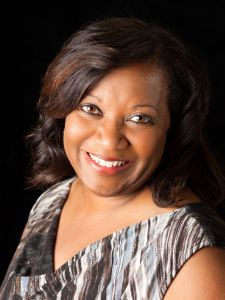
John Irving headshot

Ladue News Feature Stories

Sharing St. Louis’ Magic: Regional Arts Commission’s Felicia Shaw

St. Louis native Felicia Shaw called California home for almost four decades. While she considered it a great place to live, it wasn’t her hometown. Earlier this year, an opportunity arose that brought her back to her beloved St. Louis. As the Regional Arts Commission’s (RAC) new executive director, Shaw’s aim is to impact the local arts scene by propelling St. Louis to the next level.

Shaw’s background is in the arts, specifically arts administration. She worked for 12 years as a program manager for the City of San Diego Commission for Arts and Culture, and for the past seven years as the director of the arts program at the San Diego Foundation. That position was eliminated last year, and she found herself looking for a new direction, which brought her back to St. Louis.

Shaw says last year’s events in Ferguson further influenced her decision to move home. “I want to make a new imprint in the hearts and minds of people so we highlight what’s really working (in St. Louis) and what’s good here,” she says. “We can use arts as a tool to make St. Louis a safer and more vibrant place to live.”

Shaw has high praise for the local arts and culture community, and since assuming RAC’s executive director position in May, she’s been working to further expand St. Louis’ reputation as an artistically creative region. “As a city, we’re highly ranked for sports,” she says. “But when I think about the vibrancy of our arts culture, St. Louis should be ranked much higher in that area, too.”

St. Louis is an arts town, Shaw says, with a deeply ingrained and mature community of artists and art enthusiasts. “One of the things I missed the most when I was in San Diego was The Muny,” she says. “We tried to have a similar concept in San Diego, but it didn’t work out. St. Louis is special. The Muny provides magical nights under the stars all summer long.”

Shaw is proud to be leading RAC and looks forward to moving the organization and all of its branches forward. “The legacy of RAC is so strong,” she says. “This isn’t a turnaround situation, because (RAC) is already doing such a great job. I’m not here to fix anything – I’m here to take it to the next level.”

One of the first orders of business for Shaw as executive director was to dedicate time to go out and listen to citizens in the community. She and her team devised a series of dialogues in which they invited a handful of people to come and tell them about the trends and issues impacting the region. “We fund 250 organizations,” she says. “Obviously, we can’t sit down with all of them individually to hear their comments and concerns, but this was a good way to hear what’s going on.”

For Shaw, the current St. Louis art scene is exciting. “Artists themselves are evolving,” she explains. “They’re looking at their work as a small business.” This is good for St. Louis as it moves out of the recession and focuses on the entrepreneurial economy, she says, noting that here, artists can live more affordably, do cutting-edge work and position themselves as micro-enterprises.

“Artistic practice is changing,” Shaw says. “Artists aren’t going the traditional route. They’re busting out of their framework all together and taking their art to the streets.” She notes how the Ferguson unrest has changed art in St. Louis for the better. “Artists’ responses to Ferguson really helped people connect with their feelings,” she says. “They’re working in the traditional sense, but also working with social justice.”

Luckily, the people of St. Louis “really accept the arts as a part of their daily lives.” Shaw notes that in San Diego, things like going to the theater or visiting a gallery were generally done for a special occasion. Here, “it’s a way of life.”

The approach to the arts in St. Louis is democratic, Shaw says, because there is access for everyone. “People don’t realize that a lot of the things we have for free here cost a lot in other cities,” she says. “The investment was made many years ago that arts and culture are important to our wellbeing in St. Louis.”

Moving forward, Shaw sees her role as promoting and marketing the St. Louis arts culture in the best way RAC can. “There’s so much happening here,” she says. “I’m hoping we can reposition St. Louis as a world-class destination for the arts.”

This story was originally published at laduenews.com. Read it on LN’s website here.
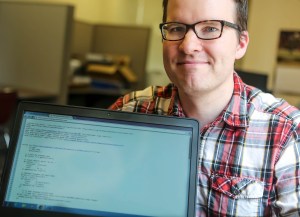
Felicia Shaw Headshot

Ladue News Feature Stories

The Future, By Design

As technology advances, so does the demand for skilled employees to keep up with how it’s changing. Enter Michael Palmer, founder of Code World Order and Code Red Education. Palmer, an educator who has taught kids of all ages from kindergarten through college, came up with the two programs to help bright young minds develop coding and computer programming skills and eventually land jobs in programming or information technology.

Palmer got his start in education teaching at a school in Cahokia, Illinois, where many students were falling behind and weren’t prepared for a college environment – but Palmer saw their promise and took action. “They were hard workers,” he says. “They wanted to get done with high school and start working to make life better for their families.”

When Palmer was laid off from his teaching job due to budget cuts, he found himself with a considerable amount of spare time – and he still he wanted to teach. In partnership with his wife, Ann, Palmer developed a curriculum for students across four levels of schooling – early elementary, late elementary, middle school and high school – that would give students skill sets in four areas, which Palmer refers to as S.T.E.M. (an acronym for science, technology, engineering and mathematics).

“We took over a computer lab and started teaching kids HTML and web design,” Palmer explains. “Many of them had never used a computer, but we had great success. These kids went from computer-illiterate to developers in three months.”

This was the beginning of Code Red Education, the Palmers’ computer language education program that introduces and trains students in computer science and digital literacy skills such as game design, web development and how to build mobile applications as well as the basic principles of engineering. The curriculum was sent to St. Louis area teachers, too, so they could teach it in their classrooms. “There’s stability in the S.T.E.M. market right now,” Palmer says. “Coupled with professional development and support, this prepares [students] for a high-demand, high-paying S.T.E.M. career.”

That’s the essence of Code Red Education. Code World Order, however, is a side project of Palmer’s, and is considered a sister project to Code Red. In a world where making connections is so important, Code World Order does just that. “These aren’t just high-school students we’ve trained – they’re adults with true technology skills.” Palmer says.

Code World Order joins highly skilled professionals with fast-moving start-ups. It’s a database of the region’s S.T.E.M. talent, providing a one-stop shop of sorts for both candidates and employers.

“As St. Louis tries to make a name for itself as a technology city, we need human capital to do that,” Palmer says. “It’s hard to draw people in. Our solution has been to grow and retain our own talent, which will eventually allow us to grow and sustain St. Louis.”

Palmer one day hopes to expand his programs to the Midwest and beyond, to cities like Chattanooga, Tennessee, that have been trying to rejuvenate their image through technology. Palmer’s programs have been largely well-received and have made positive impacts in the lives of many students and career professionals. “We get overwhelmingly positive feedback from teachers,” he says. “They see the value in it.”

Teachers who would’ve had to go back to school to learn how to teach these topics don’t need to with Palmer’s curriculum, he says. Code Red Education helps teachers expose students to a wide variety of computer science skills including software development, web design, and mobile app development. It’s something the teachers appreciate and embrace. “It’s a big time-saver for them.”

Palmer continues to work with all ages of students, from elementary kids at Reed Elementary, to St. Louis Public Schools to the patrons of St. Louis County Library. “We just try to get more and more kids interested in this,” he says. “Our high-school students have both the hard and soft skills they need for a work environment.”

Going forward, Palmer wants to take Code Red Education far and wide. “We’re mission-focused and want to go into cities that need us. We want to train great teachers and expand.” He wants Code World Order to be the go-to for start-ups and institutions, eventually expanding to serve big companies like Monsanto. “That way, we can all grow and prosper right here in St. Louis.”

All in all, it’s about giving students of all ages and backgrounds the skills they need to be successful in the real world, a world that is which is more demanding and fast-paced than ever before. “We show students the door, but they’re the ones who walk through it,” Palmer says.

This story was originally published at laduenews.com. Read it on LN’s website here.
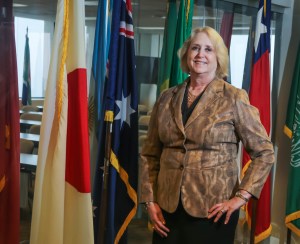
palmer02

Ladue News Feature Stories

Women in Action – Betsy Cohen

Betsy Cohen was always involved in the community and international interests. While working at Nestlé Purina, she was associated with a coalition that worked with people overseas, allowing her to develop a good sense of how to make things better for immigrants in St. Louis.

When the St. Louis Mosaic Project launched in 2012, Cohen was immediately intrigued. The initiative was looking for a director, and Cohen came on board in 2013. “The St. Louis Mosaic Project says we’re all part of a mosaic, regardless of our race,” she says. “You keep your own individual identity, but are part of something bigger.”

The St. Louis Mosaic Project is a response to an economic impact report that outlined St. Louis to be lagging in immigrant growth and the economic benefits of increasing its foreign-born population. It’s managed by the St. Louis Economic Development Partnership, World Trade Center St. Louis and a 22-member committee. The Project targets the immigrant community at many levels, including the civic level, the education level, and all levels of business.

After a long corporate career, Cohen found herself able to really devote her time and talent to making the region better. “Everyone has an immigrant story,” she says. “It’s important to remind American that we all have an immigrant story, and that’s how our country was built.”

Cohen cites The Woman’s Exchange as an example of helping people who help themselves. “Their mission is to help train women who are starting over,” she says. “These people have started a pathway to make life better for themselves and their children. This country offers those opportunities to make a new, better start.”

Through the Mosaic Project, Cohen says, lives are being positively influenced daily. “I meet great people, both native-born and foreign-born,” she notes. “People are always asking me what they can do to help – that’s so rewarding.”

The St. Louis region will see a population shift in coming years, Cohen explains. “We’re going to have more people of Latino and Asian background in the community, particularly in West County,” she says. “Our African-American and Caucasian populations are older, but the Latino and Asian populations are younger and growing. This is something we should be positive about because we want to be a growing region.”

The goal of the St. Louis Mosaic Project is to be the fastest-growing U.S. metropolitan area for immigration by 2020. It won’t be an easy one, with St. Louis ranking 19th out of the 20 largest metro areas in the country, with 4.6 percent of the population comprised of immigrants, according to U.S. Census data collected in 2011.

However, Cohen says the organization is on track to meet this goal, and just need to keep spreading the word about the Project and its programs.

Living in a more diversified community is good for all involved, according to Cohen. “We should embrace that we can be bigger and better. This is the future for our children and grandchildren.

This story was originally published at laduenews.com. Read it on LN’s website here.
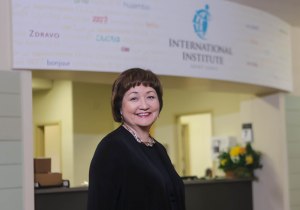
cohen02

Ladue News Feature Stories

Women in Action – Anna Crosslin

Last month, the White House’s World Refugee Day Champions of Change recognized Anna Crosslin, president and CEO of the International Institute of St. Louis, for her efforts in working with immigrants. Crosslin was among only 10 people in the country selected for the honor. “I was shocked, pleased and humbled,” she says. “I attended a ceremony at the White House, and got to serve on a panel about my perspective on refugees and what we can do better as a region and as a country.”

Crosslin isn’t a newcomer to the St. Louis immigrant community and the International Institute– she’s been the organization’s director for 37 years. “I’ve been drawn to this kind of work my whole life,” she explains. “I’m Japanese-American, and came to the United States when I was 2-and-a-half. I grew up with a foot in two cultural worlds: the world of my Japanese-immigrant mom and American-born father.”

In high school, Crosslin was president of her school’s chapter of American Field Service, a program that exchanged foreign-born high schoolers with members of the chapter school for a year. When Crosslin moved on to college, she majored in political science and Asian studies. She started at the International Institute in September 1978, and has been working to help the immigrant population in St. Louis ever since.

The Institute was quite different from what it is now when Crosslin started in the late 70s. Nine staff members worked in a Victorian mansion in the Central West End with a budget of $120,000. Now, it has a staff of 75, and a budget of $5.5 million.

Every day, Crosslin works with two populations: the newcomers (immigrants and refugees) and the St. Louis community at-large. “The newcomers integrate into the community very successfully, if provided the right opportunities,” she explains. “The community at-large benefits from a global perspective, living and working around people from many different cultures.”

Crosslin brings up a surprising and disheartening statistic: Missouri has one of the lowest issuance rates for passports. “(Missourians) don’t travel much around the world, aside from Mexico and Bermuda,” she notes. “When we want to compete in a global economic market, we cannot negotiate effectively. We’re at a disadvantage if we don’t develop that perspective.” Having more foreign-born people in the region brings a more global perspective to St. Louis and can help us take our rightful position on the global stage, she notes.

At the International Institute, Crosslin aims to help build and strengthen that bridge between newcomers and residents who have lived in St. Louis, for many years. The Institute serves about 7,500 immigrants and refugees from 80 different countries. Crosslin and her staff offer job training, counseling, and language and citizenship classes. She’s also the director of the Festival of Nations, which takes place every August in Tower Grove Park. Next month’s event is August 29 and 30.

“It’s very satisfying work,” Crosslin says. “I’ve been blessed in these 37 years. I have a spectacular staff and volunteer group that have really been able to implement the strategies defined for the Institute. It takes a village.”

This story was originally published at laduenews.com. Read it on LN’s website here.

crosslin02

Ladue News Feature Stories

A Walk Down Memory Lane with Ron Elz

Music can be a history lesson: A journey back in time, as well as the voice of a generation. No one knows this more than Ron Elz, who has been in radio since the 1950s and has spent most of his life in St. Louis.

Ron Elz? A few may not know that name. However, a name they’re more likely to recognize is Johnny Rabbitt, the radio moniker he’s been using since 1962.

Currently, Elz is the host of the classic oldies show, Route 66, which airs every Saturday night on KMOX. This year marks Elz’s 61st year in radio, though these days, he has his toes in a little bit of everything.

Elz is a member of the board of directors of the St. Louis Mercantile Library and Mercantile Art Museum, is co-founder of the Media Archive at the Missouri History Museum, and serves on the board of trustees for the Eugene Field House and Toy Museum. He’s also been inducted to the Rock and Roll Hall of Fame in Cleveland’s DJ section, and is in the St. Louis Radio Hall of Fame and St. Louis Media Hall of Fame. He’s a director of Mound City Publishing Consultants, which has several titles out currently, and has penned several books on St. Louis trivia.

“I’m doing two more memories and nostalgia books this year,” he says. “There’s also one coming out on a big St. Louis landmark that I can’t talk about yet.”

Bringing back music and memories of years past are important to Elz’s KMOX show, which he’s been hosting since 2008.

He does ‘themed’ shows and always is looking for new avenues to make it most interesting to the listener.

“For the Fourth of July, I did a combination of songs about summer, summer hits from the ‘60s, in addition to songs about America,” he says. “I played everything from Bruce Springsteen to the Steve Miller Band to Lee Greenwood.”

Elz is full of stories from his many years in the radio and music business, recalling memories of talking with magician Harry Blackstone, Jr., musician Gene Autry, actor Gregory Peck, singer Billy Joel and many more.

“Some of my personal favorites include interviewing Raymond Burr, star of Perry Mason. I let (my interviewees) talk about whatever they want, for the most part, and he told me about how he was raising black sheep in New Zealand,” Elz says, with a laugh.

The music he plays regularly on Route 66 is mostly from the late 1950s to the early 1970s.

“Oldies connect with people,” Elz explains. “Even if they don’t know what the song is called, they’ll hear the first few words or chords and have a memory tied to it.”

In between songs, he talks about things that used to be, like something from the St. Louis Globe-Democrat years ago or a nightclub that’s long gone.

“People are so interested in St. Louis’ history, even people who have moved here,” he notes.

Elz has a message for the younger generations – generations who may not know and love the oldies like those born during that time period.

“There are so many messages to be heard in this music. It can tell you what happened in the past… sort of a history lesson,” he notes. “The oldies are a portal to the past, a pleasant history lesson.”

This story was originally published at laduenews.com. Read it on LN’s website here.
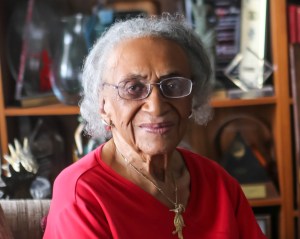
rabbit02

Ladue News Feature Stories

Elite Advocates – Frankie Muse Freeman

Frankie Muse Freeman will be 99 years old in November, but nothing gets in the way of her passion for civil rights and her efforts to end discrimination. A landmark attorney both locally and nationally, Freeman is the first woman to be appointed to the United States Commission on Civil Rights, and currently serves as a member of the Commission on Presidential Scholars.

Freeman decided to make civil rights her life’s work after growing up in then-segregated Danville, Virginia. “We had to accept the segregation, but we didn’t approve of it,” she says. “One of the things that had to be changed was the law.”

Freeman started at Hampton Institute, which her mother had attended, and decided then that she would become a lawyer. She was admitted to Howard University Law School in 1944, and received her degree in 1947, graduating second in her class. During that time, she met her husband, Shelby, who was from St. Louis, and they soon were married.

The couple moved to St. Louis in 1948, where Freeman wrote to several local law firms. After not hearing back from them, she decided to open her own private practice. She became the lead attorney in the 1954 landmark NAACP case against the St. Louis Housing Authority, which ended legal segregation of public housing.

In the 1960s, Freeman was nominated by President Johnson as a member of the U.S. Commission on Civil Rights, and, once approved, was reappointed by presidents Nixon, Ford and Carter. “President Johnson wasn’t the first one to consider me, though,” she says. “I was at the White House on November 17, 1963, and told I was being considered by President Kennedy; but he was assassinated the next week. I thought it was all over with.”

In March, Freeman heard from President Johnson. “He told me he had talked to the Urban League and the NAACP about me, but he didn’t tell them what position I was being considered for,” she says. “They would’ve given him the name of a man.” She ended up serving on the commission for 16 years.

Since then, “I’ve been busy, busy, busy for years,” she says. “I’m blessed because my family has always been so supportive.”

Freeman’s legal career in St. Louis spanned more than 60 years, full of “interesting work,” she says.

These days, Freeman lives in an apartment in the Central West End, and spends her time visiting with family and staying involved in the Urban League and the NAACP. She’s a trustee at her church, the Washington Tabernacle Missionary Baptist Church, where she has been a member since 1949.

Freeman’s accomplishments and honors are numerous, and include being inducted to the National Bar Association’s Hall of Fame, receiving the Springarn Medal from the NAACP, and being inducted to the Civil Rights Walk of Fame. Most recently, a star was installed in the St. Louis Walk of Fame in the Delmar Loop honoring her.

Despite all of these accolades, when you ask Freeman what her biggest accomplishment is, she’ll tell you something completely different. “My family,” she says. “I have been able to be a civil rights lawyer, a wife and a mother all at the same time. When my husband died in 1991, we had been married 52 years, and that was a blessing. I’ve accomplished some things, but not without the support of my family.”

President Obama appointed her to the Commission on Presidential Scholars earlier this year, and it’s kept her busy. In fact, she made the journey to Washington, D.C., to see the 141 presidential scholars be recognized earlier this week. “We met in Washington in April and we selected the scholars,” she says.

The overall theme in Freeman’s life seems to be “blessed,” a word that comes up time and time again in a conversation with her. “I worked with all kinds of groups if they were having a situation with discrimination based on either race, gender or anything else,” she says. “I did whatever I felt I had to do to make a difference.”

This story was originally published at laduenews.com. Read it on LN’s website here.
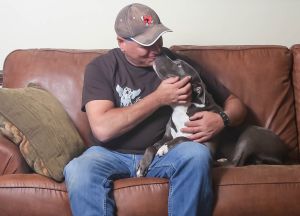
freeman01_crop

Ladue News Feature Stories

Stray Rescue of St. Louis

The streets of any city can be treacherous for our four-legged friends if they don’t have anyone to look after them. Luckily, many once-homeless pooches have found a friend, hero and rescuer in Randy Grim, founder of Stray Rescue of St. Louis. Grim has built a phenomenal network of animal lovers who are dedicated to making St. Louis a more compassionate city through Stray Rescue.

One of these efforts is an event called Urban Wanderers – Faces of Survival, which features artwork from more than 60 artists from all over the country. “They take one of our rescue dogs, and whatever their medium is as an artist, they turn the image of the dog into art,” Grim says. “There’s so much excitement around it.”

Faces of Survival is a six-week show at Gallery 400 Event Space at 400 Washington Avenue. At the end of the six-week run, the art is auctioned off, and all proceeds go directly to helping St. Louis’ four-legged friends. This year’s event runs from July 10 to Aug. 2, and begins and ends with a party.

Shep, Stray Rescue’s 2014 miracle dog, who is featured in this year’s show, has overcome being shot in the back, being paralyzed and sodomized. “Shep is a true inspiration,” Grim says. “Even when the vet said to put him down, I wanted to give him a chance. Now, he can run and has been adopted.”

Grim says Stray Rescue of St. Louis is truly unique because “we’re really in the trenches. We don’t put dogs down just because they were shot, burned or mutilated,” he says. “We heal the dog – mind, body and soul.”

Grim works daily with police, city employees and Mayor Slay’s Animal Cruelty Task Force. “We’re working in the toughest parts of the city, but we’re able to save more than 3,000 dogs a year,” he says. Grim sees cases of unspeakable cruelty, but also success stories, full of hope.

One such dog is Diseno, who has been undergoing intensive care. “When we got the call, she had been lying there for four days screaming and nobody did anything,” Grim says. “It bothered me so much that nobody cared. She was close to death and had a bullet that had gone under her eye and landed in her spine.” Grim was relieved when a surgeon was able to remove the bullet. Now, Diseno is making great progress with walking already. He also notes that they are close to solving the abuse case and hopes someone has to answer for what they did to Diseno. “I have a feeling she might be our ‘spokesdog’ next year,” he says. “She loves all people and has an incredible ability to forgive, as dogs do.”

While most shelters just put their dogs down, Grim and his staff are able to give their furry friends a second chance. “These dogs are often stigmatized because they’re ‘secondhand’ or ‘street dogs,’” he says. “But we’re able to give them a real bed, food and love.”

Stray Rescue’s volunteer base is strong, but they have approximately 300 to 500 dogs and cats on any given day. “We’re out in the community and spay and neuter as many animals as we can,” Grim says. “The community knows and respects us, and we’ve been able to solve many cases that way.”

Years ago, Grim says it was a challenge to get anyone in the community to divulge information about animal abuse cases, but as the program has become more recognized, they’ve been able to prosecute felony animal-abuse cases with prison time. “We do this all out of love for the animals,” he says. “I always say that if we all took after our dogs’ ability to forgive, we would be such better human beings.”

 This story was originally published at laduenews.com. Read it on LN’s website here.
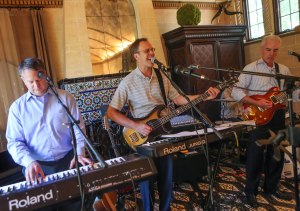
55707608a9ee3.image

Ladue News Feature Stories

Flaming Pie jams for a good cause

Faint traces of Paul McCartney’s Maybe I’m Amazed drift out of Branko Marusic’s home in Clayton. But it’s not somebody playing an old record from the 1970s – it’s a practice session for the band Flaming Pie.

Flaming Pie, a Beatles and British Invasion cover band made up of three local attorneys and a financial adviser, somehow manage to find time in their busy lives to get together and do something they all enjoy: playing music.

The group includes attorney/CPA Marusic on drums and vocals; attorney Mark Boatman on lead guitar, bass and vocals; attorney Paul Puricelli on guitar, keyboard and vocals, and Moneta Group principal Tim Halls on keyboards, bass and vocals. They also are accompanied by Ann-Marie Brown’s vocals for some songs.

So how does a group of professionals end up as a Beatles cover band? Marusic and Boatman went to middle school together, and Marusic met Puricelli in law school. “We started this in (Halls’) basement a long time ago, and his daughter was our drummer. But she made fun of my singing, so we kicked her out of the band,” Puricelli says jokingly.

Marusic says Boatman, who had toured with Head East and played in front of 50,000 people, was going deaf, so the band took a break. “It was just too much noise, but (Puricelli) said he knew a guy who played electronic drum set – me,” Marusic says. “We all had chemistry, and certainly enjoyed playing the same kind of music.”

After some time, though, the band tired of playing the same Beatles songs over and over, and expanded to British Invasion to include the Rolling Stones, The Who, Zombies, The Hollies and other ‘invaders’ from the 1960s and 70s. “We wanted to stay within a niche and keep that identity,” Marusic explains.

A few years ago, Flaming Pie played at Innsbrook Institute’s Summer Music Academy and Festival, where St. Louis Symphony’s David Halen is the artistic director. “He got wind of us through the director of Innsbrook at the time, and had always wanted to do this combination of symphony classical music with the Beatles,” Marusic says. The thought behind it was that the Beatles “pinched” a lot of their music from classical songs, Marusic explains, so the idea would be to play Beatles songs, along with the classical piece that inspired them.

Flaming Pie played five different performances at The Sheldon Concert Hall with symphony members a year and a half ago. “After that, we wondered ‘where do we go from here?’” Marusic says. “It doesn’t get any better than playing with people that talented.” Boatman noted that playing with symphony members was “10 times cooler” than playing a stadium show. “These are world-class musicians, and we’re just trying to keep up,” he says with a laugh.

The combination of classical and rock elements was extremely well-received, the band members noted. “The way it fits together is just very cool,” Marusic says.

Right now, Flaming Pie members are practicing for a show that’s near and dear to them: Kids Rock Cancer’s ‘All You Need Is Love’ benefit concert. “Both (Halls) and I are on the advisory board for Kids Rock Cancer, and they asked us to do their big fundraiser about four years ago,” Marusic says.

Marusic tells the story of how they always try to have a few kids from the organization join them on stage, and notes one in particular: 20-year-old Brooke Nickelson, whose passion and music talent inspired Flaming Pie. “He played with us, and we were his back-up band,” he recalls. About five months ago, Flaming Pie was asked if they wanted to reunite to do a show at The Sheldon, but they didn’t move forward with it. Shortly afterwards, the band got the news that Nickelson, who had been one of the pioneers with Kids Rock Cancer, had passed away. “That was all we needed,” Boatman says. “We knew we had to do this show.” The concert takes place at The Sheldon on Thursday, May 21. Marusic says both the band and Kids Rock Cancer are “pulling out all the stops” for this big fundraiser, which is affiliated with Maryville University’s music therapy program.

The band is special to the members because of the camaraderie. “We’re all friends anyway, but we share something that’s special to us and unique to the four of us,” Boatman says. “It’s fun to share it with others.” They thought they were getting back together just for this one show at The Sheldon, but they’ve booked other shows this summer, too. To learn more about the band, visit flamingpie4u.com. To learn more about the Kids Rock Cancer show, visit kidsrockcancer.org.

This story was originally published at laduenews.com. Read it on LN’s website here.

flamingpie01