Happily Ever After Stories

Happily Ever After: Andy and the Delmar Gardens of Chesterfield Family

Once upon a time, Andy the shepherd mix lived in the U.S. Virgin Islands’ St. Thomas as an emotional support dog. When multiple hurricanes hit the Virgin Islands in the latter part of 2017, her owner could no longer care for the pup. Andy was picked up by Love for Love City, a rescue organization founded by country music star Kenny Chesney to help rescue pets lost or abandoned in Hurricane Irma. Andy came to the contiguous United States by plane and ended up in a place where her emotional support skills could be put to use: Delmar Gardens of Chesterfield.

Delmar Gardens of Chesterfield started fostering puppies three years ago. The program was met with enthusiasm from the residents, and the community cared for 10 sets of puppies until they were adopted out. Stray Rescue of St. Louis approached the senior community about fostering older dogs, and the Delmar Gardens activity director, Jenni Ferguson, welcomed the idea.

 Four-year-old Andy came to Delmar Gardens around three months ago, and the center’s staff knew right away she was a perfect fit for the residents.

“She was here probably only four hours until we knew we wanted to keep her,” Ferguson says. “It was an instant connection with everyone.”

Andy spends most of her time in Delmar Gardens’ specialized care unit, where she bonds with residents who have Alzheimer’s, dementia and other memory impairments.

Katie Claus, a music therapist in the specialized care unit, says the residents love to take care of Andy as if she’s their dog.

“From the first moment we brought her in, she strutted around the whole building with her tail wagging and was comfortable being there,” Claus says. “She’s bonded with all of the residents in the specialized care unit, and there are three in particular that she’ll curl up next to. The residents’ faces light up when they see her. She’s so good with them.”

The residents love to feed Andy. Ferguson even cites one resident who will try to hide food for Andy in her walker.

“Andy will go up to the residents and put her head under their hand,” Ferguson says. “When she wants attention, she’ll put her paw on their leg. It creates a more homelike environment for the residents because they feel like they’re taking care of her.”

While talking to a resident one day about Andy, Claus says they summed the dog’s life at Delmar Gardens perfectly: “Andy’s a big kid that belongs to everyone here.”

Although Andy goes on walks throughout the whole Delmar Gardens complex, she always makes her way back toward the specialized care unit. Ferguson says she “wants to get back to her people.”

“It’s like she was meant to walk in our doors,” Ferguson says. “She’s like an angel dog.”

This story was originally published at laduenews.com. Read it on LN’s website here.
Ladue News Feature Stories

Remediation With a Leash

Dogs have a unique ability to comfort and heal in a way that most other animals can’t.

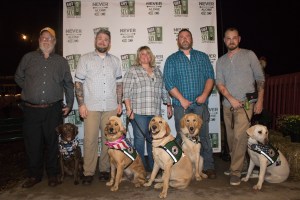
Nicole Lanahan knows this. She’s been a dog trainer for 20 years and seen firsthand the effect four-legged friends can have on the people around them. For the last two decades, Lanahan has trained service dogs, police dogs and military dogs alike – but in the last five years, began receiving inquiries about post-traumatic stress disorder (PTSD) service dogs specifically.

“I was doing my best to refer them to other local organizations, but I’d hear back from [the caller] saying there was a five-year waiting list or [the organization] wanted to charge $20,000,” Lanahan recalls.

Lanahan’s final straw fell when a veteran called her crying, asking why Lanahan couldn’t help her.

“The next day, I went to my accountant and filed a 501(c)(3),” she says.

Thus, Got Your Six Support Dogs was born. Lanahan took a two-week workshop from This Able Veteran in Carbondale, Illinois. She was greatly “impressed and in awe” of its program and knew it was what she wanted to model Got Your Six after. (Incidentally, the name Got Your Six gives a nod to the military: It’s a phrase that was first used among fighter pilots in World War II. When airborne, they talked about where they were in relation to the hands of an analog clock, so “got your six” means “got your back.”)

Got Your Six’s mission is to provide specialized service dogs to veterans and first responders suffering from PTSD and/or sexual trauma. With roughly 22 veterans nationwide committing suicide every day, according to a 2013 study by the United States Department of Veterans Affairs, organizations like Got Your Six can help veterans relearn the basic human feelings they might have had to suppress in their time of service.

The nonprofit started with just Lanahan and a few volunteers and now has more than 100 volunteers. They currently place six dogs with veterans per year, with preference to local applicants – last year was 50 percent local, 50 percent elsewhere – and with a long-term goal to double that number to two classes of six dogs per year. Since its inception in 2015, Got Your Six has been able to place approximately 20 dogs with veterans and first responders.

To be considered for a support dog through Got Your Six, interested and eligible individuals are asked to fill out an extensive application that allows the group to get to know a given candidate. On the other end of the program, the organization’s dogs are trained for an entire year leading up to a possible pairing.

“We know a [support dog] alone isn’t going to cure someone from PTSD,” Lanahan says. “They’re getting a whole toolbox to combat PTSD, not just a dog.”

Over a 10-day period, dogs are matched with individual applicants. The veterans attend a daily trauma resiliency/suicide prevention course during this 10-day period, led by a licensed therapist.

Pairing a candidate with a dog is a case-by-case matchmaking process. Lanahan says if an applicant is antisocial, he or she will be paired with an outgoing dog. If someone is considered rough around the edges, he or she will be paired with a more affectionate dog. If someone is fearful, he or she will be paired with a more confident dog.
“Opposites really do attract in this case,” Lanahan says.

Got Your Six mainly uses Labradors and golden retrievers as support dogs. The organization primarily works with breeders who have a history of breeding service dogs, but occasionally will work with and train rescue retrievers, too.

The group’s dogs are trained to help break down the barriers the veterans and first responders might have built over time. They have learned to perform medical tasks, awaken their owners during night terrors, do compression therapy, retrieve items like cellphones and remain alert to anxiety. Their training is tailored to their individual owners’ needs, so a dog will learn what the beginning of a particular person’s anxiety looks like to help recognize and de-escalate it.

This extensive training comes at a price, though. Each dog costs the organization approximately $20,000 to train, and Got Your Six relies on fundraisers, donations and grants to cover these hefty costs. One such fundraiser is its upcoming trivia night on Feb. 24. Although it’s sold out, Lanahan says the organization is always looking for silent auction items and donations to help cover the cost of providing dogs to veterans and first responders free of charge.

The 2018 pairing program will take place July 29 through Aug. 7, and applications must be received by June 15.

This story was originally published at laduenews.com. Read it on LN’s website here.

Ladue News Feature Stories

Helping the Community Rise

For more than 20 years, Rise has worked to revitalize communities and neighborhoods across the St. Louis region, partnering with nonprofits, financial institutions and government entities to bring change.

Since its creation in 1989, the organization has helped develop more than 5,000 homes and 100,000 square feet of commercial space, helping communities as a consultant, lender and community developer. With a comprehensive approach that envelopes all stages of neighborhood development, Rise can help breathe life back into areas of the city that have seen disinvestment (defined as “a diminution or expenditure of capital investment, as in the failure to replenish inventories or in the sale of a capital item”).

Stephen Acree, the organization’s executive director and president, has been with Rise since 1999 and has worked in community development for more than 30 years. He says seeing a community rejuvenated, as well as knowing Rise played a part in that rejuvenation, is rewarding.

“We tend to work in parts of the region that have seen disinvestment and need some help to come back,” he says. “We do a substantial amount of real estate development. We’ll work with a neighborhood and an organization to help them do organizational planning and community neighborhood planning.”

From there, Rise might be a first-end developer. If an area has been suffering from disinvestment and isn’t seen as profitable, Rise often takes the first step to do development in the area.

“The notion is to catalyze [the area] so other investment will follow,” Acree says.

Rise started working on development on a small scale, partnering with neighborhood organizations to do a few buildings at a time. They would provide investment in an early phase of development, leading to an “extremely active and very effective” predevelopment loan fund.

“[The fund] provided a source of financing early on that organizations could use to get their project to a bank for financing,” Acree says.

He uses St. Louis’ Forest Park South East neighborhood as an example. Rise started working in the area in the early 2000s to “prime the pump.” There was neighborhood planning in the area, but a lot of nuisance behavior and crime was emanating from the poorly managed rental properties there.

“It was a bad time for that neighborhood,” Acree recalls.

Rise put together a package and bought 36 of the buildings in a three- by four-block area. The organization did historic rehabilitation, put the buildings under professional property management and converted 12 of them to single-family homes.

“That was very intentionally designed to be a substantial enough intervention to try to catalyze additional investment,” Acree says. “That’s been more of our model since: to try to do things that are a little more impactful.”

Rehabilitation of entire neighborhoods takes a lot of work. Residents want to keep the historic context of their neighborhood intact. They don’t want to see demolition, Acree says. These properties are often scattered throughout an area, making them a challenge for a typical developer.

That’s why we have a place in fulfilling that role,” Acree says. “One of the difficulties we have in the work that we do is that these [projects] don’t happen in short time frames. These are projects that can take three or four years to get going, and the life cycle of turning around a neighborhood can be a decade-long process,” Acree says.

Rise partners with community development nonprofits all over the St. Louis area, providing them with the financial backing and expertise they need to make an impact on their neighborhood.

In 2018, Rise is working toward closing on a historic rehabilitation development in St. Louis’ Dutchtown neighborhood. The project includes 46 apartments and an area of Chippewa Street’s former commercial district that will feature a restaurant incubator and space for retailers and services.

Rise also found an opportunity to work with St. Louis’ youth while doing planning for the Gravois/Jefferson area. The team discovered a surge of interest from young people in the community, wanting to be involved in their evolving environs.

“We made a big effort to do youth engagement there and found that a lot of the youth population would like to be involved in the change they want to see in their community, but they didn’t know how to be connected,” Acree says. “We’re entering into a partnership with the St. Louis Internship Program to have a youth-employment program that’s focused on planning and community development.”

Over the years, Rise has built a reputation as a professional organization that’s committed to its mission, backed by a team of people who are a part of that team because “this is truly what they want to do,” according to Acree.

“We’ve built and sustained a reputation as being an organization that gets things done,” he says. “I get to run an organization where people want to come to work and really believe in the work we do.”

This story was originally published at laduenews.com. Read it on LN’s website here.

Ladue News Feature Stories

Beary Tasty

On Nov. 14, a colorful new storefront made its debut in Des Peres’ West County Center: Build-A-Bear Bakeshop.

Inspired by the company’s deep-rooted make-your-own concept, the bakeshop brings a new approach that goes beyond creating a plush pal. At the first-ever Build-A-Bear Bakeshop, customers of all ages can decorate their own cupcakes, provided by locally owned sweet treat company Sarah’s Cake Shop.

According to chief operating officer Chris Hurt, Build-A-Bear actually introduced a food concept in the early 2000s – the Eat with Your Bear Hands single-location restaurant was launched in 2005 to complement the in-store experience at the Fifth Avenue store in New York City. The restaurant closed in 2007, but the company’s 20th birthday was the perfect excuse to bring back a sweet element of the concept in a smaller format with Build-A-Bear Bakeshop. By chance, a space became available on West County Center’s first floor, just a few storefronts down from the mall’s Build-A-Bear Workshop.

“We couldn’t have asked for a better time to open a concept like this,” Louis Wachter, the chief bakeshop manager, says, eyeing the busy mall around him. “The traffic has been unreal, and [the storefront] is so bright compared to those around it. Your eyes just go right to it.”

Patrons to West County Center can enjoy a variety of sweet treats including cupcakes, cake pops, cookies, cakes, macarons and more. Individual treats start at $2, and a 6-inch cake is $17.50. Customers can choose from already-iced cakes and treats or choose to decorate their own cupcakes with frosting, icing pens and sprinkles. The store also has a deal where customers can get two cupcakes and a drink – choosing from juice, milk, coffee or water – for $9, which Wachter says has been “hugely popular.” In addition to walk-in items, customers can also schedule a party at the bakeshop, where a “party host” will lead the group through decorating their cupcakes in a reserved place for games and activities. In the deluxe decorator package, each guest will receive a child-size apron and a character appearance in addition to the components of the basic decorator package.

Paired with their bakeshop goody, customers can also choose from a selection of milk from Kansas City’s famed Shatto Milk Company that include chocolate, strawberry, cotton candy and root beer flavors.

“We heard Shatto Milk was a big deal, so we gave them a call,” Wachter says. “They agreed to partner with us, and it marked their first venture out of the Kansas City area.”

When the bakeshop first opened, there was a line out the door just for the milk. Wachter recalls people leaving with multiple bottles of the cotton candy milk. “It’s been crazy,” he says.

Aside from branching out a bit to the other side of Missouri, working with local and regional companies has also been important to Build-A-Bear in bringing the bakeshop to life. Right out of the gate, the shop teamed with Sarah’s Cake Shop, whose team brings baked goods to the store three days a week. The bakeshop also carries St. Louis-based Dubuque Coffee and a variety of merchandise items themed around the bakeshop like mugs, thermoses and water bottles.

For now, the West County Center location of the bakeshop is the original and only store open for the Build-A-Bear brand.

“The Build-A-Bear name has been helpful to the success and the aesthetic so far,” Wachter says. “But it’s different from what people are used to.”

Though the bakeshop isn’t physically connected to the mall’s Build-A-Bear Workshop, Wachter has observed a notable stream of traffic to the bakeshop seems to come from customers who have previously been at the store creating furry friends.

“People know we’re here and are figuring time at the bakeshop into their winter plans,” he says.

Wachter recalls the “warm, fuzzy feeling” he had when he first started working in the workshop and is always seeking to provide that for countless customers to the bakeshop. He wants the bakeshop to be a place of fun, memories – and lots of sprinkles.

“A lot of kids spend the holidays baking with mom or grandma, but they [might] only see grandma a few times a year,” Wachter says. “If they come in here and decorate, they’ll have that moment and that memory, and Build-A-Bear can be part of that experience. Kids love the creative side, and we’ll handle the mess.”

This story was originally published at laduenews.com. Read it on LN’s website here.

Ladue News Feature Stories

Fore the Fiercely Feminine

Kim Tuttle, Kari Schindehette and Jacque Bardgett love everything about golf – almost.

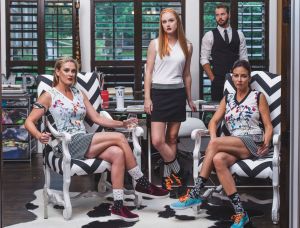
Sisters Tuttle and Schindehette and Tuttle’s stepdaughter, Bardgett, found themselves frustrated with women’s golf clothing every time they hit the links. They disliked the shapeless shirts and boring skorts that dominate the market. They wanted something more for their golf attire – something fresh, fierce and feminine.

“The clothes are just always lacking,” Tuttle says. “They never had any style.”

Frustration turned into brainstorming, which turned into the formation of a plan. “We decided this was something we wanted to pursue,” Tuttle says.

The sisters note that now is a great time to pursue this mission for better women’s golf clothing, citing a big push in the golf industry for more women golfers. Although many companies are manufacturing women’s golf clothing, Schindehette says it all looks the same. They wanted to create a line both edgy and modern that women would want to wear both on and off the course.

And so, Motherputter was born.

The three local women worked with a public relations company to come up with names, and as soon as they saw “Motherputter,” they knew “that was it.”

“It has a bit of a rebel vibe,” Schindehette says. “It sounds kind of crazy, but once we got the branding figured out, everything gelled around that.”

Tuttle’s background is in fashion merchandising, and she says working with Motherputter truly takes her back to her roots.

“It’s not just another line of golf clothes,” she says. “We have this vision to create a community for women golfers. We want to bring them together to grow, teach and learn.”

Schindehette says golf has always historically been a men’s sport, but adds that trends show women spending more at pro shops. They hope to get their brand into retail shops, pro shops and specialty stores. Luckily, with a snappy name like Motherputter, Schindehette says that “everybody wants to be part of it.”

They officially launched Motherputter in November 2017 at the Ladies’ Fall Boutique at Meadowbrook Country Club in Ballwin and have continued online sales since. On Jan. 8, they launched the line at Naples Grande Golf Club in Naples, Florida.

The inaugural line from Motherputter consists of funky sleeveless tops, a reversible zip-up vest, a Motherputter signature polo, skorts, shorts and dresses. The trendy golf apparel is all made in the United States and is made of performance-quality fabrics that breathe and move with a body in motion.

“One of the first things we designed was our Sweetwater dress,” Tuttle says. “Golf dresses are a fairly new concept, and we’ve done a different take on it.”

With a dropped waistline, edgy stripe in the back, checked design on the front and a floral top, the Sweetwater dress has been one of the company’s best-sellers since online sales opened. Another best-seller is the Motherputter signature polo; the black polo features a white collar, big-hole mesh sleeves and branded elastic, along with a branded zipper pull.

“We’re trying to break the trends from the old, stodgy men’s styles,” Schindehette says.

Tuttle notes that Motherputter is more than just clothes – it’s an attitude. The clothing pieces are designed with all ages in mind, working to bolster that sense of inclusivity and community the team is going for.

Going forward, the Motherputter team is working hard on its online and social media presence. With goals to grow the community and bring women together in femininity and individuality, the ladies of Motherputter have their sights set high.

“Our mission is to empower women,” Schindehette says. “Golf is such a mentally tough game, but it’s all about confidence. If you look good and feel good, your game is better.”

This story was originally published at laduenews.com. Read it on LN’s website here.

Happily Ever After Stories

Happily Ever After: Ivy, Ginger and the Ford Family

Once upon a time, Gail Ford had a soft spot for golden retrievers, adopting four of the much-loved breed over the years.

When her fourth golden, Sassy, passed away, Ford was heartbroken. She had gotten Sassy from Love a Golden Rescue, a regional group of volunteers that rescues golden retrievers and golden retriever mixes in central and eastern Missouri and central and southern Illinois. Ford called her friend Jan Knoche, the organization’s president, to let her know she was interested in adopting another dog when her grief over Sassy subsided.

As an avid reader of Love a Golden Rescue’s newsletter, Ford’s heart ached when she saw the group had rescued three 8-year-old sisters.

“I knew I had to have one,” she says. “I want [senior dogs] to have unconditional love and dignity in their last years.”

Ford adopted Ivy in December 2016 and immediately began working with her, since the dog had suffered emotional and mental turmoil over the years.

“Within four days, she was riding in the car and walking with us,” Ford says.

Months went by and Ivy’s sisters were adopted, too. At least, so Ford thought. Ford received another newsletter that said one of the sisters had been surrendered to the rescue after the dog didn’t get along with the homeowner’s cats. Ford knew she had to bring Ivy’s sister Ginger home, and she did just that in July 2017.

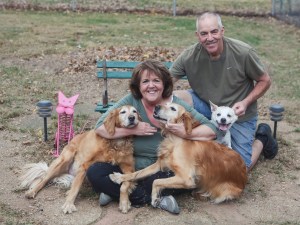
The two are “so bonded” and get along with the Ford dog, a terrier mix named Pokey. Pokey has been a guide for the goldens Ford brought home, teaching them how to be a dog again.

“These dogs couldn’t even go up or down steps,” Ford says. “Now they roll in the grass, love ice cubes and are joined at the hip.”

Visitors and family friends often can’t tell Ivy and Ginger apart since they both look incredibly similar and like the same things. Though they’re two peas in a pod, Ivy and Ginger each have their own quirks. Ivy’s laid-back, and Ginger is an enthusiastic eater who recently consumed a pair of Ford’s glasses and just caught her first squirrel. Ginger will lay on top of Ivy while she’s sleeping, and all three dogs are always touching when they’re napping.

Senior dogs and cats are often deemed unadoptable because of their age, but Ford’s opinion couldn’t be further from that. As the mom of three senior dogs, Ford knows the joy they can bring into their owners’ lives.

“If you give them a chance, they’ll give you so much trust,” she says. “They’re the loves of our life.”

This story was originally published at laduenews.com. Read it on LN’s website here.

Ladue News Feature Stories

Bringing Sunshine and Joy

It was summer 2014, and David Fissell’s wife, Gloria, had been in and out of more than one nursing home. A few weeks before she passed away, she had a talk with her husband of 30-plus years about what his life would be like after her passing.

“She asked me, ‘What are you going to do after I pass away, sweetie?’” he says. “She said, ‘Do you know how many people here tell me how lucky I am to have you?’”

When Gloria Fissell was in the nursing homes, David Fissell hardly ever left her side, staying from breakfast until after supper and helping other residents while she napped. In fact, he was voted employee of the month twice because of his caring efforts and assistance. Gloria Fissell had noticed that many nursing home residents rarely or never had visitors and wanted her husband to do something for those in need after she was gone.

Gloria Fissell died at 80 years old on July 26, 2014. She left her husband a $1,000 stash in their home that he was to use to improve the lives of area nursing home residents.

“I started out trying to help [people on] Medicaid, especially those who didn’t have families,” he says. “After several trips to nursing homes, I found that even residents with traditional insurance or living family members usually had it just as bad.”

Fissell started off helping out at Mount Carmel Senior Living in St. Charles and got involved with bingo, something he says brings real joy to the facility’s residents. They call him “the bingo man.”

“Most people don’t want their relatives or loved ones to go into a nursing home,” Lisa Owen, executive director of the David & Gloria Fissell Foundation, says. “Individuals also don’t want to think about nursing homes, in general, and what may go on there because we’ve all heard stories or seen news reports. It’s challenging for the foundation to find volunteers willing to go into facilities because of the fear and stigma attached to such places. For many individuals, folks in nursing homes are kind of ‘out of sight, out of mind’ – people don’t want to think about it.”

Fissell made the decision in 2016 to start the David & Gloria Fissell Foundation, a nonprofit organization headquartered in St. Charles. The foundation currently serves five St. Charles County nursing homes and assisted living facilities, encompassing more than 500 residents and welcomes volunteers to bake treats, read to residents and play games with the elderly.

The foundation’s goal is to “put smiles on faces every day” and improve the lives of the residents at these facilities by providing items that bring joy and comfort, such as handmade fleece blankets, baked goods, snacks and treats, crossword and word-search puzzle books, and cards, gifts and decorations for holidays and special occasions, such as birthdays, resident appreciation days and ice cream socials. Just weeks ago, residents at the O’Fallon Mount Carmel Senior Living facility celebrated the season at a party that included gifts, carolers, festive décor and holiday candy.

Fissell now plays bingo every day of the week across four different facilities, which costs the foundation between $450 and $550 a month.

Owen explains that bingo is “really meaningful” for the residents. “The games are a wonderful opportunity for seniors to get out of their rooms, make friends, socialize with other folks and engage in a purposeful activity,” she says. “This helps them get a little exercise, use fine motor skills and keep their brains sharp. In addition, residents know that Dave and the foundation he represents truly care and are looking out for them.

“One item that’s extremely special to our residents are the blankets we make and distribute. You can’t imagine how much comfort our warm, soft and cuddly homemade fleece tie blankets bring to lonely seniors and disabled folks in the care centers and rehab facilities we serve!”

Fissell says Gloria is his guardian angel and continues to watch over him as he works tirelessly to bring some joy to the lives of area nursing home residents.

“We were married over 30 years,” he recalls fondly. “I was her third husband, and she was my fourth wife, but we were together longer than all the other ones added up. She was my soulmate.”

This story was originally published at laduenews.com. Read it on LN’s website here.

Ladue News Feature Stories

Telling St. Louis Stories

Jim Kirchherr didn’t always want to work in media. In fact, when he was at the University of Illinois Urbana-Champaign, he was studying history with plans to be a social studies teacher. But the now-senior director of content at Nine Network made a “spur of the moment” decision to switch to broadcast. “It was never something I was dreaming about,” he says. “I’ve just always been good with words.”

His way with words didn’t lead him astray. Kirchherr went on to have a successful career in media, including 27 years with St. Louis’ Nine Network. At the end of November, Kirchherr learned he would be inducted into the 2018 class of the Media Hall of Fame for his work with the local public television station on countless broadcasts, digital content, documentaries, public affairs specials and more. He’s won 26 regional Emmy awards, most recently for his work on a program about a Washington University in St. Louis laboratory that was studying the abilities of swarms of cyborg locusts to use their antennae to sniff out explosives.

“[The Hall of Fame induction] is a recognition of a very steady output of really good work,” he says. “When you work in public TV, people appreciate that, but you often don’t get a lot of recognition. This is kind of nice.”
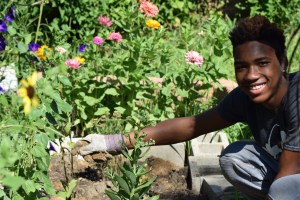
When asked about memorable career highlights and milestones, Kirchherr harks back to his first TV job, which showed him he was in fact cut out for the career ahead. It was Dec. 13, 1977, and a plane carrying the University of Evansville Aces basketball team crashed on takeoff, killing all 29 passengers.

“That was the first national story I covered, and it was important to me because I realized how well I could work under pressure and try to organize a newscast on short notice,” he says. “It was an important revelation for a terrible story.”

Kirchherr has been at Nine Network since 1991 and has worked on numerous projects he calls to mind as memorable. At the turn of the century, he produced a nine-part history series called Decades: St. Louis in the 20th Century, which he notes he is particularly proud of. Kirchherr also notes Homeland: Immigration in America as another career highlight – Kirchherr served as a producer and writer on the three-hour documentary series that explored America’s immigrant experience and aired nationally during the 2012 election.

Although he grew up in Chicago and moved to St. Louis in 1978, Kirchherr says his “outsider” lens gives him a new view of the city that born-and-raised residents don’t have.

“Not being born and raised here gives you a different perspective because you tend to notice things that people who grew up here don’t notice,” he says. “Almost anything I notice on the street that catches my eye is something I’m curious about and want to know what the story is.”

This curiosity often leads to stories that unveil parts of St. Louis residents would’ve never otherwise known.

“My favorite thing to hear from people after they’ve seen something I’ve done is ‘I’ve lived here all my life, and I never knew that,’” Kirchherr says.

Although sometimes they’re not “earthshaking” things, Kirchherr says this fresh perspective has led him to do things like climb the inside of the Union Station clock tower.

“I’ve driven by that a million times,” he says. “One day I wondered if they’d let me climb it. It took some negotiating, but we took a camera and did it.”

Kirchherr calls St. Louis a well-kept secret in many aspects and summons a quote from writer Theodore Dreiser to describe how he feels about the city. “I learned in time to like it very much, but for the things that set it apart from other cities, not for the things by which it sought to rival them,” the quote goes.

“I think that’s both praiseworthy and somewhat indicative of St. Louis not tooting its horn as much as it should,” he says. “St. Louis could really play to its strengths.”

In his work with the Nine Network, Kirchherr has been able to dig into St. Louis’ strengths and weaknesses alike. He says the most gratifying part of his job is the ability to find and tell stories across the region in a way that’s comprehensive and thoughtful.

“It’s given me the opportunity to do research, to dig into the past, to cover current issues … and do it all well,” he says. “With public television, we have the airtime to do these stories well.”

Where other networks might have only a minute to tell a particular story, public television allows producers like Kirchherr the airtime to delve deep into their topics and really tell the story.

“The challenge for public TV is always funding,” he says. “Changing technologies can be viewed as an obstacle or an opportunity. I think if Nine Network remains a valuable resource, the quality of content is always going to be a top priority, not necessarily the tools.”

This story was originally published at laduenews.com. Read it on LN’s website here.

Ladue News Feature Stories

With Open Minds – and Open Hearts

“Love your neighbor as yourself.”

For Lucas Rouggly, this oft-heard commandment is a complete way of life. He and his wife made the decision to move their family to north St. Louis to truly understand the needs of the northern part of the city and be able to help those around them.

“When we made the leap [to move from Portland, Oregon], we had a lot of friends and family that were excited for us and wanted to help out, too,” Rouggly says.
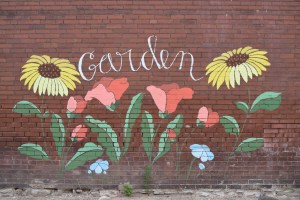
Thus, LOVEtheLOU was born. The nonprofit was formed to take the pulse of the needs of city neighbors and how the needs can be met through loving relationships. In its early days, Rouggly, his family and friends hosted block parties and street festivals in the municipality’s Old North St. Louis neighborhood. These activities proved to be an easy way to combine people wanting to serve and people wanting to celebrate. After they turned a vacant lot into a garden, though, “everything just snowballed.” They started their work in 2010 and received their status as a nonprofit organization in 2014.

“Over the past three or so years, we’ve had more than 1,000 volunteers come and help out [in the gardens],” Rouggly says.

With growing support from volunteers and partners, the community development initiative has expanded significantly in more ways than one.

After being given a building two years ago, volunteers of LOVEtheLOU rehabilitated 10 apartments in the space, which are being rented out to north St. Louis residents at the lowest prices in their area of the city. There are four business spaces in the building, as well, creating a marketplace for local entrepreneurs.

In addition to the physical strides LOVEtheLOU has been making in north St. Louis, the group has been consistently working to form relationships with the people who live there. In 2015, the group started a mentorship program with teens specifically, called STL | LIFT. It brought on two youth directors to work with the teens of North City, employing the teens over the summer to work in the three community gardens while showing them new opportunities outside of the area they reside.

“We took 26 [teens] this summer, and they did absolutely phenomenal,” Rouggly says. “It’s a testament to a little bit of love.”

Each week, the LOVEtheLOU team takes the teens on an “empowered experience” after their work in the community gardens to expose the students to different career paths and opportunities. LOVEtheLOU also partners with businesses to do everything from horseback riding to showing students how to get their driver licenses to doing financial planning and budgeting – important, and sometimes fun, life lessons they might otherwise not learn.

Rouggly says it’s often surprising how quickly the teens change when given opportunities and a little bit of love. Rouggly described one student as “completely out of line” the first time they took him out to a camp; however, by the end of the summer, “he was a completely different kid.”

“His whole demeanor changed,” Rouggly says. “He was asking question after question. The only thing that was different was that he had people surrounding him, giving him opportunities and love.”

Realistically, Rouggly knows the LOVEtheLOU team won’t reach all the kids in St. Louis. But each year, they hope to grow their mentorship program.

“The goal is to take every one of the kids and give them 100 different experiences they wouldn’t receive otherwise,” he says. “In doing that, we’re expecting a high percentage of them to be completely transformed. This isn’t just tutoring or a program after school; it’s a holistic approach to every part of life. That’s where we find our niche. We want to really walk with these kids and allow our huge volunteer base to walk with them, as well.”

LOVEtheLOU’s projects also include facets called STL | LINK, which will partner LOVEtheLOU with businesses and other nonprofits to work together on common goals, and STL | LIVE, which is the nonprofit’s biggest initiative for 2018. STL | LIVE will work with outside groups like area churches in St. Louis County and plug them into fixing up abandoned houses. Once the homes are rehabilitated, Rouggly and his crew have identified individuals in the area who will be selected for home ownership.

“They won’t be renting – they’ll actually be owning these homes,” Rouggly says. “It’ll be a process of taking vacancies, fixing them up and handing them over to people who are well-deserving.”

For the long-term future, Rouggly and his team want to “give as much away as possible.” With a solid volunteer base, LOVEtheLOU will be working to find city residents who can benefit from groups coming in and being in their neighborhoods.

“We help give people a vision of what can be,” he says. “We don’t have to be a flyover city in peoples’ minds. There’s so much good here. It’s going to take organizations like LOVEtheLOU to highlight the good and point it out. The word ‘love’ for us isn’t cliché – it’s backed with action.”

This story was originally published at laduenews.com. Read it on LN’s website here.

Dancing Astronaut

Dancing Astronaut proudly presents the 2017 label of the year

Monstercat

Breaking barriers and pushing the dance music envelope since its inception in 2011, Canadian independent label Monstercat is Dancing Astronaut’s Label of the Year. For the past six years, Monstercat has paved the way for listeners to discover dozens of new artists, garnering a massive following along the way. Led by a boundary-pushing team, 2017 proved to be the label’s best year yet. They brought on more than a dozen new artists, including ModestepKill The NoiseBassnectarRagga TwinsDirtyphonicsGammerKayzoLookasOokayFox StevensonSlanderSullivan King, and Gareth Emery.

Monstercat started 2017 strong with the launch of a massive anti-bullying campaign in accordance with the release of Gareth Emery and Standerwick’s “Saving Light,” raising thousands of dollars for an anti-bullying foundation called Ditch The Label.

February brought the label’s first-ever platinum record recognition for marshmello’s 2016 release, “Alone,” which has garnered millions of streams across platforms to date.

As festival season approached, the Monstercat team ramped up their efforts for shows at Amsterdam Music EventEDC Las VegasTomorrowlandE3, PAX East and Miami Music Week.

In the midst of festival season, Monstercat announced a partnership with Rocket League that resulted in the label releasing an album for the video game. The 18-song compilation featured songs from SlushiiNotakerTristamWRLD, and more, and was released in accordance with the game’s two-year anniversary.

They capped off a successful summer by opening their headquarter doors in Vancouver for a Monstercat Compound event. The street party served as an opportunity for the label to recognize the community that has supported them over the years with free performances by RobotakiConro, Going Quantum and Grant.

In November, the team continued their worldwide reach with multiple shows in China, including a residency at Asgard Nightclub in Beijing that featured performances by JOYRYDEDelta HeavyPegboard Nerds and Lookas.

As 2017 draws to a close, recognition for the label is coming in from all sides of the music industry. SoundCloud recognized Unlike Pluto‘s “Everything Black” as their Top Electronic Track of 2017, and the track was also Monstercat’s most-streamed on Spotify, amassing more than 10 million streams on the platform. Two weeks ago, the label turned the power over to the fans and asked them to vote on their top Monstercat tracks of the year. After a short voting period, listeners selected label OGs Pegboard Nerds’ track “Heaven Let Us Down” as their favorite release of 2017.

As years go by and music trends shift faster than most can keep up with, the Canadian label proves time and time again that they have finger on the pulse of the next best thing in electronic and dance music. By exposing their listeners to an unimaginable range of music from some of the industry’s most talented innovators, the Monstercat team has established themselves as fearless trailblazers in an unpredictable industry.

To celebrate their incredible year, Monstercat called on Dan Scarcelli, Head of Programming for the label’s weekly Call of The Wild show, to whip up this vicious mix packed with some of their hottest releases to date. Appropriately, the mix serves as the 200th edition of our long-standing AXIS mix series.

This story was originally published at dancingastronaut.com. Read it in full, including runners-up, on DA’s website here.