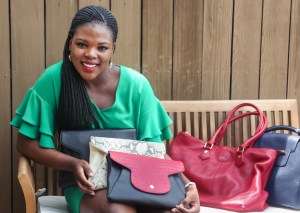
Ladue News Feature Stories

Sheer Brilliance

Beyond the door of a nondescript University City brick building lies an unimaginable amount of color – a resplendence, some might say.

Sucheta Bhide rented out the massive 8,000-square-foot warehouse last fall to house her growing high-gloss lacquer and painting company, The Resplendent Crow, where she reimagines furniture in a glamorous, Hollywood Regency style.

It all started in 2013, when Bhide bought a little house in Maryland Heights and was looking for a high-gloss accent table. When she had little luck finding anything locally, she decided to research how to create the look herself. She was so pleased with the results that she did a few more pieces in her house, including a dresser.
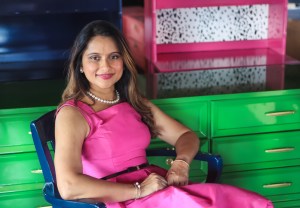
“After a while, I realized I only had so big of a house and decided to start selling [the furniture],” she says.

Bhide set about finding a name for her new venture, knowing she wanted a word that would describe the rich, colorful tones she was using to reimagine the pieces. Since she loves birds and used to enjoy painting them, her then-boyfriend suggested looking to feathered friends for inspiration. Bhide started researching colorful birds and stumbled across the resplendent quetzal, a Central American bird of stunning green and red.

“I knew the word ‘resplendent’ was exactly what I was looking for,” she says.

But she also wanted a not-so-serious, slightly oxymoronic feel to the name, so she tacked on the word “crow.”

“There [are] times when I feel like even though my furniture is resplendent, I’m here with my hair in a bun and covered in paint,” she says. “So I’m kind of like the crow.”

Kicking off her new venture, Bhide painted a set she had found on Craigslist and put it on Etsy. When someone from Wyoming purchased it, she realized it wasn’t just local St. Louisans who were looking for this unique glam look – it was folks from all over the country. To accommodate her growing business, Bhide knew she had to expand out of her house.

“I was doing it in my garage for a year or so, and it got so cramped,” she says. “The house would smell like paint all the time.”

Bhide started with a 1,000-square-foot warehouse on Olive Boulevard, thinking that space would be plenty.

“I outgrew it in two months,” she says. “This kind of business just needs a huge amount of storage space.”

She continued to work out of the warehouse for two years until she found her current space on Maple Avenue. The two-story building houses all the pieces that are either finished or ready for customization on the second floor, while all of the work takes place on the main level.
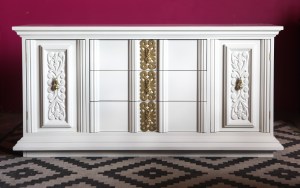
Although a large portion of her business consists of customers bringing in pieces to be painted, she also offers pieces that she’s sought out from all over the country. When a customer has a dresser he or she wants customized, for example, The Resplendent Crow arranges for pickup. When the piece makes it to the warehouse, Bhide and her six team members take it apart, setting the hardware aside. They sand the piece down, scuffing the surface up enough to the point where it can easily be primed. After a few coats of primer, they fix any dings and imperfections with filler. From there, the piece receives three to five coats of lacquer. Gloss finishes are what The Resplendent Crow is known for, but Bhide and her team can also do satin and matte sheens on pieces. The process takes about three to four weeks, and the finished pieces sell for an average of approximately $1,500.

Bhide sends dressers, credenzas, chairs, desks, nightstands and more out all over the country. In a tour of her facility, she pointed out pieces that were going to California, Oklahoma, Maryland and New Jersey. One piece is even in the works to go to Hawaii.

Although she can match any color for paint, there’s one in particular that’s remained popular among her sold pieces.

“I never would’ve guessed, but I sell hot pink furniture all day long,” she says. “I think people see the colors I’ve used on social media, and they finally feel brave enough to make the jump.”

Bhide’s goal with The Resplendent Crow is to continue selling and customizing furniture, in the hopes of eventually opening a retail location. She believes it would be easier to show off the eclectic mix-and-match look people are going for in a shop-type location.

“As much as I like this space right now, it’s still a warehouse setup, and it’s hard for people to imagine the pieces in their own spaces,” she says.

Since she began her business, Bhide has been met overwhelmingly with support from her customers and suggests those interested get to know her work better by following The Resplendent Crow’s Instagram or Facebook page and also visit her Etsy shop.

“People love that they can get their old pieces of furniture customized,” she says. “They’ve come to appreciate vintage and older pieces. They’re thrilled with the transformations, especially if it’s a piece that’s theirs that they really love.”

This story was originally published at laduenews.com. Read it on LN’s website here.
Dancing Astronaut

Koven talks working with 100 fan-submitted vocal samples for ‘Voices’ [Q&A]

At the end of July, UK duo Koven debuted their third Monstercat single of 2018, “Voices.”

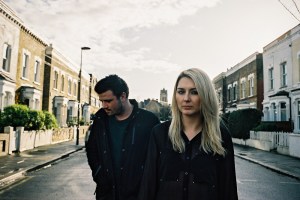
“Voices” had been in the works for some time. In mid-May, Koven’s Katie Boyle popped up on Monstercat’s social media in a video, asking fans to submit vocal samples for a forthcoming song. She gave an example of the kind of material the duo was looking for, and the submission process began. Boyle and her Koven partner Max Rowat ended up with dozens of submissions and used them to create the intensely emotive track, which came out July 27.

We caught up with Boyle to hear about the process of creating “Voices” and what’s next for the duo in 2018.


Where did the idea come from to get the fans involved in the making of “Voices”?

I had noticed before that a few artists had done something similar, but their fans would send in samples they had created, and then the artist would make a track out of that, so I just thought, why couldn’t we do this with but people can send in their vocals. Instantly I thought, “but a lot of people might not have access to a microphone or recording equipment” but then I remembered back to recording my first single around 7 years ago, and the vocals were just recorded on a built in iMac microphone, and of course it didn’t sound amazing but I think it actually added something different to the track. Nobody noticed it. So as well as getting people involved in something they may of not thought they would/could do, it was also an interesting idea to see what would happen if people recorded on what they have available to them, whether it’s a mic/phone or a webcam.

How many vocal samples are featured in the track? What was the process like for working with them?

We had around 100ish vocal submissions. Firstly I spent some time going through each submitted track and just listening to it by itself, and then the idea was to just import them into a project and just press play and see what it sounded they all sounded like together without any editing. I remember feeling quite nervous before pressing play as I had no idea whether this would work or not, but thankfully everyone sounded amazing together. I didn’t want to do too much editing to them as I didn’t want just 60-70 auto-tuned vocals. I then just put them all through a reverb and imported into the main ‘Voices’ Project.

Are you interested in using more fan-submitted material in some capacity in the future?

Yes it was an awesome process and the feedback has been great. I’d be keen to try it again, but this time with lyrics.

What does “Voices” mean to you?

I think for us, the experience of making the track was really special as we were so overwhelmed with how many people wanted to get involved. There were those who sent us their vocals and those who contacted us to let us know they were too nervous or scared to submit but they really appreciated the opportunity all the same. So for us the track will always be a representation of the fans and how much everybody cared. It was very special for us to learn this.

What’s next for you in 2018?

We are super close to releasing our new ep ‘Reality Reach’, once that’s out we will be fully focused on our first album! We’ve got some great ideas already in the making for the album and we are so excited to get that finished up and released, it’s been along time coming, we can’t wait!

How do you see your sound evolving in the future?

We are just a few weeks away from releasing our next ep. I feel like we are at a really good place musically at the moment, where we feel confident with what we are making – which hasn’t always been the case. Every time we release a track and the feedback is positive it takes you forward a few steps with being able to try new things, as well as taking note of what has worked well in the past. We’ve got some great ideas already down for the next process which will be our first album.

This story was originally published at dancingastronaut.com. Read it in full on DA’s website here.

Happily Ever After Stories

Happily Ever After: Ira, Winnie and the Martin Family

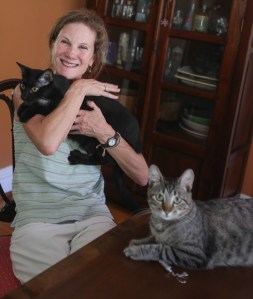
Once upon a time, Sally Martin was interested in adopting two young cats. She’d had cats her whole life, but she’d never actually chosen them. Most of the time, they’d just wandered into her yard and stuck around until she took them in. The last set of cats she’d had were sisters, so she knew she wanted to get a pair of youngsters that were already at least friends. Upon doing a brief Google search in March of this year, Martin found Animal House Cat Rescue and Adoption Center. She was attracted to the fact that Animal House was a no-kill shelter, and she saw they had a number of young kittens.

She made a few visits to the St. Louis shelter, getting a feel for the way the rescue organization operated. After Martin explained that she was looking for two young cats, a staff member’s “eyes lit up.” The staffer told Martin that two, then named Felix and Rachel, had just come back from being fixed. The black one – Felix – jumped down from his cat tree and right into Martin’s lap. Rachel, a tabby, was sleeping, but woke up to greet Martin, too.

“I stayed with them for an hour,” Martin recalls fondly. “I said, ‘This is it.’”

She didn’t take them that day, since the cats still needed another standard veterinary visit before they could go to their forever homes. But later that March, the Animal House staff brought the two youngsters out to Martin’s home in Webster Groves.

Martin renamed the duo Ira and Winnie. Ira is around 14 months old, and Winnie is about a year, so they’re “still full of mischief.” She has a bird feeder right outside the dining room window, which is “like TV for them,” Martin says. “Ira particularly loves that.”

Winnie likes nontraditional toys and is content to play with things like twist ties, and her brother enjoys rubber bands and shoes. He also enjoys messing up the second hand of a clock Martin has.

“It’s kind of like having toddlers,” Martin muses. “You can get toddlers cool-kid toys, or you can give them a set of wooden spoons, and they’ll just go to town.”

Since adopting the cats in March, the trio has settled into a routine. Martin knows that around midmorning, Ira and Winnie will go into “crazy chase-each-other mode,” but she enjoys their lively company.

“They’re so playful,” she says. “I couldn’t be happier.”

This story was originally published at laduenews.com. Read it on LN’s website here.
Ladue News Feature Stories

Beauty Meets Function

In a world where women’s accessories are often either beautiful or functional, Ronke Faleti wanted a solution that merged the two for one of a woman’s most basic everyday items: the handbag.

The mother of three never had the desire to carry a diaper bag, but with a 6-, 3- and 1-year-old, she needed something that would work with her on-the-go lifestyle. She found a Parisian brand she was happy with, but the handbag still didn’t have all the components she needed.

Last June, Faleti put her thoughts to paper and began sketching out what she wanted to be the perfect toddler-friendly bag. She designed a statement piece first, then added in the functional aspect of the design.

“I wanted to carry a bag that I’m proud to have but one that also is able to have everything I need inside of it,” she says.

In July 2017, korédé was officially an incorporated business. The name, which means “bring goodness” in Nigerian, is at the heart of Faleti’s company. In August of last year, she was able to take sample bags out into the world and get customer feedback. She asked women what they would pay for a bag like the one she had manufactured and got their feedback on functionality.

Her first sample bag has evolved into what is now the Milola clutch. The leather handbag has three internal compartments and retails starting at $150 for a black clutch and $245 for snakeskin. Its shining feature is a dispenser opening that can be used for facial tissues or baby wipes.
“Women were gaga over that feature,” Faleti says with a laugh. “The thing about the bag a lot of women like is that it’s deceptively small. It packs a punch and has five pockets.”

The clutch also features gold-tone hardware and has a cross-body strap that’s detachable for carrying solely as a clutch. She offers the bag in black, light-toned snakeskin and a black-and-red combination.

The second bag Faleti designed was the Annabelle, a carryall relaxed leather tote that retails for $395. After doing research at retailers like Nordstrom and Saks Fifth Avenue, hearing what was selling and what wasn’t, she came up with a tote that checked all the boxes. She heard complaints about women not being able to find their belongings in a black-interior bag, so she designed hers with a light-colored interior. She heard about water bottles spilling and ruining purses, so she created a water-resistant nylon interior that can be shaken out in case of a spill, as well as an interior insulated water-bottle holder. Personally frustrated with organizer inserts for large tote bags being sold separately, Faleti incorporated hers into the Annabelle.

“The issue I saw in the organizers was that it never really fits your bag appropriately and it just eats up the space,” she says. “Ours is just built right in.”

The Annabelle has a zippered 8- by 10-inch pocket that Faleti says she often uses for keeping a change of clothes for her kids. In addition, the tote features two elastic pockets, one insulated, one mesh see-through pocket, and a key clip right at the top to keep your keys from disappearing.

“With these bags, we start with beauty – then infuse function,” she says. “I think that’s something that’s missing in the marketplace. Today’s women want function, but we love beauty.”

In the year since her launch, Faleti has worked tirelessly to pin down what the korédé persona looks like: who she is and where she’s shopping. While she’s selling her bags at shopkorede.com and at DotDotDash in Clayton for now, Faleti has big hopes and dreams for her company. She envisions a $100 million company 10 years down the road, uniting women in products that make them feel feminine, confident and attractive.

“We want to enter into the intersection of womanhood and motherhood and focus on the womanness of that person,” she says. “If our life for whatever reason adopts a new role, we don’t have to abandon those traits.”

Faleti says korédé’s ethos is “beautifully functional” and is all about products that are transitional through multiple life stages.

“From boardroom to play dates to a weekend away, korédé will take you there.”

This story was originally published at laduenews.com. Read it on LN’s website here.

Ladue News Feature Stories

Conscientious Closet

In a world where single-use items reign and clothing often gets retired after a year or two of use, many people aren’t actively aware of where their everyday products come from. This weighed on the mind of Christina Weaver, who founded a company 10 years ago to help bring ethically sourced fashion to Missouri.

What is known today as Route started in Columbia as Mustard Seed Fair Trade. From its early days until today, the nonprofit has always been focused on smaller vendors and organizations that are just getting started, enabling them to have a more direct impact on the makers.

“We have always wanted to be – as far as design and look and items we’re purchasing – up to date,” Weaver says. “We’re giving people the option of buying what they would buy somewhere else, but just buying it safely and sustainably.”

After rebranding to Route three years ago to showcase a more midcentury modern, minimalist feel, Weaver and her team turned their focus on women’s clothing, jewelry and accessories. The organization’s team split its time between Columbia and

St. Louis doing pop-up shops and managing the Columbia storefront. But managing people and driving back and forth proved to be both time-consuming and a lot of work, so Route closed the Columbia storefront last summer and moved her business solely to online – for now.

“It was great to be in Columbia for 8½ years, but it was time,” Weaver says. “It feels good to have contracted a bit as a business and focus on who we are and what we’re doing.”

Currently, Route sells in St. Louis, does free St. Louis delivery, pop-up shops and occasional home parties, and sells goods online.
At shoproute.org, visitors will find a carefully curated selection of women’s fashion items and accessories. Each piece has been carefully selected to fit with each aspect of Route’s mission. These pieces come from partnerships Route has established via social media, word of mouth in the fair trade community and often the vendor reaching out to Route, which has a vetting process for the partners that includes a series of emails, phone conversations and a requirement, when possible, of video or a photo of the factory.

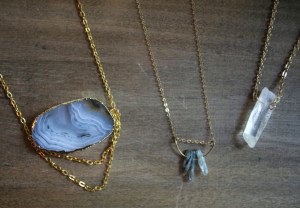
Current pieces on the website include a bright tunic T-shirt made in Nepal by women rescued from sex trafficking; a gorgeous purple skirt that’s part of zero-waste Cambodian-American clothing line tonlé; and the chic Rosario jumpsuit, handmade in Peru.

“It’s not just what looks good and fits with our curated line,” Weaver says. “It’s also maximizing the impact.”

Weaver seeks products that will help people who most need employment, like women coming out of trafficking, the disabled and others, in mainly third-world countries. This plays into the “know the route” aspect of the organization’s mission. On the website, a graphic shows the process: Makers are safely employed by Route’s partner organizations, which flows into Route curating a modern and impactful line. From there, customers purchase from Route to sustain employment and let each piece be a symbol of empowerment and a story. “We create Routes for relationships that change lives and change the world,” reads the last step of the Route process. Weaver also started a branch of Route this year that’s secondhand, still keeping with the carefully curated attitude when selecting pieces for it.

The organization is in what Weaver calls a “transition year,” and though it’s downsized considerably, the mission of making a difference remains. Right now, it’s just Weaver and a few part-time staffers, along with salespeople who help when they can.

“It’s neat working for a company that has such a focused mission because it just draws in the best people,” she says. “We’ve worked with passionate, mission-focused women and men, and it’s been great.”

Weaver is quick to give credit to Jessica Penner, who co-founded the Route brand with her in 2015.

“She’s very creative, and the visual part [of Route] is really hers,” Weaver says.

Route has been well-received in St. Louis – particularly South City – as well as within bigger cities on the East and West coasts.

“People get excited about the look of the brand and what we’re carrying,” Weaver says. “Every time people hear about what we do, they’ll tell us how they’ve been looking for [a brand like Route].”

For the second half of 2018, Weaver’s focus is on the online store’s featured pieces and what else to bring in for the cooler months.

“We took some time off at the beginning of 2018 to rethink how we wanted to do business,” she says. “We’re thinking through what our buying looks like for us right now and how we keep that fresh-looking. There’ll be some products we haven’t carried before in the fall and holiday season.”

As for her long-term goals, Weaver is open to seeing where Route takes her – with one overarching goal in mind.

“We want to help people curate their own conscious closets so they feel good about every piece they put on,” Weaver says. “That’s the goal. We want to make women feel as beautiful as they are and create positive impact with what they own.”

This story was originally published at laduenews.com. Read it on LN’s website here.

Other Freelance Work

Monstercat Blog July Feature: MYRNE & Grant

After months of swirling rumours, speculation, and memes, MYRNE and Grant’s long-awaited “Fault” is finally here!

We’ve enjoyed seeing these two become fast friends, and were thrilled when they told us that a collab was on the horizon. The duo have delivered a feisty collaboration called “Fault” on Monstercat Uncaged, featuring the vocal talents of songstress McCall. The sheer complexity of this track stands out from the get-go: it’s layered with twinkling synths and sinister builds that are a perfect blend of the two artists’ styles.

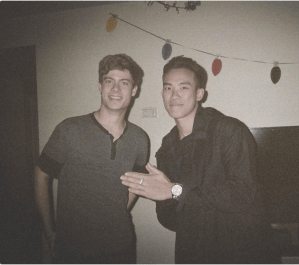
“Fault” is many months in the making, starting when MYRNE came to the United States from his home country of Singapore for the first time in early 2017. The two producers got together at Grant’s dorm room at the University of Southern California, cramming into the tiny space to make music. Nearly a year later, MYRNE came back to the States for a few shows with KRANE, and he and Grant met up again.

“We rented out one of the USC recording studios for a couple hours, and that’s when work on ‘Fault’ really began,” Grant recalls.

It was a short session – only about three hours – before Grant had to go to class. But the two continued working on the song separately after MYRNE went back to Singapore.
“The time difference was pretty challenging, and we’re both perfectionists,” Grant says. “If we were to work on the same part [of a song] together, we’d have way too many ideas and too many tweaks.”

MYRNE worked heavily on the drops and builds for “Fault,” and Grant focused on many of the chord progressions.
“We didn’t reference anything for this song and didn’t have the end product in mind when we started working on it,” MYRNE says. “We were both just having fun trying out some crazy techniques.”

With a mutual respect of each others’ skill sets established, the song came together organically. They each found ways to put their own stamp on the other person’s section, leading to a four-minute venture showcasing Grant and MYRNE at their finest.

On Friday, July 20, both artists have performances at the Monstercat stage at Tomorrowland. But who gets to play the collab?

“MYRNE’s going to play it during his set, and I’m going to come out for that group moment,” Grant says.

The appreciation these two show for each other is immediately apparent, and they’re quick to acknowledge each others’ strong suits.

“I really respect the amount of musical talent Grant puts into his work,” MYRNE says. “It’s so evident in the studio.”

Grant echoes the sentiments back to his collaborator.

“He knows exactly what to layer and when,” he says of MYRNE. “All of his mixes sound so punchy, and he’s just a badass producer in general. This collaboration was two pieces of a puzzle fitting perfectly together.”

This blog post was originally published at monstercat.com. Read it on their website here.

Happily Ever After Stories

Happily Ever After: Kong and the Gallahue Family

Once upon a time, a 1-year-old boxer/pit bull mix was at a rural pound with seven other dogs. Unfortunately, the pound only had six fenced pens, so two of the dogs were scheduled to be euthanized due to lack of space. Luckily, Needy Paws Rescue stepped in, rescuing the remaining two dogs before they were euthanized in April 2018. The boxer/pit mix, named Malle at the time, became the organization’s 3,000th rescued dog since its establishment in 2014, earning him a special place in the hearts of the Needy Paws staff.

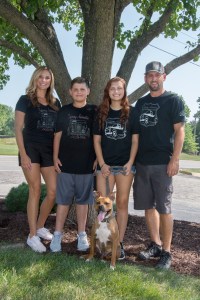
Not long after, Jason and Lindsay Gallahue were looking to adopt a dog. They had heard about Needy Paws through friends and wanted to go look at their adoptable pups. On their daughter Hayley’s 18th birthday, the Gallahues went to an adoption event at PetSmart and saw a quirky pup with an inquisitive face: Malle.

“We saw him, and my kids immediately loved him,” Lindsay recalls.

Their son, Bryce, saw the brand name Kong on the dog’s cage and thought it was his name. Finding the name fitting, the Gallahues renamed Malle “Kong” and took him home.

They’ve had him for a little more than a month and “couldn’t have asked for a better dog,” Lindsay says. Kong is a social pup who loves to go everywhere with the family. He goes golfing with Lindsay and Jason and will patiently wait in the cart while they play their game. He’s also made friends with the two pit bulls who live next door and loves to play with them. Kong’s even helping Hayley train for going into the Navy, and the two of them go running every night.
The Gallahues only had Kong a few weeks before the Fourth of July came around – a day hated by countless dogs across the country who fear fireworks, inconsolable during their loud booms. However, that wasn’t the case with Kong.

“We took him to see the fireworks, and he just sat next to us in the chair,” Lindsay says. “He’s so sweet, and we haven’t had any problems with him.”

Well … aside from one: Kong chewed up the American flags Lindsay had in her potted plants. But other than that, Kong has snuggled right into the Gallahue family, even worming his way into the bed on the second night after his adoption – and every night since.

The Gallahues are enthusiastic about adopting from Needy Paws and plan to continue supporting the organization through trivia nights and other events.

“Kong is such a good dog,” Lindsay says. “We love that we can take him everywhere with us.”

This story was originally published at laduenews.com. Read it on LN’s website here.

Ladue News Feature Stories

The Gateway to the West Takes A Bow

Since 1965, St. Louis’ Gateway Arch has stood strong as the 630-foot monument to westward expansion. In those 50-plus years, millions of people have flocked to the iconic landmark annually to admire its sleek design, enjoy the museum below and peruse the community around it.

Unfortunately, the Arch’s initial design had Interstate 64/40 running just outside of its bounds, making walking from St. Louis’ downtown straight onto the Arch grounds nearly impossible. Seeking to instate Arch designer Eero Saarinen’s original vision of making the Arch accessible from downtown, the National Park Service created a new general management plan for the Arch grounds in 2009. From there, CityArchRiver Project partners broke ground in 2013 on a new plan to reimagine, connect, enhance and transform the Arch.

In the time since, members of the Gateway Arch Park Foundation and partner organizations have been working tirelessly to reveal the new and improved Arch to the world – which they did on July 3. The $380 million project was funded by $221 million of private donations and $90 million of sales tax revenue from the passage of Proposition P in 2013. The revamp includes a reimagined museum that adds decades to its predecessor, an expanded visitor center and revitalized park grounds that include more than 5 miles of pathways – including a green space that directly connects the Arch grounds to downtown.

Executive director Eric Moraczewski and communications director Samantha Fisher took LN on a tour through the upgrades and pointed out the difference the revamp will make in how both St. Louisans and out-of-towners view the bow-shaped landmark.

The front desk – one of the first things visitors see when they come through the new west entrance – will be staffed by members of both the National Park Service and Explore St. Louis. Moraczewski says this will allow visitors to get recommendations of what to do in the surrounding area.

“The park service is going to do an amazing job of telling you what’s here on these grounds, but we’ll also have someone to guide you through the rest of the community, too,” Moraczewski says.

On entering the underground facilities, visitors will find a gigantic terrazzo floor map that displays all the trails the pioneers took on their journey west, with St. Louis highlighted in yellow.

“It’s the first glimpse of establishing why this museum is here in St. Louis and the important role our city played in the exploration of the western part of our country and the settlement of it, too,” Fisher says. “We lay out not just Lewis and Clark but also the impactful role we had on the California exploration, the Oregon Trail, the Mormon Trail and the Santa Fe Trail.”

The new museum, which has been in the works since 2010, has more than 100 years of additional history and 46,000 additional square feet. The new exhibits incorporate universal design, which is accessible for people of all abilities. During the museum’s creation, there was also an effort to showcase different perspectives of the people of the time – like those of the Native Americans, Mexicans, women, African-Americans – which are scattered throughout the exhibits.

“That’s something the park service is very intentional about and has highlighted throughout all of the galleries in the museum,” Fisher says.

Unlike the original museum setup, which was off to the side of the tram entrance, the new layout has visitors walk through the center part of the museum to get to the trams, encouraging guests to peruse along the way. Soundscapes and touch screens help bring the museum’s spaces to life and make for a more interactive, dynamic experience.

“A large majority of people were just coming in and going to the trams,” Moraczewski says. “Now, you’re noticing it right away, and something will catch your eye.”

The museum is set up chronologically, beginning with establishing colonial St. Louis in the late 1700s. Key features of the first section include an animated fly-through of what the village of St. Louis would’ve looked like in 1797.

“Our park historian wrote a 40-page essay that detailed everything down to the doorknob of what the village was like,” Fisher says. “Our animation studio built this beautiful film for people to see. It’s neat to see what village life would’ve looked like, especially for St. Louisans.”

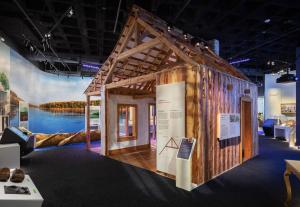
That section of the museum also contains an example of the kind of home that would’ve been built in French colonial St. Louis: a vertical log cabin. The National Park Service preservation team built the museum’s cabin on-site using mostly traditional tools, which added an authentic touch.

Another featured structure is the Old Rock House: built in 1818, torn down in 1959 and resurrected from the basement of the Old Courthouse for the new museum.

“The park service preserved the stones and the frames in the basement of the Old Courthouse, so the historic preservation team came out and rebuilt this on-site,” Moraczewski says. “When you walk in, you walk through a piece of history.”

Within its 100-year addition is a section on the actual building of the Arch – something that wasn’t touched on in the old museum aside from the film shown to tram riders. The exhibit showcases the five designs that were part of the monument competition and demonstrates Saarinen’s innovative model in comparison to the other finalists’ offerings.

“There was no competition,” Fisher says with a laugh. “He won unanimously.”

Now that the project has been completed and the Gateway Arch National Park is fully open to the public, Fisher says the organization’s focus is on stewardship.

“In addition to continuing to provide additional funds for the support [the National Park Service] will need to maintain the park, we’re also working really hard to engage the people of St. Louis to come and experience the park with event series all year long,” Fisher says. “We want to get people down here. We have a national park in our backyard, and we want our city to take part in it. The Arch is for everyone.”

Gateway Arch Park Foundation, 314-881-2015, archpark.org

This story was originally published at laduenews.com. Read it on LN’s website here.

Ladue News Feature Stories

Thoughtful Totes

Haley Black comes from a rodeo family. Growing up in Bloomington, Illinois, Black’s father crafted equestrian saddles, so she was always around leather goods. After moving away and getting her undergraduate degree in speech and hearing science at the University of Illinois and then her master’s degree in deaf education from Washington University in St. Louis, Black felt a part of her was missing: a creative outlet. The stress of teaching was weighing on her, and she wanted to express herself in another way.

Going back to her roots, Black turned to leather. “I wanted to create something,” she remembers.

The first thing she made was an envelope-style clutch – something she designed with a very specific purpose.

“Whenever we go anywhere, my husband always hands me his wallet and phone,” she says. “I wanted something that would hold all the things I need as an adult woman, along with things like his wallet and phone.”

Her initial design would become an elegant yet heavy-duty bag that had countless people asking where they could get one. Seeing the interest, Black realized there might be a business endeavor possible there. In 2015, she created Mandolin Handbags – a name carefully chosen from an instrument she and her father both play.

“I learned the skill of leather from him, and we both play the mandolin,” she says. “I’m nowhere near intermediate level at this point, but it’s another thing passed down from him. I like the music that comes from [the mandolin]. It feels like home.”

Black turned her passion for fine-quality things and the current fashion revolution into her efforts with Mandolin Handbags.

“I value the fact that things aren’t made in a factory and are all a little different,” she says.

The current Mandolin Handbags line consists of her inaugural clutch, which retails for $180, the Sequoia Crossbody ($220), the Commuter Bag ($320), a wallet that starts at $50 and a few other home goods like coasters. Each piece is made to order by Black herself and usually arrives within two weeks of the order being placed.
“With the clutch and other pieces, I’ve tried to take the things I liked in my dad’s equestrian background and pare them down a lot,” she says. “Like the commuter bag, for example, has handles made from infinity braids – the same ones you use for horse reins. Because of this, it can hold a lot of weight, and the braid gives when you’re walking so it’s not so much weight on your shoulder.”

Black has put considerable thought into the design of each of her pieces. When she was creating the designs for items like the clutch, she would “do the worst” to it to see what needed to be reinforced. In keeping with the individualized character of every handmade piece, Black doesn’t use a lot of processing on the leather so “it can become yours.” The clutch has suede lining and is accented by polished gold- and silver-toned hardware.

She says the larger crossbody bag has been a best-seller, noting its versatility.

“You can take it anywhere,” Black says. “I’ve taken it on a hike and also to a fashion event.” She adds that the commuter bag is also popular due to its accommodating size. “It’s great to take on vacation, to carry a laptop or even be used as a diaper bag. The size works for so many things.”

Since she began selling bags under the Mandolin Handbags name more than three years ago, Black has received overwhelmingly positive feedback on her creations.

“You can clearly identify that these bags are handmade,” she says. “I think that sets them apart and opens them up for more inquiry.”

In the future, Black says she’d like to expand her line but is careful about what that expansion will look like. She doesn’t want to overlap the functionality of the bags she’s already creating.

“If I went on vacation, I would use the commuter bag as my carry-on, the crossbody during the day and the clutch to go to dinner,” she says. “So I will ask myself, ‘What’s the purpose other than what’s already there?’ I want to be thoughtful and systematic in my growth.”

For now, customers can find her bags locally at Union Studio, a shop in St. Louis’ Botanical Heights neighborhood that carries a collection of goods made by area makers, or via her website.

Mandolin Handbags, themandolinhandbag.com

This story was originally published at laduenews.com. Read it on LN’s website here.

Ladue News Feature Stories

Emboldening St. Louis Women

In 2014, Jennifer Ehlen noticed that St. Louis ranked near the bottom of an American Express study on cities that support women entrepreneurs. She was troubled by this, and wanted to change the statistics for the region.

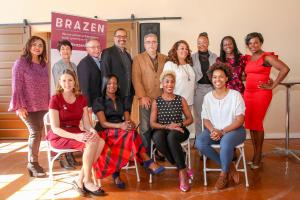
Ehlen founded Brazen, whose mission is to help women entrepreneurs and CEOs grow their businesses. According to its website, the group encourages women at all stages of business and industries to join a like-minded community, access curated online and offline resources, leverage best-practice tools and feel supported on their entrepreneurial journey.

Since its humble beginnings four years ago, the organization has expanded both locally and beyond – and now has branches in Chicago, Dallas, Fort Worth, Denver, Detroit and Philadelphia. To date, it’s helped more than 1,000 women entrepreneurs in St. Louis and continues to grow.

Mindy Mazur, the executive director of Brazen St. Louis, a local 501(c)3, says Brazen helps its members through customizable immersive programming. The members must meet three criteria: they identify as women, are the owner/founder/CEO of their own company that’s not already part of a parent company, and are serious about building their business. Team Brazen members pay a $40 one-time registration fee and $19.88 recurring monthly fee for access to “Power Hours” and member events, including roundtables and online curated resources.

“We’re focused on the nuts and bolts of how to build and scale your business, regardless of industry,” Mazur says. “This includes accounting, raising money, legal, technology, marketing and more. We’re focused on the building blocks.”

Brazen St. Louis’ flagship program is Growth Groups, which are peer mentoring groups of seven to nine women who meet once a month for three hours. During those meetings, the members work together on one another’s business challenges. Growth Groups is an add-on program that costs $30 per month.

“It’s an ongoing network of support,” Mazur says. “Everyone has an opportunity to talk through and share their challenges. They work through those challenges together and hold each other accountable.”

Another angle of support through Brazen is its Power Hours – one-on-one subject matter expert mentoring sessions, rotating through topics like marketing and fundraising each month. Brazen St. Louis brings in experts from its sponsor organizations so members can have one-on-one time with experienced business professionals and get firsthand advice on issues they may be struggling with.

Brazen St. Louis also hosts roundtable events for up to 12 members and guest speakers, along with member events throughout the year for larger groups.

In between in-person events, Brazen St. Louis members also have support through a private Facebook group that’s loaded with referrals, funding opportunities and conferences. There’s also an online vault of resources that includes guest columns and other articles.

“Our members span all industries and different stages of business,” Mazur says. “Nonprofits, for-profits, people who have products, services, tech apps … It’s a nice mix of different businesses that enriches the membership. We try to provide that support network for our members as they’re looking to scale and give them confidence.”

Mazur sees Brazen St. Louis as “sitting at the cross-section of women in leadership, equity in entrepreneurship and economic development.”

“We play a unique role here,” she says. “Imagine the economic impact if we helped every business add just one job or increase revenue by 1 percent. It’d be a huge boost in St. Louis economic development.”

One such example of Brazen’s help is to local business owner Kimberly Moos of Cotton Cuts, a subscription-based company that delivers pre-cut quilting fabric to your doorstep. She’s been a part of Brazen for more than two years, having started by going to one of the group’s office hours.

“It was the first time I’d spoken about my idea out loud,” Moos recalls. “But [Brazen co-founder Aimee Dunne] was so supportive and so motivating.”

Moos became a Brazen member before she officially launched Cotton Cuts, and credits where she is today, being able to buy out her competitor last summer, to her first-year growth group. She says the structured, regimented organization of the growth group was “the right resource at the right time.”

“Taking the first step is always the hardest,” Moos says. “But once you do, you won’t regret it.”

This story was originally published at laduenews.com. Read it on LN’s website here.