Dancing Astronaut

ATTLAS grows both roots and wings in debut LP, ‘Lavender God’ [Review]

ATTLAS‘ debut album on mau5trap has been half a decade in the making. The Canadian producer has steadily garnered a devoted fan base over the past five-plus years with numerous singles and remixes, a well-rounded set of EPs, and a celebrated Storyline mix series. He was largely quiet on the release front in 2019, spending time putting together the latest Storyline episode and tackling an even bigger project: Lavender God.

In the final month of 2019, ATTLAS announced the LP was on its way and shared its first single, “Sinner Complicated.” The six-minute track showcased the full-bodied auditory experience that was to come, and he followed it up with “Hotel” with Maylyn shortly after.

Lavender God was released on Jan. 31, featuring 10 tracks that span from contemplative instrumental pieces to lighter collaborations with artists like Alisa Xayalith of The Naked and Famous.

ATTLAS’ meticulous attention to detail is evident in every angle of Lavender God‘s 48 minutes and 21 seconds. He sets the scene with “Shatter,” an adventurous, multi-faceted introductory track that leads the listener down the rabbit hole to fully experience the captivating twists and turns he has composed.

With the help of Lambert, ATTLAS moves gracefully from “Shatter” to “A Winding Path.” This delicate tune feels like one gorgeous four-minute build, as the artist continues to introduce his listener to the longer format of this collection.

“Half Light” with Xayalith delivers a more pop-friendly atmosphere, as the songstress’ vocals soar over relaxing instrumentals. A dreamy piano melody serves as both the intro and outro to this song, tying it together beautifully.

The album’s namesake, “Lavender God,” follows. The tune continues the introspective tone set by its predecessors. Its purposeful pace gives the listener ample time to immerse themselves in its mellow melodies, and it’s easy to see why the artist chose this track and its name to summarize the 10-track collection.

The late fall and early winter months are impeccably captured in “November,” a track that leads off with a scattered melody. The theme builds in gradual layers, adding delicate background piano before fading back into its original singular refrain.

The shortest track on the LP is followed by one more than twice its length, “Sinner Complicated.” The song arrived as the album’s debut single in mid-December, giving a taste of the complex world-building fans would be able to experience when the full LP arrived. It nestles cohesively in the middle of the album, paving the way for “Ray of Light” to follow.

“Ray of Light” lends a more optimistic tone after the shadowy atmosphere of “Sinner Complicated,” introducing itself with bright synths just as its name suggests. A calming piano melody and soothing orchestral elements balance out the bold synthwork, making it a stunning example of all ATTLAS is capable of.

An air of mystery returns in “Home.” Though it begins with a slightly haunting introduction, “Home” eventually opens up to a warmer soundscape, and ATTLAS delivers dramatic ebbs and flows throughout the course of the tune’s nearly five minutes.

ATTLAS brings Maylyn aboard for “Hotel,” which arrived as the LP’s second and final single before its full release. This upbeat number is sure to thrill dance music fans at its steady 120 BPM and encourages swaying or head-bobbing with a steady beat.

The LP wraps with “More Than That,” the second-longest song in the collection. This orchestral piece is destined for symphony play, punctuated by dramatic horns and intriguing percussion in its first half. ATTLAS switches it up just before the 3:30 mark to deliver a second half that takes on an entirely different form, illustrating his versatility in a way that makes the listener think back on the journey from “Shatter” to the ending notes of “More Than That.”

Over the course of this LP, ATTLAS masterfully demonstrates the deep-set roots he’s taken painstaking care to establish over the past five years. At the same time, he’s able to showcase what’s to come: years of top-notch, unique productions that make him invaluable to the ever-evolving music scene.

Lavender God is an unprecedented adventure, with ATTLAS fearless at the helm.

This story was originally published at dancingastronaut.com. Read it in full on DA’s website here.

Dancing Astronaut

Turning it up a notch with RAM Records founder Andy C [Interview]

Decades ago, the electronic music scene was nigh unrecognizable from its worldwide integration and popularity today. Andrew John Clarke was younger then, attending illegal raves with his friends in the English countryside. One such party came to mind when someone recently sent him a photo from many years ago over social media, reminding him of years past.

“It was one of those parties where somebody put out a phone number to call, and you met up at a service station on the road. Then this big convoy of cars made its way through the countryside to this back garden [in Kent] and we had a rave,” he recalls. “That’s how we used to do it. But now look at the kind of stages we do at EDC Las Vegas.”

It would be years before Andrew John Clarke would become known to most as Andy C, and he never would’ve guessed he would be where he is today. But his love of music and what would become drum ‘n’ bass led him down an unexpected pathway.

He helped create what many view as one of the most influential drum ‘n’ bass tracks of the 1990s—”Valley of the Shadows” under his Origin Unknown moniker with Ant Miles—and began to make a name for himself through his energetic DJ sets. Around the same time in 1992, he created RAM Records with Ant Miles, not knowing the influence the label would have over the next 27 years.

“Things are doing awesome [at RAM],” Clarke says enthusiastically. “We have an absolute steady stream of releases coming out every week. It’s relentless, but that’s how we like it. We make up one part of this beautiful scene of ours, and we’ve been there for everything. It’s a beautiful thing to still be at the forefront, you know?”

RAM had incredibly humble beginnings, starting out with Clarke picking up records in the trunk of his dad’s car and stamping the labels in his bedroom.

“Now, we’re streaming millions of streams all over these new mediums and touring the world,” he says. “It’s unfathomable, really.”

Though things have changed drastically since 1992 for RAM Records, Clarke maintains an optimistic viewpoint.

“I always think change is for the good,” he says. “I like to look forward. I appreciate the past because it invokes so many beautiful memories for me, but I love to look to the future. That’s what keeps the excitement there for me.”

Clarke is as excited about today’s drum ‘n’ bass scene as he was years ago. He says he’s “seeing a resurgence” in the United Kingdom, where the scene has “gone up to another level” in recent years. He’s also enjoying seeing the genre’s boom in the United States, where it’s been steadily getting more recognition and gaining traction.

“We seem to be seeing a lot of social media talk from people [in the States] who play drum ‘n’ bass tunes in their sets or are wanting to make dnb,” he says. “It seems to me we’re turning it up a notch.”

But Clarke would love to see even more drum ‘n’ bass coming out of the States. In fact, he encourages it.

“I know the United States is full of sick producers and people who want to smash the sound,” he invites. “Bring it to us.”

To those pursuing production, he offers advice that rings true for many aspects of life:

“If you want longevity, you’ve got to be true to yourself. If you’re pushing a sound and you’re passionate about it and love it, then you should stick at it and somewhere, hopefully, the crowd will get on your wave.”

When it comes to the style of music, Clarke notes he’s noticed today’s drum ‘n’ bass returning to “rawer sounds,” which delights the producer since that’s background he comes from.

“It’s been great to see the younger generations sort of battling it out week in and out to see who can make the sickest drop,” he says. “That’s what I’m feeling right now.”

But trends in music are unpredictable, and many producers scramble to figure out how to ride the current wave while staying true to their own sounds. For Andy C, though, the capricious nature of electronic music is a huge part of what makes it fun.

“I have no clue what drum ‘n’ bass will sound like in five years or even six months, and that’s part of the excitement” he says. “It just takes someone to come along and do a genre-defying song or create the next big bassline or take on a beat, and then it goes off on a tangent. That’s the beauty of it. Time goes pretty fast, but I know [drum ‘n’ bass is] going to be in an even healthier position than it is now.”

Clarke’s passion for drum ‘n’ bass and the scene surrounding it is driven by “the energy, the people, and the sense of community.” He calls the genre unique and says that “when you feel it, you really get it, and it becomes a strong passion within you.”

Those who have embraced this strong passion span generations—something that’s truly special to Clarke when he performs.

“At the events I do, there can be people spanning a 25-year age gap, and everybody will be raving together. It’s all ages, but that passion is always there. There’s a real beauty to a passion that never leaves for a style of music.”

When asked if he thinks the scene has changed for the better over the past few decades, Clarke’s answer is instantaneous.

“Of course! As much as I like raging in the back garden with 12 people, I definitely love being able to play all over the world to thousands of people. I’m such a lucky guy. It’s humbling and beautiful.”

This story was originally published at dancingastronaut.com. Read it in full on DA’s website here.

Dancing Astronaut

Celebrate 10 years of UKF with founder Luke Hood [Interview]

In April 2009, a 16-year-old from Frome, England wanted to share his love of bass music with the world. Luke Hood started a YouTube channel called UKF (which stands for United Kingdom and his hometown of Frome) and saw his subscriber base steadily begin to grow. The brand launched that year with the creation of its original channels: UKF Drum & Bass and UKF Dubstep, which now have 2.2 million and 6.3 million subscribers, respectively.

It’s been 10 years since the launch of these lauded channels, and Hood’s passion project has turned into something bigger than he ever could’ve imagined. Videos across the UKF channels have garnered more than 3 billion views, and the brand has hosted UKF events in 20 countries and 38 cities around the world.

Hood and his team have been celebrating these momentous milestones all year long by dropping singles from the label’s UKF10 – Ten Years Of UKF album—a massive 37-track compilation that makes its full debut on Friday, Nov. 29. So far this year, the world has been treated to fresh tunes from bass music greats like Camo & KrookedHybrid MindsMatroda, and more. Finally, to cap off the year, UKF is throwing a huge party in London on Dec. 14, featuring a lineup that most bass music lovers could only dream of.

To hear more about the journey from humble YouTube beginnings to legendary compilation albums and worldwide events, we chatted with founder Luke Hood.


What does this 10-year anniversary milestone mean to you as UKF’s founder?

For me, it’s my entire adult life’s work! So it’s a really special moment to reflect for me. We’re all guilty always looking into the horizon, setting goals and comparing yourself to others along the way, without ever really taking a moment to pause and reflect, so it’s been really special in that respect. We’ve achieved a lot over 10 years with so many artists, managers and labels, and it’s been one of my favourite years ever running UKF.


What have been some of the most exciting moments in UKF’s timeline?

2011 was a really crazy year for us. We released UKF Dubstep 2010 in December 2010 which in January topped the iTunes Dance charts and remained in the top 50 for years, followed by venturing into live events where we put on our first 500 capacity show in January, through to a sell-out 12,000 capacity show at Alexandra Palace with UKF Bass Culture, which tied into our first TV advertised album. It was a lot to take in at the time, but I look back on it with some pretty fond memories.

In more recent years, festival takeovers and launching UKF.com into an editorial platform to help up and coming artists in the bass scene get support where they otherwise wouldn’t. I’ve always wanted to champion new music and supporting artists with some of their first interviews written on UKF has been a highlight.

And finally, taking UKF back to my hometown of Frome in Somerset was a real moment for me. I had the pleasure of bringing some well-known UKF artists back to my hometown where while I was growing up it was impossible to go out and see artists in the bass world perform. When I was 16/17 I always wanted to go to shows but they were all too far away, I hope that some people who had never been to a dance music event before were able to attend and hopefully be inspired enough to go on that journey and build the next UKF.


What have been some of the biggest challenges UKF has had to overcome?

When you’re a global youth music brand focusing on multiple niches/genres of music, it becomes really difficult to stay on top of the various scenes we cover while knowing which platforms to focus on as they appear. We obviously started out as a YouTube channel, but our ethos has always been to try and spread the music we love everywhere, so had invested from the early days to make sure we had a presence on Spotify and Apple Music, where a lot of our audience now live. That extends to social media too, where when you cover such a broad spectrum it’s hard to know should we be on FacebookInstagramSnapchat? Tiktok? How much time and energy should we focus on each? I think we’ve done a good job of striking the balance over the years, but it’s something we have to constantly review.


What do you think makes UKF special and contributes to its longevity the most?

I’d like to think there’s a degree of authenticity that our fans subscribe to. Unlike most streaming services today we really do our best to keep our ear to the ground to find the latest tracks that are being made and getting reloaded in clubs, compared to the data-driven/algorithm-led world we live in today. I’m still heavily involved in the curation and I hope that consistently over the channels it’s noticeable.

The second and most important thing I think, particularly that has kept the longevity is the community. There have been people commenting on our videos for years, and it’s that interactivity and engagement you don’t get from other platforms. We are nothing without our fans and the comments/likes/dislikes that come with them. Without that, we’d just be a streaming service.


What has feedback been like on the UKF10 singles hitting the airwaves this year?

Positive! We were overwhelmed by the feedback initially when we put out the first single with Camo & Krooked. As soon as “Atlas” was announced we had so many artists and managers get in touch to express an interest in getting involved with the campaign. We’ve always been there promoting artists to our community at the core of what we do, and naturally helping artists release their music felt like a natural step after 10 years. I’m really proud of the album that’s come together as part of this and I’m excited to see the response to it when it finally drops! It’s an amazing collection of artists old and new that we’ve worked with and supported over the decade.

This story was originally published at dancingastronaut.com. Read it in full on DA’s website here.

Dancing Astronaut

Take the plunge with Goldroom on his new multi-faceted endeavor, ‘Plunge/\Surface’ [Interview]

Los Angeles-based singer, songwriter, and producer Goldroom feels most at home on the water. He grew up sailing and has carried his love of the world’s oceans into his adulthood and his music career, crafting dreamy synth-pop tunes that are right at home with a balmy sea breeze to carry them from ear to ear. Josh Legg—known to the music world as Goldroom—has made a career of combining his passion for music with his love and respect for the water, and many fans know him best from his longstanding High Seas tours he’s been putting on for the past several years.

He put out his last record, West of the West, in the fall of 2016 and followed it up with a long bus tour with his band. In June 2017, he played a few Corona SunSets festivals, one of which was in Tulum, Mexico. Legg and the band had a day off and chose to spend it at the beach. The waters were mellow, and Legg decided to go bodysurfing.

“In a really surprising and unlucky way, I got tossed just the wrong way and hit the top of my head on the sand,” Legg recalls. “I felt the lightning bolts go through me, but I didn’t think I was that hurt.”

However, it became apparent over the next few hours that he was more than just a little hurt. In fact, he’d broken his neck in two places.

“I lived in a hospital in Cancun for two weeks and then flew back to LA and lived in a hospital there for another few weeks,” Legg says. “Then I was pretty bedridden at home another month or so. Finally, I was able to begin working my way back.”

He remembers reading comments on social media saying “he’s done” and “he’s never coming back.”

“I felt a lot of personal pressure to get back out on the road,” he says.

But everything he did that autumn was “way too early.” Legg was managing his pain with painkillers, including an opiate called Tramadol, which doctors had told him to take daily for six months.

“Tramadol is pretty heavily abused by a lot of people and leads to bad things,” Legg says. “I was trying not to take it every day, and I didn’t. But even so, it led to a foggy year in my life.”

In a bit of an existential crisis wondering where the Goldroom project was going, Legg thought about the lengthy process he’d had preparing West of the West to make its way into the world. In his haze, he continued to write songs but wasn’t quite sure where things were going. The music to come out of this time period makes up what became the Plunge part of the upcoming LP.

“When I listen back to the songs that became Plunge, all I hear is haziness—but in a good way. It’s extremely representative of my 2017 and 2018, and I love that about this music. It’s just true to where my life was at.”

Around this time, Legg started to fall back in love with dance music. He’d always loved DJing, but the further he went with his Goldroom project, the less he’d found himself making club-friendly music.

“When I was finally able to start touring again and felt healthy physically, I started to really fall in love with dance music in a new way,” he remembers. “I think it coincided with a lot of disco and certain types of house music that had kind of disappeared for a while and started to come back.”

In his renewed excitement, he found himself thinking about the kind of music his idols sampled: slow, funky, and psychedelic. Then it clicked. He had made a record of just that for Plunge.

“Rather than sample other people, I thought I’d just sample myself. And what slowly came about was the idea of sampling every single song I’d made and making an alternative, French house version of it.”

These alternate versions would become Surface, the other side to the two-part LP.

Plunge sounds like my injury to me.

When I listen to Surface, I can hear myself getting healthy.”

Legg knew he was on to something, but he had to try his concept out. Though he plays plenty of live shows with his band, he also loves to DJ and thought he’d take a Surface song out for a spin.

“The first one I tried was ‘Yellow Flowers,’ the sister song to the final single on the album, ‘Trust,’” he says. “Everyone was really excited about it, and that was the lightning moment. It became obvious that I could make [an alternate version] for all of them.”

Many of Plunge/\Surfacetracks have debuted ahead of the LP’s full release on Nov. 1—like “I Can Feel It” and “Do You Feel It Now?” which are sister tracks and both feature singer Love, Alexa. While these two are fairly easy to see as related, Legg assures his fans that none of the versions of the songs on the LP are the “correct” iterations.

“As I was releasing these songs, I wanted people to have no idea what came first,” he says. “Neither is meant as a remix or original. They’re just each an individual song that is re-contextualized based on the other. Hopefully, you might even like both of the songs better because they both exist.”

West of the West was Legg’s first experience doing a slew of collaborations with other people. He prefers not to work through the internet bouncing stems and vocals back and forth, and would rather team up in the studio to work through the songwriting process. But for Plunge/\Surface, Legg worked on many more tracks solo—and some of them sound much like they did the day he wrote them, like “Cocaine Girl,” which he says he wrote in four or five hours.

“I really wanted my sonic touch to be all over this record because it’s a little weirder and a little darker… more human and messy,” he says. “I wanted it to be that way.”

With the exception of new friend Love, Alexa, Goldroom chose to work with previous collaborators like Mereki, Chela, and Nikki Segal, whose voices you can hear on music from years ago, like “Only You Can Show Me,” “Fifteen,” and “California Rain,” respectively.

“Working with them felt like being at home, which was something I really needed coming off my injury,” he says.

The key difference between West of the West and this new collection of songs is that it’s “just much more Josh,” the producer says.

“It’s much more me… more raw and much more human. There’s a lot more mistakes in the playing and in the singing. The vocal takes aren’t perfected within an inch of their life. It’s purposefully messy because my life’s been kind of messy.”

When asked how his life would be different if he hadn’t broken his neck on that fateful day in 2017, Legg says it’s something he’s never thought of before.

“I feel incredibly lucky that nothing worse happened,” he says, after thinking for a minute. “A lot of people that break C6 and C7 [vertebrae in the neck] end up paralyzed or they die. Realistically, I would’ve put music out sooner, and I would’ve been playing live more often, but I have no idea what the music would’ve sounded like.”

Even while he was injured, though, all he wanted to do was get back out on the water.

“Even though it was the thing that bit me, I felt the need to get back there as soon as possible. It’s the place in the world where I feel like I get the most joy and bring the most joy. Because of my injury, I feel even stronger than ever that it’s my place in the world.”


This story was originally published at dancingastronaut.com. Read it in full on DA’s website here.

Dancing Astronaut

The Midnight paint with vibrant sonic colors as they prepare their new LP, tour the world [Interview]

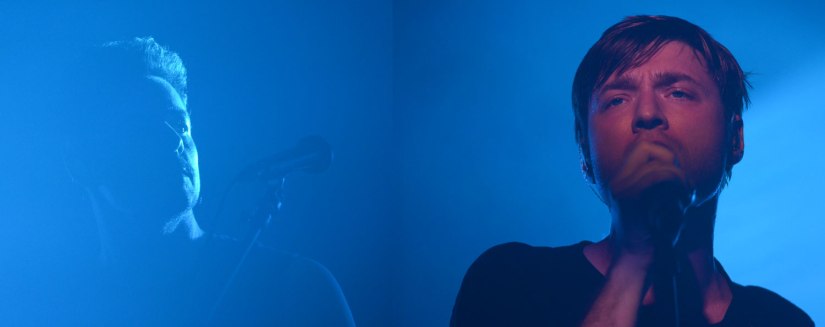
Tim McEwan and Tyler Lyle are exhausted—the good kind of exhausted that comes from performing in countless venues around the world.

“We haven’t slept in six months,” Lyle says. “It’s all one big blur.”

The duo, known to the music world as The Midnight, have been touring almost nonstop since the release of Kids, their third LP released last September. They’ve spent most of 2019 on the road, kicking off in Norway in February and hardly slowing down since then. On a stop in St. Louis in the midst of this heavy tour schedule, DA caught up with The Midnight to hear about their journey across the globe and the promise of new music on the horizon.

McEwan and Lyle jointly form one of the most celebrated acts in the modern synthwave scene, but they don’t like to put their music in a genre-confined box. They simply enjoy making music together and delivering the end result to their fan base and beyond.

There is a Japanese term: Mono no aware. It means basically, the sad beauty of seeing time pass – the aching awareness of impermanence. These are the days that we will return to one day in the future only in memories.

McEwan and Lyle first got together in 2012 when they were paired up in a studio session. They didn’t know each other prior. McEwan, who’s from Copenhagen, comes from a production and studio background, and Lyle grew up in Georgia and has a songwriting background. While their backgrounds were largely different, something happened the first day they got in the studio together: They wrote their first song as The Midnight, “WeMoveForward.”

“[Lyle] wrote the verses pretty quickly, but finding out what the song was was a longer process,” McEwan recalls. “We didn’t know we were going to make a band called The Midnight. It was all about finding and figuring out where to point the ship.” 

Both artists agreed that the tricky thing about meeting someone you could do anything with is that it’s both freeing and overwhelming. They spent their first EP figuring out what The Midnight sounded like, and from there, it was a natural progression.

“It’s a palette of colors we’ve been working with,” Lyle notes. “We’re still going to use those palettes over time, but we’re going to grow.”
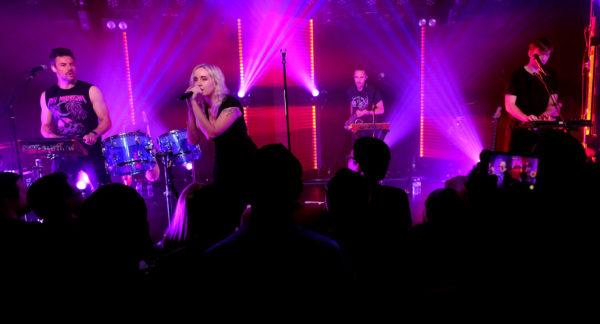
Mono no aware fuels The Midnight’s music—whether it’s in the form of the dramatic “WeMoveForward” or the final Kids track, “Kids (Reprise),” from last September. They’ve grown tremendously as a band since those early days and are constantly seeking to evolve their sonic palette. Many fans were initially thrown off by the absence of saxophone riffs in the Kids album, but McEwan and Lyle insist that the recent album had a different story to tell than its predecessors. Kids is—as its title plainly reveals—about what it’s like being a kid.

“Sultry sax doesn’t go hand in hand with being 10 years old and riding around on bikes,” McEwan explains. “The people that connected [to Kids] connected in a very deep way. They really got it. There’s a pain and a sadness inherent in nostalgia that I think [Lyle] was really good at tapping into.”

Lyle expounds, noting that they’re “trying to broaden and deepen the palette” with their new material.

“We’re writing songs in different corners of the room,” he says. “Hopefully with the next record, we’ll bring a little more sunlight out.”

Where Kids was about growing up, McEwan and Lyle see their next album as a natural progression in life into the teenage phase. McEwan says they’ll look to capture “the angst and the turmoil of being a teenager, the highs and lows, the hormones going crazy” in their next body of work. The way their writing process is going, they see this series as “maybe a trilogy,” telling an overarching story.

For those who can’t wait for their next dosage of The Midnight’s new material, the duo’s second remix EP landed on Silk Music on Sept. 27, featuring reinterpretations of tracks like “Arcade Dreams” from Timecop1983 and “Shadows” from Uppermost.

“I always love hearing a different take on our songs and my tracks and what elements are used and how they’re using [Lyle’s] voice,” McEwan says. “It’s so freeing to hear. I’m really excited about these songs being dressed up differently for people.” 

For now, though, The Midnight are on a brief tour break after trekking across the States for much of the summer and early autumn. In late October, the duo take off again across the pond to play shows in Germany, the UK, France, and many more, wrapping up one of their heaviest tour years to date in the later days of 2019.

As a singer, Lyle thrives off the energy he gets from crowds, noting that his favorite part of his job is the moments when he can feel the connection in the room.

“I spent 10 years as a folk singer in much smaller rooms,” he remembers. “It felt like a heart-to-heart connection, but this feels like a spiritual energy with a whole room. There’s an energy there that’s hard to simulate any other way.”

McEwan lives on the other end of the spectrum, calling himself a “studio guy.”

“My real high comes when I’m working on a track and I crack the code,” he says. “You have the promise of something great, but you haven’t had to do the laborious work of executing it yet. You’re riding the high of all the possibilities, and you know where to take it.”

Combined, these two personalities and skill sets are unstoppable. With their music, The Midnight has touched countless lives with their ability to reach and comfort their fans—fans who “need to be told they’re OK, they’re loved and that they’re not alone,” Lyle says. “We’re trying to build up the mythology, singing about monsters and vampires… But at the end of the day, the connection seems to happen when we just sort of recognize that human struggle is universal, and we’re all in it. Music is this magical thing that helps us feel a little less alone.”

McEwan agrees, saying that all of us “are the same when it comes down to it.”

“It sounds like such a cliché, but music is a way to unite people,” he says. “It’s the feeling of knowing that you’re meeting all these kindred spirits. You’re writing a song, and three years down the line you’re playing somewhere in Germany or St. Louis and someone comes up to you and says ‘you got me through a hard period of my life.’ That’s something that’s bigger than us.”


This story was originally published at dancingastronaut.com. Read it in full on DA’s website here.

Dancing Astronaut

Premiere: BoxPlot gears up for enthralling Liquicity EP with ‘Voicemail Poems’ [Q&A]

Introspective drum ‘n’ bass finds its voice in talented producers like BoxPlot. The Boston-based producer first caught the attention of the dnb world back in 2015 and has been making a name for himself via his unique brand of dreamy beats ever since.

His newest piece of work, an EP called Alice, arrives on Liquicity Records on Sept. 6. Hear its opening track, “Voicemail Poems,” and learn more about the work that went into the EP below.


Tell us a little bit about the making of this EP.

The initial idea came from my tune “My Non-Existent Friend, Alice,” but not from the tune itself. It came from the people in the YouTube comments sorta wondering “who is this person” or “why is she non existent.” That got me wondering if I should build this story further into an EP, and so I did. The making of Alice was a pretty grueling and extensive—1.5 years or so—but it was definitely fun. I’m very meticulous when it comes to writing songs because I nitpick on literally every detail and I absolutely want to make sure that it’s 100 percent the direction I want to go in. As for production techniques, I’ve finally gotten to utilize my Eurorack synth that I’ve been on and off building for a year or so. I’ve sorta designed it to where it’s basically made to be an ambient-lofi drone machine, and it does wonders when it comes to making atmospheres.


What can listeners expect from this EP?

I’d definitely consider this to be like a mini concept album if anything, but still very familiar to my Tramontane EP. I really wanted to hone in on the emotions of lust and loss and sorta play around with them. You can sorta view the timeline of these two imaginary characters and see how things evolve over the course of the four tracks. I periodically listen to the entirety of the EP end to end and I still get chills from it.


What does this EP mean to you?

While making the EP, I didn’t really think it had some sort of emotional connection to my actual self. I more or less just thought I was just writing a story just for the sake of writing a story. But after these past few months have gone by, I’ve come to realize that this body of work was actually me subconsciously telling myself how I felt over the past year. It kind of is surreal to think how when writing things you can be writing something that has no meaning or anything behind it, but in actuality it does and you don’t know it yet.


What are your hopes for drum ‘n’ bass in the United States?

I’m optimistic about it, but I’m realistically in the middle. I’m noticing there’s now tons of hype coming from a good majority of the big EDM guys talking about how drum ‘n’ bass is so sick and are asking for tunes from people, but it’s one of those things where I sorta need to see it to believe it. Now I’m not talking about the talent here in the U.S. The talent I’m seeing from the States is actually rather insane to be honest. A great example of this is a guy named Winslow. His tunes are absolute stompers and he makes really quality YouTube videos that I tend to watch periodically and enjoy greatly. Anyway, back to the original point: it’s the promoters that are based here that I’m iffy about. For example, if you don’t originate from the UK, you aren’t getting booked. It’s as simple as that. Flite I know for a fact is working his butt off to make sure to change that, and it’s working. It’s just that these promoters aren’t willing to pick up these homebrew artists at all, or they are at times but they are getting paid in pennies. It’s a slow process yes, but that’s what it is going to have to be; a waiting game.


What’s in store for the remainder of 2019?

I do have some collaborations with some artists that I’ve always wanted to work with, but I won’t name drop them because I do want to keep things secret. I do have plans to also make a non drum ‘n’ bass EP for once since the good majority of music I actually listen to isn’t really drum and bass. Finally, I also have another EP lined up, but this time it’s for my side project, Tetracase. Nothing is completely set in stone for that one, but it’s probably going to receive the majority of my attention for the remainder of the year.  


This story was originally published at dancingastronaut.com. Read it in full on DA’s website here.

Dancing Astronaut

Haywyre unleashes his creativity in six-part ‘Panorama’ series [Interview]

For two decades, the piano has been Martin Vogt’s forte. He’s been tickling the ivories for the majority of his 26 years and has been releasing under the name Haywyre for a decade this year, incorporating elements of jazz, funk, electronica, dubstep, and more across a wide catalog of music.

In recent years, the classically trained pianist has been particularly fond of creating concept series, first exploring comprehensive themes over the course of a body of work through his Twofold LP series on Monstercat in 2014 and 2016. With a slew of releases on the Canadian label spanning four years under his belt, Vogt has now opted to strike out on his own for the time being.

Haywyre unleashes his creativity in six-part ‘Panorama’ series [Interview + Photos]Haywyre10

Photo by Zachary White

“[Monstercat] helped me in my career big time, but I wanted to put myself in a position where I’m thinking more independently, and that meant working more independently,” Vogt said.

He began working on a new set of music: a concept series called Panorama that he planned to self-release, but it was “tough to get the ball rolling” at first.

“Seeing the difference between, for example, Panorama: Discover and Panorama: Form has been substantial in terms of reception,” he said, speaking to the first and second parts of the ongoing concept series. “People are more organically engaging with the content. I feel like I’m getting a better understanding of who listens to my music, and that really appeals to me.”

Vogt revealed near the end of last year that the initial Panorama release, Panorama: Discover, was only the first in a set of six EPs that would comprehensively make up the Panorama series.

“I’d been writing a bunch of different music for about two years, so between my album Twofold Pt. 2 and the first chapter of Panorama, I’d been coming up with all sorts of different ideas… everything from six-second loops to full-fledged pieces,” Vogt said. “They were just so different and so all over the place, and I started wondering how to piece it together. After putting some thought into it, I came up with this six-EP series.”

Vogt started sorting the songs into different categories based on how they complement each other, noting the importance of their order and how they guide the listener through the Panorama experience.

“There’s a definite ebb and flow that’s intentional,” he said. “[Panorama] is supposed to be listened to from beginning to end, more or less.”

Vogt kicked off the Panorama series with the release of Discover’s “Tell Me” in mid-November and was met with wild enthusiasm from fans who’d been waiting two years for new material.

The remainder of Discover followed a few days later, spanning from the effortlessly groovy “Stepping Stones” introduction all the way through to a full-fledged jazz number, “Blind Faith.”

Giving fans a few months to digest the new material, Vogt returned in early February to reveal the funk-laden “Let Me Hear That,” which he released with an accompanying one-take music video.

The four-track Form EP saw its official release a few weeks later, at which time he struck out on the Discover/Form Tour. In the weeks since, the tour has taken him across the United States, joined by friends like StayLoose, Balkan Bump, JNTHN STEIN, Jenaux, and K+Lab for select dates.

“Tour’s been very cool,” Vogt said. “It’s been surprising because I haven’t done a headlining tour in a long time. I hadn’t really had a chance to engage with Haywyre fans in this way for at least two years, and it’s been a really refreshing reminder that there are these real-life people that enjoy watching me perform my music.”

Unlike most of today’s electronic and dance music artists, Vogt doesn’t DJ—and doesn’t know how. His performances are purely live and dynamic, giving fans the chance to see how quick he is on the keys up close. On his Discover/Form Tour, Vogt delivers his performance on the keyboard (tilted toward the audience so they can watch him play), keytar, and vocoder-filtered vocals, making for a captivating set from start to finish. His passion for his music and for performing is unmistakable during his live performances as he switches seemingly effortlessly between instruments, showing just how far he’s come over the past decade.

“I’m more in touch with priorities creatively and what it means to me to be a musician… what it is beyond a potential lifelong career, but also what impact I want to have and how I want to be engaging with the people that are listening to my music,” Vogt said.

When he finishes his current tour, Vogt will be getting back into the studio to work the next two parts of Panorama, which he says we can expect later this year. Before that, though, he’s going to focus on some remixes and collaborations that’ve been on the back burner.

“I’ve been working on so much original content that I think it’d be cool to just switch things up for a little bit and work with [artists] I’ve talked with for years,” Vogt said. “It’s going to be exciting to see some of those come to life.”

All of that comes to fruition via the piano for Vogt, which has been the tool he’s been channeling his creativity into long before “Haywyre” was born.

“The piano is the closest thing I have to translating ideas in my head directly into something concrete,” he said. “I don’t have that kind of relationship with anything else.”

This story was originally published at dancingastronaut.com. Read it in full on DA’s website here.

Dancing Astronaut

Varien weaves a dark and vulnerable web in ‘Death Asked A Question’ [EP Premiere + Interview]

In his seven years producing as Varien, Nick Kaelar has consistently surpassed genre constructs and proven himself a true mastermind of the electronic music realm. Having always fostered an affinity for music and composing, Kaelar made a name for himself with notable works such as his Skrillex orchestral suite and innovative originals like “Valkyrie” with Laura Brehm and “Moonlight” with SirensCeol and Aloma Steele. For years, his music has seamlessly blended industrial, metal and orchestral elements into modern EDM, and he’s become a figurehead for a shadowy genre all his own.


On Halloween in 2016, Kaelar released his noteworthy My Prayers Have Become Ghosts EP.  The seven-track body of work fully encompassed his dark style with components of ambient, baroque, and progressive metal.

“I still consider My Prayers to be my best work,” Kaelar says. “It’s a very artistic and accurate representation of what Varien means to me. I got to explore all the roots.”

Though riding the high of My Prayers in 2016, the following year would prove to be full of hardship for Kaelar. Both of his parents became ill, and the nine-year relationship he was in “started to fall apart at the seams.” With these factors on top of a grueling producing schedule, Kaelar sunk into a deep hole of depression and anxiety, overcome by elements in his life he felt he had no control over. Wanting to take a step back and clear his mind, he deleted his social media accounts and disappeared from the internet scene entirely. After six years of making music as a full-time job without a break, he took 2017 to take care of himself mentally and emotionally — reemerging at the start of this year ready to get back on the horse.

He returned in February 2018 with “Blood Hunter” and has since released a variety of singles and the title track to his latest endeavor: the Death Asked A Question EP. Where My Prayers marked the end of “Varien 1.0,” this year’s releases have been all about part two of Kaelar’s journey as an artist.

“I’ve been staying positive this year and working harder than I’ve ever worked before,” Kaelar says. “That’s led to lots of days and weeks in this year where I have had a lot of struggles with depression and bouts of panic and anxiety, though… and even small flirtations with self harm.”
In early September, Kaelar released a beautifully haunting track called “Oh, Sparrow…” and was open with his fans about the story behind it. “I was sitting in my car and had that depressive, thousand-yard stare,” he recalls. “I had planned to go home that night and take some [Oxycontin] and go back to old addictive, escapist habits. Instead, I made a track and played around with an idea. I woke up the next day feeling better.”

He calls this year’s re-acclimation to the music scene a “crawl,” but says he’s in a “much better place” now. “I’ve definitely found out I’m a lot stronger than I think I am,” he says.

“The main thing that I preach and practice often is to never forsake your future self and own the consequences of your actions,” he says. “I’m working really hard now so my future self can be happy and thank my past self. A lot of great opportunities have come my way, and it’s starting to feel like people believe me when I say I’m here.

And here he is.

The new Varien EP, Death Asked A Question, is out October 26 via Most Addictive and is premiering here a day early on Dancing Astronaut. Fans old and new will find differences between this body of work and My Ghosts, as Kaelar seeks to explore things that “aren’t quite so kosher or as ‘Varien’ as people would think.”

“In my entire discography spanning back to 2011 as Varien, there’s always a sense of very deliberate storytelling. This EP is nothing like that. It’s a refraction. In the same way a mirror might bounce light, I’m bouncing the emotions of this year and last year into music format. It’s the most personal experience. It’s very raw. It’s very vulnerable.”

This story was originally published at dancingastronaut.com. Read it in full on DA’s website here.

Dancing Astronaut

Soak up some synthwave nostalgia in The Midnight’s new album, ‘Kids’

Long gone are the carefree days of our youth. The breezy, blissful moments of our childhood have faded away into adulthood,

and The Midnight take time to reflect on those times gone by in their new album. Though vocalist Tyler Lyle insists that “we are not a sentimental age,” the duo’s latest venture may suggest otherwise.

The nine-track Kids contrasts its somewhat darker predecessor: 2017’s Nocturnal, which was primed for late-night drives with its dramatic saxophone riffs and shadowy, intense undertones. Kids, which was released on Sept. 21, has an entirely different feel to it.

Set in 1985, the LP is ushered in by “Youth,” a shimmery track layered with audio snippets of broadcasters and children talking about the rise of computers and video games and what the technology could mean for the future of the world as it was known at the time. The album’s next track, “Wave,” starts much the same way, but it morphs into something much more recognizable as The Midnight’s style. Lyle’s vocals make their album debut on this track, insisting that “we are not a sentimental age,” and cites not wanting parents’ china and hooking up with strangers, never to be seen again. The album’s namesake track is broken into two parts: a prelude that follows “Wave” and a reprise that wraps up the collection. The prelude takes a somber tone, as Lyle sings wistfully about the arcade closing and monsters in the spare bedroom.

“Kids are sad, the sky is blue
There are monsters in the spare bedroom”

Its forlorn theme carries into the introduction of the previously released “Lost Boy,” a clear album standout. The duo teased the track’s July release by pairing it with clips of emotive scenes from Stranger Things, as the filtered vocals serenade, “I was a lost boy when I met you.” A soaring guitar melody accentuates the song’s themes flawlessly, leading out into into a brief interlude.

“‘Cause in the dark there are no strangers at all”

Cereal hits the bowl as a kid flips through the television channels in “Saturday Mornings,” finding commercials for The Tranformers, Blockbuster video, Atari Games, and more. The interlude gracefully delivers the listener from a carefree weekend morning to the empowering, adventure-filled “Explorers.” The Midnight pay homage to the explorers of the ’80s, giving a hat tip to the “spark-igniters,” the “Lost Ark Raiders,” the “lion-tamers.”

“Let it be said, and let it be known
He who is free is never alone”

Its hopeful undertones merge into the equally hope-filled “America 2.” Lyle’s vocals tell the tale of going to look for “America 2,” backed by the duo’s signature guitar melodies and retro synths. When it was released in August, the artwork for “America 2” depicted an ’80s-era mall, with a sign reading “permanently closed.” The neighboring arcade, however, was still lit up in its hazy neon glow, leading The Midnight to one of the LP’s final songs, “Arcade Dreams.” The instrumental track twinkles with a plucky melody and a dreamy atmosphere.

“We grow up and move away
The seasons pass, but the monsters stay”

To close out their latest endeavor, Lyle and Tim McEwan have tapped the West LA Children’s Choir to truly bring the kids to Kids. They bring back the theme from the prelude in a six-minute rendition that spans from an introspective guitar segment to the simple and sweet vocals children’s choir, summing up the LP’s overall contemplative and nostalgia-filled aura.

This story was originally published at dancingastronaut.com. Read it in full on DA’s website here.

Dancing Astronaut

Jaguar Dreams unveil debut original track, ‘Just Life’ [Q&A]

In mid-July, an enticing cover of Fleetwood Mac‘s iconic “Dreams” made its way onto SoundCloud. Captivated listeners, upon clicking on the source, found the dreamy cover to be the one and only track on the channel.

The channel belonged to Jaguar Dreams, a Brooklyn trio comprised of Ben Eberdt, Michael Kelly and Tim Kiely. In their “Dreams” cover, the group used “simple instruments and modern machines to feed the primitive appetite for dance.” This reasoning came from a trip to the Amazon rainforest, where the three were inspired by the story of the jaguar dream. In the ancient tale, journeymen would trade consciousness while in the jungle and have their souls overtaken by the animal. Re-energized upon returning to New York, Eberdt, Kelly and Kiely embarked on their Jaguar Dreams venture — writing, producing, and illustrating every aspect of their new project themselves.

Two months after the release of “Dreams,” Jaguar Dreams have unveiled their debut original, “Just Life,” which stems from the same undeniably authentic vein as their cover. Emotive harmonies usher the listener into a lush landscape of wistful synth melodies, evoking feelings of nostalgia and times gone by. They call “Just Life” a “bittersweet reflection” — and rightly so.

We caught up with the up-and-coming trio to hear about their journey thus far and what the future holds.


Why did you choose to cover Fleetwood Mac for your debut release?

We had a week there where we were reimagining a bunch of classic tracks. We’d spin records until we heard something that felt right to us, then we’d try to reinterpret it. We wrote a handful of songs that week, but “Dreams” felt like a good way to introduce ourselves.

How is the cover different from your debut original, “Just Life”?

Original music is kind of personal by definition as it comes from someplace within. With a cover, you just want to find a way to reinterpret something that you love. So the process is totally different for each song. With “Dreams,” we made something new out of something old, but with “Just Life,” we’re making something new out of nothing.

What does “Just Life” mean to you? What was the inspiration for the song?

It’s just a bittersweet reflection. It’s impossible to capture everything, so we did our best to capture a glimpse in a few minutes of music.

Who would you name as your inspirations as artists?

We are not affected by a particular set of influences. Our collective life experiences are our influence. We don’t want to sound like anybody, we want to sound like everybody.

How would you describe your music in three words to someone who’s never heard it?

“Sonic Massage Butter”

What’s up next in 2018?

We’re releasing a lot of new music.

This story was originally published at dancingastronaut.com. Read it in full on DA’s website here.