
Ladue News Feature Stories

We The People brings the best from crowdfunding to one location

What is crowdfunding?

Crowdfunding is the practice of funding a project or venture by raising small amounts of money from a large number of people, typically via the internet. In 2015, more than $34 billion was raised worldwide by crowdfunding.

In today’s world, the business of … well … business takes many forms.Many entrepreneurs take a traditional route, putting countless hours into developing and marketing their products. In recent years, though, crowdfunding has become a popular route to get an idea off the ground. Websites like Kickstarter and Indiegogo allow innovators to share their concepts with the world, which can garner funds and support from others who believe in their product, too.

Ryan Sim was one such creator back in 2015. The Singapore native “was never the 9-to-5 kind of person” and set about making slim radio-frequency identification-protected wallets via a Kickstarter campaign under the name of Kisetsu. When the first campaign raised more money than expected, Sim started believing in crowdfunding. He went on to launch two more wallet campaigns, each more successful than the last. The third campaign raised $130,000, a fortunate moment that might have been fate, as Sim was fired from his digital agency sales job around the same time. He put all his time and effort into the Kisetsu wallet line but wanted to focus on getting his products out into the world rather than just promoting them online.

“We rented a booth and sold wallets on the streets of Singapore,” Sim recalls. “It was going pretty well. One day, I put out a little sign that said ‘funded with Kickstarter.’ Sales went up threefold.”

Realizing people were intrigued by crowdfunded products led Sim and a few fellow Singaporean creators to come up with the idea for a crowdfunding store. On doing some research, they found there was no such thing, but there was definitely a market for it.

“People look at these products for more than what they are,” Sim says. “They realize they have a story behind them.”

After a successful pop-up event at a busy shopping area in Singapore, We The People was officially born in 2016.

“We The People is all about ideas and how your ideas powered with crowdfunding can have their own life,” Sim says. “Crowdfunding doesn’t look at your background or how educated you are. It looks at the idea and the person behind it.”

Six months after Sim and his team opened their initial Singapore store, they started getting a lot of interest from the United States wanting to bring We The People stateside. Although it was a market they wanted to tap into, they remained focused on their efforts in Singapore until 2018, when they began franchising and looked into bringing We The People to the U.S. They could’ve looked into the country’s biggest cities like Los Angeles or New York City, but instead they opted for St. Louis.

“We picked St. Louis for two reasons: One, it’s right in the center of the country, and two, the talent pool is just as good if not better than on the coasts,” Sim says.

“A lot of people have been asking, ‘Why St. Louis?’ but I say, ‘Why not?’”

We The People first launched in a pop-up format on the lower level of Des Peres’ West County Center in late 2018 and moved to a permanent location upstairs shortly after. The store, which is a bright and clean-lined space, is set up to feel almost like a museum, but where products can be tried out and handled.

“The sales staff will tell you everything about everything in the store, including background on the product’s creator,” Sim says. “Most of the sales staff are creators themselves.”

We The People currently features products from all over the world, but Sim and his team were passionate about including metro area makers in the store. Visitors to We The People will find local products like the Flipstik, an adhesive patch that attaches to the back of a cellphone and can be stuck to any surface, and Skelosaurz, leather dinosaur puzzles that can be molded into a variety of shapes with water.

There’s something for everyone at We The People. Customers will also find everything from a slick bagel-shaped travel power strip (the store’s best-seller), to paper that uses static electricity to stick to any surface, to Sim’s own wallets. Visitors can also check out forthcoming products through a feature called “livefunding.” Creators set up a booth or send a prototype to We The People, and the sales staff will talk to customers for them.

Giving back to the communities that have helped make their dream a reality is important to the We The People team.

“We have a community going on here,” Sim says. “Everywhere we open a store, we work with local schools. We just hosted KIPP St. Louis [charter school] and had the whole entrepreneurship class come down. We talked about what we do and got them inspired and donated 10 percent of profits for one month to them.”

Sim says reception from the area community has been incredible since the store’s launch. In the few months the store’s been open, he says he and his team have seen several repeat customers, with many coming in as many as four times a month.

“Now big-scale education centers like schools are starting to launch crowdfunding courses,” Sim says. “We are also working in a few schools in Singapore to create courses. Crowdfunding is going to become mainstream. It’s going to be an alternative to business. I see it happening right in front of me.

“A lot of people have thanked us for bringing this here. It’s really turned out well for us. There’s a lot of loyalty.”

This story was originally published at laduenews.com. Read it on LN’s website here.

Ladue News Feature Stories

The Wheel Deal

Years ago, Jennifer and Dave Kube bought a 1963 Airstream trailer so they could take their then-2-year-old on outdoor adventures with ease.

After a few expeditions, Jennifer Kube, a hairstylist, began to wonder if an Airstream could be converted into a mobile hair salon. She’d been in the business for nearly a decade at that point and saw similar concepts popping up on the West Coast, including a San Diego franchise. Intrigued, Jennifer Kube flew to California to see what the fuss was all about – and came back more motivated than ever to make her vision of creating the Midwest’s first mobile hair salon a reality.

After discussing the idea with her husband, they decided to keep their family Airstream and locate a new one to be converted to the salon. Some searching led them to a potential unit just outside of Kansas City.

“Someone had bought [a 1967 Airstream] and was trying to fix it up to take for family travel,” Jennifer Kube says. “But they decided the project was too much. Most of [the inside] was removed, and it had a clean slate.”

It would work perfectly for the Kubes’ project, though. Four years ago, they purchased the second Airstream and started on the long road of work ahead of them.

When asked what kind of labor had to be done to the Airstream in its condition when they purchased it, Jennifer Kube’s first response is “everything.”

“Plumbing, electricity … It all had to be done,” she says. “We didn’t know anyone who had done anything like this, so we had to get creative and find ways to do things and think outside the box.”

Aside from the electrical work, which they hired someone to install, the couple did most of the restoration themselves. Dave Kube has a carpentry background and years of working on TV and movie sets under his belt. But this project challenged even him.

“The panels had been taken out and piled inside the trailer,” Dave Kube says. “The windows were smashed out and replaced with plexiglass. From the time we bought it, it was a three-year process [to complete].”

Part of the delay was due to a seven-month job in Chicago for Dave Kube, but when he returned, the couple poured their hearts and souls into converting the vintage trailer into a top-of-the-line mobile salon.

In late 2017, The Clipper Mobile Salon made its debut at Sasha’s on Shaw. The Kubes had just finished the build-out, which included room for two stylists to work within the state board of cosmetology’s regulations. They weren’t offering services just yet but wanted to get the local community excited about the newest business on wheels. A few weeks after the debut, the Kubes got the trailer inspected, and it passed.

Over the course of the past year or so, The Clipper Mobile Salon has made its way across the metro area, offering blowouts, updos, dry trims and waxing for special events, milestone birthday parties and “blowout” bars. Jennifer Kube says her customers are often bridal parties, which book the salon to pull up to a wedding location for the bride and her entourage for styling and makeup.

Between managing The Clipper Mobile Salon, hosting Clipper events on weekends and still doing hair full time for her own clientele, Jennifer Kube stays very busy, effectively working two jobs. “Now that the weather’s warming up, there’s usually an event once a week, whether it’s a wedding or a pop-up,” she says.

Giving back to the community that’s been so supportive of their vision is also a priority for the Kube family. At the end of March, The Clipper Mobile Salon worked with Suits for Soldiers to offer complimentary haircuts for veterans and active and retired military members. Jennifer Kube has also worked with Ranken Jordan Pediatric Bridge Hospital to cut patients’ hair and is looking to expand her volunteer services further into the local community.

“It’s the first mobile salon in the Midwest as far as I know,” she says. “It has such a fun vibe to it. Most people haven’t been in an Airstream at all, let alone a mobile salon. We get a lot of people who aren’t even interested in the salon but will come up to us asking about the van, saying, ‘My grandma had one of these!’ There’s something for everyone to be interested here. And we can come to you.”

This story was originally published at laduenews.com. Read it on LN’s website here.

Ladue News Feature Stories

Snap to It!

Ten years ago, would you have believed that there would be museums dedicated to selfies? Embracing the ever-rising social media wave in new and innovative ways, these spaces are more interactive than typical galleries and exhibitions at other museums – and are instead tailored to provide the most dynamic backdrops for visitors to snap picture-perfect photos.

Inspired by the emergence of popular sites like the Museum of Ice Cream popping up on the East and West coasts, sisters-in-law Erika and Christa Klotz decided to pursue an idea of their own: The Selfie Room. They’re no strangers to owning businesses, either. Erika Klotz has a tech startup called PopBookings, and Christa Klotz is the president of Painted Clover, a BYOB paint-and-sip studio.

The pair were at a weekly family dinner in November 2018, and while everyone else was watching football, they began to mull over an idea together: What if they were the first ones to open a selfie-oriented space in St. Louis? Although they both live in Kansas City, Erika Klotz went to Saint Louis University and knew the area would embrace the idea.

“We’re both business owners, and it was kind of a slow time [of year],” she says. “We decided we should start a project together, and by the time the game was done, we had a full plan of how to proceed.”

With the help of an uncle with St. Louis commercial real estate connections, the Klotzes were able to find the perfect location for their museum downtown at 1424 Washington Ave., steps from The Last Hotel and the City Museum.

Just a few months after the pair had the idea, The Selfie Room made its debut in St. Louis’ historic garment district in early February. The selfie museum offers an all-ages experience for $30, and visitors can bring their own camera and changes of clothes to get flawless photos in perfect lighting. The sisters-in-law bill The Selfie Room as the perfect place for nights out, birthday parties, influencers, photographers, private events and just general photo shoots. Sessions are typically around an hour, Erika Klotz says, but there’s no time limit on admission.

“Generally speaking, a lot of our clients will walk through first, then start from the back and move toward the front,” she says. “We have a powder room if you want to switch outfits or style yourself. It’s a fun experience, but also good for photographers who want to do a full-production shoot.”
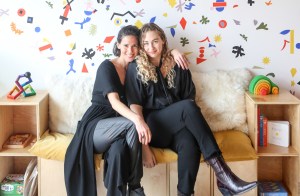
The Selfie Room offers 12 unique rooms, and each of these spaces has its own theme. The pair partnered with Henry Kitchen and Bath to create a rubber ducky room, and other spaces feature a pool-sized ball pit, colorful backdrops and oversized props. Erika Klotz says since they’re both creative individuals, she and her sister-in-law put together all the themes themselves and spent a lot of time on Pinterest combing for ideas. The current room themes won’t be there for long, however. The Klotzes aim to switch out their spaces quarterly and are already planning for summer spaces like a beach ball-themed room. Swapping out the spaces regularly, Erika Klotz says, ensures that The Selfie Room isn’t a one-time experience.

“We want to be a staple in downtown,” she adds.

The Selfie Room plans to host monthly events to attract visitors to the space, like a “dog day” event in March where customers could bring their pups to get in on the selfie action. In fact, the pair’s April event, scheduled for the 27th, will be a ’90s-themed party, featuring music from the decade, goody bags and activities.

The Klotzes have high hopes for their new venture and hope to expand in St. Louis and even in other cities. But for now, they say that being located right on Washington Avenue is perfect.

“[Because] we’re close to the City Museum, visitors can pair [The Selfie Room] with their City Museum experience, since they’re already planning to play,” Erika Klotz says. “We’re also right across from The Last Hotel, so out-of-towners can experience it and the nightclub scene surrounding it.”

Overall, though, she says the museum’s first few months in business have been a hit.

“People are loving it,” Erika Klotz says. “It’s a millennial playground.”

This story was originally published at laduenews.com. Read it on LN’s website here.

Ladue News Feature Stories

Thinking Globally, Acting Locally

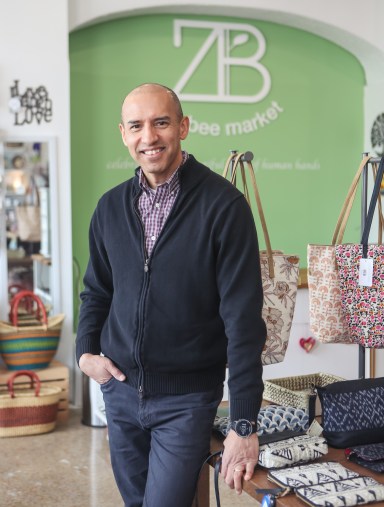
Bringing fair-trade products to area residents is Zee Bee Market owner Julio Zegarra-Ballon’s passion. After a promotion brought him to St. Louis, he learned about Partners for Just Trade, a Fair Trade Federation member local organization that was working exclusively with Peruvian artists. Although Zegarra-Ballon had been working in corporate America for two decades, after discovering Partners for Just Trade, he found himself increasingly “falling out of love” with the ways of the two large-scale corporations he had been working for.

Born in Peru himself, Zegarra-Ballon felt an immediate connection with the group and expressed interest in supporting its mission by volunteering. It was then that he was introduced to the fair-trade movement. “Fair trade” is an institutional arrangement designed to help producers in developing countries achieve better trading conditions. Members of the fair-trade movement advocate the payment of fair wages and provide safe working conditions to the producers, as well as improved social and environmental standards.

“I had been working for two large corporations that did little to ensure the producers received a fair wage for their work,” Zegarra-Ballon says. “I worked hard to make money for a limited few and to create value for shareholders, but producers along the supply chain did not share in that prosperity and often were exploited.”

While continuing his day job, Zegarra-Ballon began to assist Partners for Just Trade on weekends, often helping sell products at events. As he was selling, he found himself telling the products’ stories to prospective customers, explaining not only the beauty behind the products themselves but also the artisans who handcrafted them.

“One day, I came home and told my wife, ‘This is what I want to do,’” Zegarra-Ballon says.

His wife supported his vision, and Zegarra-Ballon set off to get his MBA at the University of Missouri-St. Louis to learn how he could venture out on his own. During this time, Zegarra-Ballon decided to take $1,000 out of savings and used it to purchase unique, handmade and fair-trade gift-type products – half from Partners for Just Trade and half from another fair-trade organization, Global Crafts. He set up a table at a local event in June 2012, and by the end of the day, he had sold nearly half of the products.

“I was elated when I got home,” he says. “I decided to reinvest the money in ordering more products.”

For the next two years, Zegarra-Ballon continued to sell fair-trade products on nights and weekends – all while finishing his MBA and maintaining his day job. Increasingly, though, customers were asking him where his shop was.

“The results spoke for themselves,” Zegarra-Ballon says. “The challenge was there, but I could feel in my heart that it would be a good thing.”

After he put a business plan together and found the perfect space, his Zee Bee Market opened on South Grand in November 2014. Less than a year later, Zegarra-Ballon quit his full-time job and dedicated all his time and effort to telling the stories behind the eclectic variety of goods he carries.

Although the South Grand community embraced Zee Bee Market and Zegarra-Ballon’s efforts, he regularly had customers note that they wished for a location farther west. In early 2017, Zegarra-Ballon saw the possibilities of the storefront located on Manchester Road between The Benevolent King and Kakao, and after much work, he opened the doors to the second Zee Bee Market in April 2018.

The space is filled with charming, colorful pieces from artisans all over the world, and Zegarra-Ballon has a story to tell for each piece.

“Everything you see here is handcrafted by artisans around the world,” he says. “We’re currently sourcing from 33 different countries. I find myself welcoming customers, and as they pick something up and begin to compliment it, I say, ‘Oh, by the way, here’s the story behind it.’ It’s a celebration of the beautiful work of human hands.”

He cites parts of the world like India and Cambodia, where certain villages have become known as meccas of leather-making, block printing for fabrications and recycling materials to be turned into accessories. But these artisans are facing the challenge of a modern society that’s focused on automated production.

“Their livelihoods are potentially at risk,” Zegarra-Ballon says. “Fair trade is targeting specifically communities that are borderline losing this incredible art form and encouraging them to stay in their villages.”

Zee Bee Market’s products are wide-spanning, from pillows made from recycled saris to wallets made from inner tubes to exquisite ceramic pieces to wall hooks made from bicycle chains. There is a large selection of organic and fair-trade-certified coffee, chocolate, tea and other treats. The shop also carries a variety of clothing and dresses, along with bags and satchels – all benefiting the people who meticulously handcrafted them.

Over the course of the past year, Zegarra-Ballon’s been getting the word out about his new space, regularly partnering with local nonprofits to donate 15 percent of sales to those groups’ missions.

“I’m so delighted to be able to give the customer in the U.S. a new opportunity to open their wallet and choose to purchase something that has a positive impact,” Zegarra-Ballon says. “We spend money all the time by the trillions of dollars in this country, but it’s a tiny percent that is actually sourced ethically. We have an opportunity as consumers to be able to support the livelihoods of people around the world by the products we purchase.”

This story was originally published at laduenews.com. Read it on LN’s website here.

Ladue News Feature Stories

Building Good Buzz

Blanche “Bee” Kern knows that beauty is found in the details. It’s perhaps one of the reasons behind the wild success of a business she started her sophomore year of college called The Honeycomb.

“A passion to create beautiful things” led her to begin creating hairpieces, including floral garlands, pins, crowns and a small selection of veils – perfect headwear for brides seeking to add more floral elements to their big day.

“Everything I made seemed to sell right away, and the custom order requests began to pour in,” she says.

Kern had launched her Etsy shop in 2008 while attending Maryville University for a graphic design degree – during what she calls the “early days” of the online handmade marketplace. Still, attention to detail and excellent customer service were her priorities as she began delivering pieces to customers all over the world.

“The online bridal industry is saturated with mass-produced items, so I was passionate about providing a more personalized and handmade service,” Kern says. “My motto is ‘perfection in the details,’ from selecting the finest available materials for my designs to thoughtful communications with my customers.”

With graduation from Maryville on the horizon and business ramping up, Kern was faced with the decision of what to do after earning her diploma.

“With graduation coming, I felt a career crisis looming,” she says. “I received a job offer from the design firm I’d interned with, but my mind was already made up. I was too excited by the customer response to The Honeycomb and loved the idea of running my own business.”

Kern turned her attention to The Honeycomb full time after graduating and has been working tirelessly ever since. The signature Honeycomb look blends fabric flowers with a luxe variety of metal vines, twigs and leaves, often incorporating Swarovski pearls and crystals, too.

“These gilded pieces are my favorite to make and the most popular with customers,” she says.

Although she focuses mainly on the flower crowns and hair combs, her veils have also picked up momentum, with the “drape” veil becoming a bride favorite. Kern recently brought on a talented veil designer – her mom, Dede – who cuts and stitches the veils by hand.
“Whereas most designers affix lace with glue, she is meticulous with needle and thread,” Kern notes.

Her fastidious care and willingness to create personalized pieces for her customers have set The Honeycomb apart in an online market that’s now saturated with wedding accessories.

“There is far more competition now,” Kern acknowledges. “This keeps me on my toes and makes me obsessive about finding new and unique ways to advance my signature look, while creating diversity in my offerings and never sacrificing on quality.”

Kern hit a big milestone in 2018 when eRank (then called EtsyRank) listed The Honeycomb as the top 1 percent seller on the global Etsy marketplace. The business also celebrated its 10-year anniversary last year, and Kern looks back fondly on the successes The Honeycomb has had since its inception.

“My items have been featured in wedding blogs, magazines and the CW-channel TV series Reign,” she says. “Although most of my customers are in the United States, 25 percent of orders today are coming from Europe. I’m quite proud of that.”

Wherever they are in the world, Kern’s customers are happy ones. She has a five-star rating from nearly 3,000 customers and receives numerous emails per month with comments like “I have been searching for weeks to find the perfect accessory. I’m so glad I found you!”

“I offer brides a truly personalized service, which many take advantage of,” Kern says. “I am frequently asked to create a hybrid of styles from the existing designs in my shop. For example, if a bride likes one headpiece for its colors and vibe, but it’s not quite the right shape, I can remake it to fit her special request. Often I will switch out flowers to match a particular bouquet. I’ve even had brides send me an ancestor’s heirloom headpiece to remake into something new. I am in love with the collaborative process!”

The Honeycomb’s continued growth has led Kern to seek out a bigger studio space, which she is moving to shortly. Currently, her designs are available only online.

“I am excited about the growth, although being a one-woman show can take its toll,” she says. Though she says some days she feels like a hamster on a wheel, she’s “so fortunate to be doing what [she] loves.”

“The plan this year is to hire someone to help with business operations, which will free up my time to focus exclusively on the creative side and continue to provide excellent customer service,” Kern says. “I am committed to creating a delightful experience for my customers, from start to finish.”

This story was originally published at laduenews.com. Read it on LN’s website here.

Ladue News Feature Stories

Sweet as Honey

Two years ago, St. Louisan Angela Giancola was living in Israel with her kids for a few months when she discovered a museum in Tel Aviv that had reusable decals everywhere. Her son, Omri, was obsessed with the stickers and the simple appeal of being able to create whatever he wanted from the decals, and he wanted to play with them for hours. Giancola inquired about purchasing some, but she learned they had been created by students specifically for the museum and weren’t for sale.

“I looked everywhere for this concept,” she says. “Then I thought I might as well just do it.”

Giancola is deaf and has a background in children’s education. Several years ago, she worked with international kids teaching sign language and art – which she says are common ways to communicate with children. “It doesn’t matter who you are or what kind of background you come from; there’s always art,” Giancola says. “I’ve always felt like it’s such a foundational way of communicating.” Also, she’d always wanted to open a children’s store but never felt the time was right. She ran the idea by Zoe Kaemmerer, a friend and former coworker of hers, who loved the concept.

“It was perfect timing,” Kaemmerer says. “I was at a point in my life where I was looking for something different, a challenge. [Giancola] and I had traveled together early on and built a professional relationship and friendship. It was an awesome ground to go forward, so we decided to go for it.”

The two friends set to work producing their own set of decals under the brand name of Honeycomb. They contacted a graphic designer friend to help with the project, noting that they wanted the shapes to be “free-form and abstract” so kids and adults could create something new in their minds.

“We want to challenge children to focus on their constructive and critical thinking and have fun with it,” Giancola says. “They can make letters, create pictures or just make simple shapes.”

From there, Kaemmerer and Giancola took their idea one step further and decided to open a shop in St. Louis’ Botanical Heights neighborhood to showcase everything from the decals to unisex kids’ clothing to their own line of wellness and skin care products. Honeycomb has been open at 1641 Tower Grove Ave. since March 6, grabbing the attention of passersby with its bright yellow multiwindow “Honeycomb” lettering by local artist Phil Jarvis.

Visitors to the shop are greeted by a colorful and versatile space that features a play area for kids on one side and a more product-oriented space on the other. The shop is geared toward all ages, though, and provides a vibrant and tranquil atmosphere for customers, whether they’re 5 years old or 85.

“Visitors can expect a full experience,” Kaemmerer says. “It’s what we want to give our customers – an immersive, interactive experience, where they’re not only going to walk away with something as a gift, but they also had this positive and loving environment they got to be a part of. Maybe they met a new friend while they were in here or got some advice from another parent or walked away with an awesome, unique gift.”

Honeycomb carries a variety of lines from all over the world, with a focus on sustainability and quality. Visitors can find everything from a wheeled basket from Olli Ella to a balance board from Wobbel to organic toy blocks from Globe Totters. It was important to Kaemmerer and Giancola to focus on products that get kids off their screens and encourage being creative as a family, and those values are mirrored in the products they offer.

In addition to the toy-oriented products, Honeycomb carries a variety of kids’ clothing, including a piece from its in-house line, the Omri bloomers, named for Giancola’s son. She notes that kids can get two or three years’ of use out of the pants, which are designed to be rolled up or rolled back down as the child grows. The line also includes a burp cloth with a distinct shape that helps it stay on a person’s shoulder. It features the same design as the decals, tying it into the overall Honeycomb theme.

So far, Kaemmerer and Giancola say that feedback on their shop has been fantastic, with both adults and children enjoying the space and what it has to offer.

“The adults are so excited about the fact that they can come in and let their kid draw for five minutes while they take a stroll around the shop,” Kaemmerer says. “We’ve been blown away by the amount of people who already follow us on social media or have a sister or friend who’s been by the store. It’s an overwhelming feeling, and it makes us realize we’re on the right track.”

The pair also plan to use their storefront as an event space, bringing in speakers like psychologists, sleep specialists and teachers who have experience with special education. Giancola says she’d also like to do readings where she’ll demonstrate the books in sign language.

“We want to grow locally and in the sense of global business, reach out to people who have the same mentality and spirit as we do,” Kaemmerer says. “We want to represent everyone.”

This story was originally published at laduenews.com. Read it on LN’s website here.

Ladue News Feature Stories

Child’s Play

In a day and age where screens are often the main source of amusement, places like Play Street Museum set themselves apart as spaces where kids can let their imaginations run wild and simply be kids.

The interactive children’s museum franchise got its start in Texas and was purposefully designed to encourage a young child’s sense of independence, exploration and creativity.

“By narrowing the focus of our museums to the interests and imaginations of children 8 and under, young explorers will discover educational exhibits and activities in a world specifically crafted just for them,” the Play Street website explains.

That specific vision drew Nicole Simon and Kellie Geraghty to the museum. The two moms lived in Dallas before moving back to their native St. Louis and, on returning, entertained the idea of bringing the museum experience to the metro area.

“I really loved the museum while I was in Dallas,” Simon says. “It was so easy to take my daughter there and let her play.”

In May 2018, the two friends started the process to bring Play Street to the metro area by looking for a space, which proved to be tough. Rebecca Suen with Hilliker and Patricia Kueneke with Cullinan Properties helped Simon and Geraghty find the right place for the children’s museum and brought them out to see 1650 Beale St. in St. Charles. The space ended up being perfect for their vision, and Play Street’s local location is set to open Mon., March 25.

“We recommend Play Street Museum to kids ages 1 to 8,” Simon says. “Sometimes younger siblings will come in with older siblings, and vice versa. I’d say kids up to about age 12 can have fun interacting with their younger siblings.”

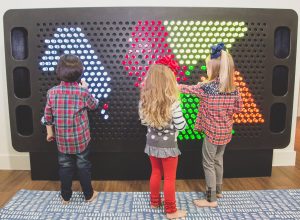
Each Play Street Museum location has a theme, and the local one’s is “town square.” Kids can play with little houses, a fire station, a grocery store, a doctor’s office and a table full of crafts. They also can enjoy a giant Lite-Brite built into the wall.

“The museum is perfect for independent-type play,” Simon says. “The kids are learning as they play.”

Because this is the first Play Street location outside of Dallas, Simon and Geraghty have spent much of the past year seeking the help of other franchise owners.
“The franchise owners have been so helpful in guiding us along the way,” Simon says.

The duo even recently returned to Dallas to “learn the day-to-day” operations of the museum, making sure they’re ready to hit the ground running on opening day.

“Once we open, we hope to be able to get the word out to the St. Louis and St. Charles communities,” Simon says. She’s excited about the opportunities the museum will bring to local kids and their families and will give them a chance to let their imaginations run wild in a safe space.

Visitors will be able to bring their kids to open-play hours, which are 9 a.m. to 5 p.m. Monday through Thursday and 9 a.m. to 8 p.m. Friday. Reserved open-play days are hosted on the third Sunday of the month, with more time slots to be available on the weekends in the future. Along with hosting special weekend events, Play Street is available for birthday party rentals, where families can pick a theme and reserve the space for 1½-hour time slots. Admission to the museum is $11.50 plus tax for children ages 1 through 8. Children younger or older are free if accompanied by a paying sibling.

“Play Street is important because it allows the child to be able to play and explore in a safe environment, so you don’t have to stay next to them the whole time – it gives them independence,” Simon says. “For parents, it’s nice to sit back and watch their children play, or they can play along. It’s a relaxing environment for both.”

Geraghty echoes Simon’s sentiments, noting how families can use the museum to return to simpler times: “It gives kids the chance to break away from screens and use imagination to go back to basic pretend play. They work with their imagination and unplug like we did when we were kids.”

This story was originally published at laduenews.com. Read it on LN’s website here.

Ladue News Feature Stories

Make My Holliday

When customers walk into Holliday in St. Louis’ Central West End neighborhood, they’re met with inviting smells wafting from candles, the warm ambiance that radiates from the store’s interior architecture and neutral-toned furniture and displays.

In their latest venture in the CWE, the McPheeters family now serves a trifecta of businesses with the opening of Holliday. Bowood Farms and Cafe Osage have been operating next to each other on Olive Street for more than a decade, and the third arm of the McPheeters’ operation just made its debut in October.

Katherine McPheeters, who operates Holliday with the help of a small staff and family members (including a loyal four-legged friend named Ruby), notes that Bowood, a garden supply shop, has sold housewares and gifts since its opening in 2006, but has now been able to expand in the new space at Holliday.

In late 2017, the McPheeters family began to work on converting a small building across the street from their other two businesses into what would become Holliday a year later. The shop is named for McPheeters’ great-grandmother Ida Holliday, who, along with her husband, bought the original Bowood Farms, located in Clarksville, Missouri, in the 1930s. (The family still owns the Clarksville farm, which grows all of the annuals and perennials, herbs and veggie starts sold in the CWE.)

McPheeters took great care in selecting the right fixtures for the space and moving everything into the little shop.

“The front didn’t have a lot of presence to it,” she says. “You could drive by and not notice it pretty easily.”

That’s not the case now. The beautifully refreshed brick building is highlighted by classic black windows, an attractive vestibule and eye-catching hexagonal tile. Its exterior complements the other two McPheeters businesses across the street.
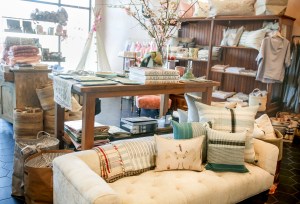
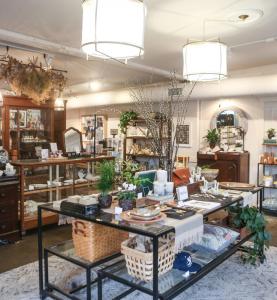
Visitors to Holliday walk into a space that’s light and open, sprinkled with everything from stationery to apparel to kids’ gifts, with an emphasis on natural and handmade.

One of the immediate eye-catching components of Holliday is a 10-foot glass display that houses the business’ jewelry – something McPheeters had been carrying at Bowood and has been able to expand.

“We have so many lines it’s hard to choose a favorite,” she says. “I’m excited to have local maker Jacki Holland pieces.”

Holliday carries an assortment of bright, fun party supplies and kids’ items, making it the perfect spot to stop before a birthday party or baby shower. McPheeters notes her excitement over Rifle Paper’s new line of party supplies, calling co-founder Anna Bond’s prints “iconic.” While the kids are entertaining themselves in the store’s corner play area, parents can browse the store’s extensive selection of tabletop linens, candles and accessories.

Holliday also carries a wide range of clothing, much of which has a handmade quality and is multiseasonal.

“Kerri Cassill makes beautiful Indian block-print bedding, as well as clothing, which is perfect for summer and beach vacations,” McPheeters says.

Customers seeking art and furniture pieces will find an array of selections by New York’s John Derian at Holliday and will even have the opportunity to order custom pieces from his furniture line with the Cisco Brothers through the store.

“I had been a fan of Derian for a while and had several pieces in my home before we started carrying his work at Bowood,” McPheeters says. “I’m really excited to be able to hang his pieces up in the new shop.”

The space, which is “more relaxed, quieter and smaller,” lends itself to a different experience than Bowood, McPheeters says.

“We’re able to have more of an interaction with the customers about how the products are made, where they’re made and what the materials are,” she says. “We put a lot of work into the finishes and the mood and atmosphere here. You can smell the candle we’re burning [as you walk in], and you can notice the scent of the flowers. It’s a nice mood to walk into, and it’s an important part of the shopping experience right now.”

The three McPheeters businesses offer completely different experiences, but each one has unique ways it ties into the others. At Bowood, gardening enthusiasts will find a wide assortment of plants and garden gifts in a greenhouse-style atmosphere. Cafe Osage offers breakfast and lunch classics, focused on seasonal, fresh foods grown in Bowood’s CWE garden. And at Holliday, customers can top off their Olive Street shopping experience with unique gifts and accessories for the home.

Holliday perfectly rounds out the trifecta, giving visitors to this particular section of the CWE a place to fully experience what the McPheeters family has to offer: nourishment for the land, body and home.

This story was originally published at laduenews.com. Read it on LN’s website here.

Ladue News Feature Stories

A Novel Idea

UNICEF estimates that an average of 353,000 babies are born every day around the world, and an estimated 264 million children aren’t getting an education. What if each of those babies were given a library card and access to his or her local library’s resources right from day one? St. Louis County Library is making that a reality in the metro area with its Born to Read program.

As the library expanded its efforts to reach as many children and families as possible, it created a new program in 2015: Born to Read. Library director Kristen Sorth says this program was implemented to reach families “at the earliest possible moment” – and what could be earlier than the moment a new family member enters the world?

“We want to convey the importance of reading and introduce reading into the daily routine at the beginning of a child’s life,” Sorth says. “That’s why we came up with the idea to reach parents at the very first moment they have with their newborn in the hospital.”

The Born to Read program ensures that every baby born in St. Louis County receives a library card. New parents at participating hospitals receive a bag that contains a book, early literacy information, a library card, a Cardinals beanie and a voucher for two Cardinals tickets, along with other items.

The program started with just a few hospitals but has grown to include Mercy Hospital South, SSM DePaul Health Center, St. Clare Health Center, Missouri Baptist Medical Center, SSM St. Mary’s Health Center, St. Luke’s and – most recently – Mercy Hospital St. Louis, which was added in January.

“We know hospitals and maternity wards are busy, so we worked with them to come up with the most convenient way to deliver this information,” Sorth says. “We came up with the idea for this bag and expanded [what came in it] as we started talking to private funders and organizations in St. Louis that wanted to be a part of it.”

Born to Read is funded primarily through the St. Louis County Library Foundation, along with other area organizations and corporations like Cardinals Care, Great Southern Bank and Delta Dental, to name a few.

The program’s funding has allowed bags to be delivered far and wide in St. Louis County, with 47,000 families receiving a bag and library card since Born to Read’s inception. Hospitals handed out 12,000 bags in 2018 alone, and the addition of Mercy Hospital earlier this year will bring another 9,000 babies into the Born to Read family in 2019.

“I think having a child hear words and make a connection starting at birth means they’re going to have a great chance at staying on track in school,” Sorth says. “When they get to third and fourth grade, if they’re not at the right reading level, it’s hard for them to catch up. It’s important to get them interested and hear how words translate into stories.”

Sorth says the feedback from both parents and hospitals has been great over the years.
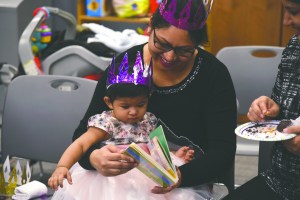
“We get a lot of people who send us photos of their babies in the hospital with their Born to Read bags,” she says. “Hospitals love it, too. The American Academy of Pediatrics includes reading to babies as one of the things doctors talk to new parents about. For the doctors, this is a really easy way to talk to parents about reading from the start.”

The Born to Read program serves as the initial kickoff to a child’s lifelong library experience, as well. As the child’s first birthday nears, parents receive an invitation to come to the library for a birthday celebration, where they receive another free book, the parents talk about early literacy with library staff, and staff members introduce the parents to all the programs the library features, like 1,000 Books Before Kindergarten. Library communications manager Jennifer McBride notes that it has seen an increase in attendance for parents and young children and hopes that increase is due to programming like Born to Read.

“Attendance at our children’s programs was up 10 percent in 2018 over the previous year,” she says. “I can’t attribute that directly to Born to Read, but it has definitely helped spread awareness of all the early literacy resources and programming available at the library.”

With an increase in foot traffic at the library, Sorth and her team hope to build on the programming that’s become so important to the organization’s mission.

“We really want to continue Born to Read long-term,” Sorth says. “And we want people to know that the library offers so many additional tools for caregivers to encourage kids and keep them engaged and learning.”

This story was originally published at laduenews.com. Read it on LN’s website here.

Ladue News Feature Stories

For the Love of Art

Sarah Kelley and Mary Beth Bussen have known each other for more than 20 years, but they never dreamed they’d be running a shop together. But here, in 2019, the duo operates Union Studio in St. Louis’ Botanical Heights neighborhood, selling a wide variety of handcrafted goods and fine art. The best part? Everything in the shop is made by area residents.

Years ago, Bussen had been using the space at 1605 Tower Grove Ave. for her own personal textile work, sharing the storefront with another artist and maintaining a small retail footprint. Within her first year in the space, though, Bussen knew that she needed to figure out the focus for the storefront and that she’d need additional help.

“Just as I was writing up a job description and making the decision to expand the retail, [Kelley] walked in and said she was looking for a job,” Bussen says. “I wanted to create ongoing access to the high-quality work of artists in the community, and once [Kelley] came aboard, we really expanded that.”

When they first started Union Studio in April 2014, the duo carried the work of eight artists in the corner shop. Today, they carry more than 80.

“We’ve grown the retail aspect of things substantially in the last four years,” Kelley says. “What’s been nice about this space is, everything’s always happened organically. The combination of the community’s response and artist interest has led us to take on more and cultivate more relationships.”

Visitors to the shop will find a new selection of wares regularly, as the duo shifts out their supply to feature new pieces frequently. From local granola to pottery to handbags to skin care, Union Studio has a little something for everybody. Although the selection does change out regularly, there are a few things customers will always be able to find in-store, known as the Union Studio Collection. The set of items includes Al Westcott’s handleless mugs, Christiane Danna’s leaf earrings, Stone Leather Goods’ envelope purse and more.

“When people first walk in, we always ask if they’ve been in before,” Kelley says. “We tell them that everything is handmade and all artists are from St. Louis. [Bussen and I] personally know each and every person whose work is in here, and our customers have come to expect and cherish having that story to go with [their purchases]. I think that’s something really special.”

Oftentimes, customers use Union Studio as a gift shop and are drawn back repeatedly by the ever-changing selection, Kelley says. She notes the popularity of the shop’s “pantry” section, which features things like local honey, tea and granola.

“People like to give gifts that can be consumed and don’t have to have a place in somebody’s home,” she says of that popular exceptional section, which functions rather like an elevated impulse-buy area.

Customers are also drawn to the shop’s selection of clothing and accessories, including cozy pants from Annamaya Clothing by Alison Hyde, colorful pieces by Olivia Rae Designs and intricate jewelry from makers like Leia Zumbro and Jenny Walker.

The duo spends a lot of their time interacting with customers, taking the time to get to know them and find out what pieces they’re drawn to in the shop.

“There’s something special that happens in this space,” Bussen says. “People really are drawn to the work and the people that are doing it, whether it’s a cord wrap for your earbuds or a piece of large art for your home. I think people don’t always know what they’ll find, but they’re confident they’ll find something.”

As they celebrate their five-year anniversary this spring, the Union Studio ladies seek to open up the conversation even further.

“I think five years in, the shop is still ever-changing in its dynamic, but we want to have more sit-down conversations, whether it [be] with the artists or other business owners or members of the community in general,” Kelley says.

Bussen agrees, noting the reflective and loyal qualities in the shop’s customer base, along with the artists she and Kelley work with.

“We have a whole group of artists who are creative and generous to take a chance with us,” she says. “When you look at the people we have engaged in this space, it sure seems like there’s so much work to be done. Whether the work occurs in this physical space or broader, I think our hope is that we can start to understand what we can do with all these incredible people.”

This story was originally published at laduenews.com. Read it on LN’s website here.